





Acts 2:1-11
1 Corinthians 12:3b-7, 12-13
John 20:19-23
OVERVIEW OF THE READINGS
Acts recounts the dramatic descent of the Holy Spirit at Pentecost, empowering the disciples to speak various languages so that people of many nations could hear the Gospel in their own tongues. In John’s Gospel, the risen Jesus breathes the Holy Spirit upon the disciples and commissions them to continue his saving mission, especially through reconciliation and forgiveness of sins. 1 Corinthians highlights the Spirit’s distribution of diverse gifts among believers, all intended for building up the Christian community. Together, these readings present the Holy Spirit as the source of unity, strength, renewal, and missionary zeal in the life of the Church.
REFLECTION
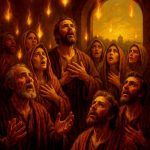
Dearly beloved, according to our first reading from Acts, the coming of the Holy Spirit took place on Pentecost when the disciples were gathered together in one place. Suddenly, they heard a sound like a mighty rushing wind from heaven, and tongues as of fire rested upon each of them. These signs are rich in biblical symbolism.
The first symbol is wind. In the Old Testament, God’s manifestation is often accompanied by wind, signifying his divine presence and power. The biblical word for “wind” can also mean “breath” and “spirit,” connecting the natural phenomenon with God’s life-giving action. Just as God breathed life into Adam at creation, so now the Holy Spirit breathes new life into the community of believers, inaugurating a new creation in Christ.
The second symbol is fire, which also signifies divine presence. In the Old Testament, God revealed himself through fire, most notably on Mount Sinai. The tongues of fire at Pentecost signify that God himself is present among the disciples. (Bishops, priests, and deacons wear red vestments on Pentecost as a visible sign of this fire and power.) The tongues of fire resting upon each disciple reveal that believers have become the new dwelling place of God. Fire further symbolises purification and transformation: the fearful disciples were transformed into bold witnesses. Moreover, the divided tongues signify unity in diversity: though believers differ in language and culture, they are united in the one Spirit.
Filled with the Holy Spirit, the disciples began to speak in different languages. When they emerged speaking boldly, some bystanders assumed they were drunk. Peter stood up and explained that this was the fulfilment of God’s promise through the prophet Joel: “And it shall come to pass afterward, that I will pour out my spirit on all flesh; your sons and your daughters shall prophesy, your old men shall dream dreams, and your young men shall see visions” (Joel 2:28, RSV Catholic Edition). This prophecy foretold an extraordinary outpouring of God’s Spirit upon all people, inaugurating a new era of divine grace and spiritual renewal.
Unlike earlier periods when the Spirit was bestowed chiefly upon selected leaders, Joel envisioned a time when the Spirit would be poured out abundantly and universally—sons and daughters, old and young, servants and handmaids alike would participate in God’s gifts. The prophecy highlights the abundance, universality, and inclusiveness of the Spirit’s action. Peter declares: “This is what was spoken through the prophet Joel” (Acts 2:16), making clear that Pentecost is neither confusion nor intoxication, but the fulfilment of God’s promise and the inauguration of a new chapter in salvation history.
Peter reinterprets Joel’s “afterward” as “the last days,” situating Pentecost within the messianic age inaugurated by Christ’s death and resurrection. The Spirit is poured out upon “sons and daughters,” “young and old,” and even upon “servants and handmaids.” No one is excluded. Christians therefore understand Joel’s prophecy to be fulfilled at Pentecost, when the Holy Spirit descended, empowering the disciples to proclaim the Gospel with courage and inaugurating the universal mission of the Church.
Pentecost was originally a Jewish harvest festival called Shavuot, or the Feast of Weeks, celebrated fifty days after Passover, commemorating the giving of the Law at Mount Sinai. Hence the name Pentecost, from the Greek word for “fifty.” Many devout Jews came to Jerusalem from all parts of the world. The people who experienced the outpouring numbered one hundred and twenty (Acts 1:15)—not only the twelve apostles but the entire community. It is often said that this passage reverses the story of the Tower of Babel. What was new was that people did not need to come back to a centre; rather, the word would go out to every corner of the earth.
The significance of Pentecost is profound. First, it brought a dramatic transformation: the disciples, who had remained hidden in fear, were emboldened to proclaim the risen Christ with confidence. Second, Pentecost marks the birth of the universal Church. The mention of peoples from many regions—Parthians, Medes, Elamites, Cappadocia, Pontus, Egypt, Rome—symbolises the Church’s mission to all nations. Third, Pentecost reveals the Holy Spirit as the source of the Church’s unity. As St. Paul teaches, the Spirit incorporates believers into one body through baptism while bestowing diverse gifts for the common good. Finally, the miracle of tongues shows that the Spirit’s gifts are ordered towards mutual understanding and the universal mission, drawing all peoples into one harmonious fellowship in Christ.
I once knew a man who moved to a foreign country where he did not speak the language. He felt isolated. One day, a neighbour took time to learn a few phrases in his native tongue. That simple act broke down walls of loneliness. This small human gesture reflects what the Spirit did on a grand scale at Pentecost: proclaim God’s saving works to every nation.
My dear People of God, the first reading from Acts and the Gospel reading from John recount the same fundamental reality—the outpouring of the Holy Spirit—but from different perspectives. In John’s Gospel, the gift of the Spirit takes place on the very day of the Resurrection. Here, the risen Lord himself is the agent, and the emphasis falls on the mission and authority he entrusts to his disciples. Gathered behind locked doors out of fear, the disciples suddenly encounter Jesus standing among them, greeting them: “Peace be with you.” The word “peace” translates the Hebrew shalom, signifying wholeness, harmony, and right relationship with God.
Jesus shows them his hands and his side, bearing the wounds of his Passion. Their fear turns to joy. He then commissions them: “As the Father has sent me, even so I send you.” Then he breathes upon them and says: “Receive the Holy Spirit.” This gesture deliberately recalls Genesis 2:7, where God breathes the breath of life into Adam. Just as God breathed life into the first creation, the risen Christ now breathes the Spirit into his disciples, inaugurating a new creation.
The gift of the Spirit is immediately linked to reconciliation: “Whose sins you forgive are forgiven them, and whose sins you retain are retained.” Empowered by the Holy Spirit, the disciples are sent to continue Christ’s reconciling work. The apostles do not act on their own authority but as representatives of the risen Lord. The “retaining” of sins points to pastoral discernment: where people reject the Gospel or refuse repentance, reconciliation cannot take effect. This passage provides the biblical foundation for the Sacrament of Reconciliation, through which Christ continues his ministry of forgiveness.
Although John’s account differs from Acts in chronology and presentation, the essential reality is the same: the outpouring of the Holy Spirit. John presents a more intimate bestowal of the Spirit on Easter evening, while Acts narrates its dramatic public manifestation at Pentecost. The signs of wind, fire, and languages revealed to the crowds that the disciples had been empowered by God for their universal mission. What John describes in seed form within the upper room, Acts displays openly: the Holy Spirit equipping the Church to proclaim reconciliation, unity, and salvation to the ends of the earth.
I remember a story about a man estranged from his brother for fifteen years over a property dispute. One Christmas, the younger brother received a letter saying, “I forgive you. Please forgive me.” That single sentence broke years of silence. That is what Jesus entrusts to his Church: the power to speak words of reconciliation that set people free.
Beloved in Christ, Paul’s letter to the Corinthians addresses a community divided over spiritual gifts. Corinth was a prosperous Roman colony where some members thought speaking in tongues made them superior. Paul corrects this. He states that no one can say, “Jesus is Lord,” except by the Holy Spirit. The title “Lord” rejected Caesar as ultimate authority. Paul explains that there are varieties of gifts but the same Spirit, and varieties of service but the same Lord. The manifestation of the Spirit is given for the common good. Paul then uses the metaphor of the human body to illustrate unity within diversity. By one Spirit we were all baptised into one body. The Spirit overcomes social divisions: Jew or Greek, slave or free. The eye cannot say to the hand, “I have no need of you.” Every member is essential.
A few years ago, I witnessed a parish choir preparing for a major celebration. The sopranos thought they were the most important, the tenors felt overlooked, the altos complained, and the basses felt like background noise. The choir director stopped the rehearsal and reminded them that a choir needs all four voices to produce harmony. That choir illustrates what Paul teaches. Every baptised person has received a gift from the Spirit, and that gift is needed for the Church to fulfil its mission.
What does Pentecost mean for us personally? At Baptism, we receive the gift of the Holy Spirit, and in Confirmation we are strengthened by the fulness of the Spirit to live and witness to our faith. Yet an important question remains: are we truly bold enough to bear witness to Christ in our daily lives? At times, we may become complacent or lukewarm, and it is precisely then that we need the Holy Spirit to stir us from spiritual laziness, renewing zeal for God and courage in discipleship.
Sacred Scripture reminds us: “Your body is a temple of the Holy Spirit within you” (1 Corinthians 6:19). If the Holy Spirit dwells within us, do we strive to make our lives a worthy dwelling place, or do we grieve him through sin? Whenever we embrace falsehood, selfishness, or other sins, we weaken our openness to the Spirit’s transforming presence. Pentecost therefore calls us to continual conversion, so that the Holy Spirit may live and work freely within us, shaping us into faithful witnesses of Christ.
THE REFLECTION IN A NUTSHELL
The Holy Spirit is the gift of the risen Christ that creates unity out of diversity, empowering ordinary believers to become bold witnesses. At Pentecost, the Spirit enabled the disciples to speak every language, reversing Babel and fulfilling Joel’s prophecy. John’s Gospel shows Jesus breathing the Spirit upon his frightened disciples, commissioning them to continue his work of forgiveness. Paul teaches that the Spirit distributes different gifts for building up the body of Christ. The Spirit transforms fear into courage, division into harmony, and isolation into communion. This same Spirit is given to every believer at Baptism and Confirmation. May we open our hearts to receive the Spirit anew, so that together we may proclaim that Jesus Christ is Lord.

![Pentecost Sunday [Yr. A] (May 24, 2026) Acts 2:1-11; I Cor12:3b-7, 12-13; Jn 20:19-23. By: Rev. Fr. Clifford Atta Anim.](https://frcliffordhomilies.com/wp-content/uploads/2026/05/IMG_3123-150x150.jpeg)