




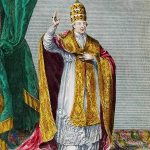
![Pentecost Sunday [Yr. A] (May 24, 2026) Acts 2:1-11; I Cor12:3b-7, 12-13; Jn 20:19-23. By: Rev. Fr. Clifford Atta Anim.](https://frcliffordhomilies.com/wp-content/uploads/2026/05/IMG_3123.jpeg)
Happy birthday to Priscilla Ameyaa & Antoinette Adu Yeboah. May God bless and keep you from all harm now and forever.
Pentecost: The Birth of the Church in the Power of the Holy Spirit
Pentecost comes from a Greek word meaning “fiftieth day.” In the Jewish tradition, it is celebrated fifty days after Passover as a harvest thanksgiving feast. Over time, it also came to be associated with the remembrance of God’s great covenant moments, especially His covenant with Noah after the flood (Genesis 9:8–17) and the giving of the Law to Moses on Mount Sinai (Exodus 19–20). For Christians, Pentecost takes on its fullest meaning fifty days after the Resurrection of Jesus Christ, when God establishes a new covenant not written on stone, but poured into human hearts through the Holy Spirit.
The event of Pentecost itself marks a turning point in salvation history. On that day, the Holy Spirit descended upon the apostles and the Blessed Virgin Mary in the form of tongues of fire (Acts 2:1–4). What is striking is the transformation that followed. The same apostles who had been locked in fear were suddenly filled with courage, becoming bold preachers of the Gospel. They began to proclaim Christ with power, and through the gift of tongues, people from many nations heard them speaking in their own languages. This was not merely a linguistic miracle; it was a sign that the Gospel is meant for all peoples, breaking every barrier of race, culture, and language (Acts 2:5–11).
The early Church that emerged from this outpouring of the Spirit became a living witness to Christ. The Acts of the Apostles shows us communities that prayed together, broke bread together, shared their goods, and endured persecution with joy (Acts 2:42–47; Acts 4:32–35). The Spirit who descended at Pentecost continued to sustain them, even to the point of martyrdom, as seen in the witness of Stephen, the first martyr, who was filled with the Holy Spirit as he saw the glory of God (Acts 7:55–60).
The Holy Spirit remains central in the life of every Christian. First, He is God dwelling within us. Saint Paul reminds us that we are temples of the Holy Spirit (1 Corinthians 3:16; 6:19). This means the Christian life is not lived in isolation but in constant awareness that God lives within us. Second, He is our strength in spiritual struggle. The Spirit helps us in our weakness, especially in resisting temptation and remaining faithful to Christ (Romans 8:26). Without Him, Christian living becomes mere effort; with Him, it becomes grace-filled victory.
Third, the Holy Spirit sanctifies the Church through the sacraments. Through Baptism, we are reborn as children of God (John 3:5). Through Confirmation, we receive a deeper outpouring of the Spirit, strengthening us as witnesses and soldiers of Christ (Acts 1:8). Through Reconciliation and the Anointing of the Sick, He restores us to communion with God, healing the wounds of sin. In the Eucharist, the Spirit transforms bread and wine into the Body and Blood of Christ through the epiclesis, nourishing the Church for her pilgrimage (Luke 22:19–20). Through Holy Orders and Matrimony, He builds up and sanctifies the Church in her ministries and family life, making every vocation a path of holiness (Ephesians 5:25–32).
Fourth, the Holy Spirit is our teacher and guide. Jesus promised that He would teach us all things and remind us of everything He has said (John 14:26). This is why the Church, guided by the Spirit, preserves and faithfully interprets the deposit of faith through her Magisterium. Fifth, He is also the one who enables prayer. We often do not know how to pray as we ought, but the Spirit intercedes for us with groanings too deep for words (Romans 8:26–27). He is present whenever we open Scripture, helping us to hear God speaking personally to our hearts.
Finally, the Holy Spirit enriches the Church with gifts, fruits, and charisms. Saint Paul lists these gifts as wisdom, understanding, counsel, fortitude, knowledge, piety, and fear of the Lord (Isaiah 11:2–3; 1 Corinthians 12:4–11). These are not abstract ideas but living realities that build up the Church and strengthen her mission in the world.
The message of Pentecost is therefore very personal. The Holy Spirit is not a distant power but a living presence who desires to take possession of every aspect of our lives. We must allow Him to guide us daily by becoming more aware of His indwelling presence and striving to live in holiness. We must continually ask for His strength in prayer, especially in moments of temptation and weakness. We must depend on Him in our prayer life, allowing Him to teach us how to speak with God and how to listen to Him in Scripture, in the Church, and in silence. And we must open ourselves to His prompting to do good, to forgive, and to live in reconciliation with God and others each day.
Pentecost is not only a past event; it is an ongoing reality. The same Spirit who filled the Upper Room continues to be poured out in every Eucharist, every sacrament, and every act of faith. The question is not whether the Spirit has come, but whether we are open enough to receive Him. God bless you.
References and Sources
- Holy Bible: Acts of the Apostles 1–7; 1 Corinthians 3:16, 6:19; Romans 8:26–27; John 14:26; Luke 22:19–20; Genesis 9:8–17; Exodus 19–20; Isaiah 11:2–3
- Catechism of the Catholic Church: CCC 683–747 (The Holy Spirit and the Church), CCC 1285–1305 (Confirmation), CCC 1091–1109 (Holy Spirit in the liturgy), CCC 737–741 (Holy Spirit in the Church’s life)
- Second Vatican Council: Lumen Gentium (esp. on the Church as Temple of the Spirit), Sacrosanctum Concilium (on liturgy and epiclesis)
- Acts of the Apostles (early Church life and witness)

Amen,thank you soo miluch for the birthday wishes,may God bless you🙏🏽🙏🏽🙏🏽
Amen