




April 2 Holy Thursday: Jn 13: 1-15: Holy Thursday evening Mass
Holy Thursday Homily: Love Made Visible in Service and Sacrifice
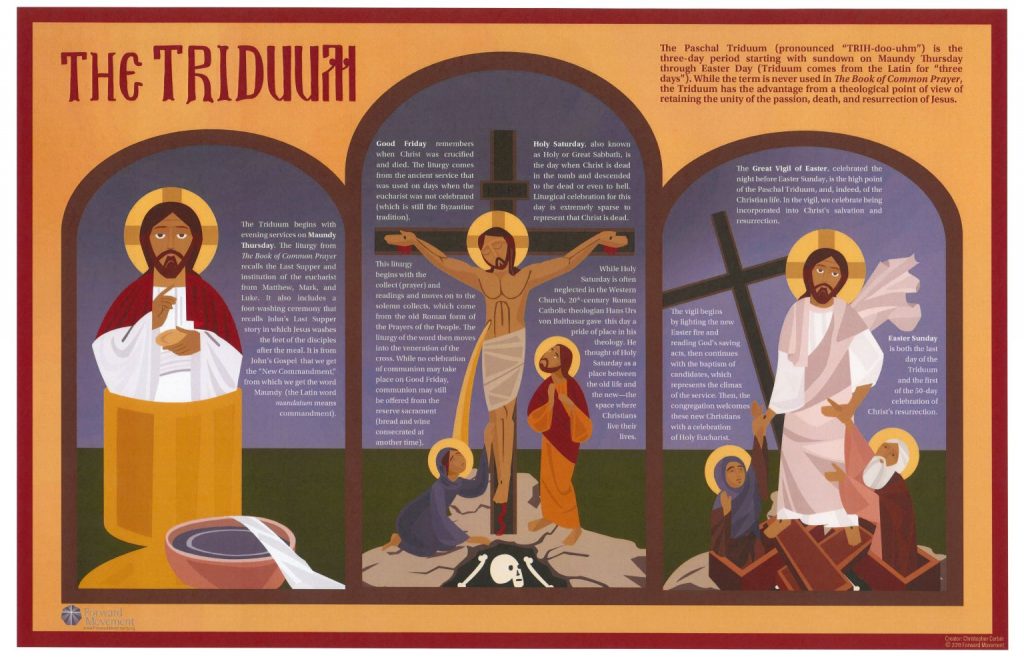
Today, we gather to celebrate one of the most profound evenings in the life of the Church, the mystery of Holy Thursday, the beginning of the Sacred Triduum. On this night, we do not simply remember events from the past, we enter into them. We relive them. We are drawn into the very heart of Christ.
Tonight, we celebrate three great gifts Jesus gave to His Church:
- The gift of the Holy Eucharist
- The gift of the ministerial priesthood
- The gift of the new commandment of love
1. The Eucharist: Love Given as Food
The roots of tonight’s celebration go back to the Passover in Book of Exodus (Ex 12:26–37), when God delivered His people from slavery in Egypt. That meal was a remembrance of liberation, a sign of covenant, and a thanksgiving to God.
But on this night, Jesus transforms that Passover into something entirely new.
At the Last Supper, He takes bread and says:
“This is my Body.”
He takes the cup and says:
“This is my Blood.”
He does not say, “This represents me.”
He gives Himself.
As St. Paul reminds us in 1 Corinthians 11:23–26, this has been the living tradition of the Church from the very beginning.
The Eucharist is not just a ritual. It is Jesus Himself, given as food for our journey.
Every Mass makes present the sacrifice of Calvary. Every Eucharist is love made visible.
2. The Priesthood: A Gift for Service
Tonight also marks the institution of the priesthood.
Jesus says, “Do this in memory of me.” In those words, He entrusts His mission to His apostles and their successors.
The priesthood is not about status or honor. It is about service, sacrifice, and self-giving love. The priest stands at the altar not in his own name, but in the person of Christ, offering the same sacrifice and feeding God’s people.
This is why tonight is deeply meaningful for priests. It is a reminder that our calling is not to be served, but to serve.
3. The Washing of Feet: Love in Action
Perhaps the most striking moment of tonight’s Gospel is not the breaking of bread, but the bending of knees.
Jesus washes the feet of His disciples.
In that culture, washing feet was the work of a servant. Yet the Master becomes the servant.
Then He gives a command:
“Love one another as I have loved you” (John 13:34).
This is not ordinary love.
This is sacrificial love, humble love, self-emptying love.
What Does This Mean for Us?
1. A call to humble service
To “wash feet” today means to serve others, especially in simple and hidden ways. It means putting others first, forgiving quickly, helping quietly, and loving without expecting anything in return.
2. A call to sacrificial sharing
Jesus gives us His Body and Blood. We are called to give ourselves, our time, our talents, our resources, for the good of others.
3. A call to become Christ-bearers
At the end of Mass, we are sent forth. The words “Go in peace” mean: carry Christ into the world. Bring His love into your homes, your workplaces, your communities.
Conclusion
Tonight, Jesus shows us what true greatness looks like:
- Not power, but service
- Not pride, but humility
- Not taking, but giving
The Eucharist we receive must become the life we live.
As we adore Him tonight, let us ask for the grace:
- to love as He loves
- to serve as He serves
- and to give ourselves as He gives Himself
Because in the end, the measure of our lives will not be what we received, but how much we loved. God bless you.
April 3 GOOD FRIDAY: Jn 18: 1- 19: 42
Good Friday Reflection: The Challenge to Carry Our Crosses
Today, on Good Friday, we stand before the Cross, not as a mere symbol, but as the very heart of our faith.
The Cross is not just wood. It is a message. It speaks.
Just as a dove symbolizes peace and a heart symbolizes love, the Cross reveals something deeper, it reveals the face of God’s love.
A. The Meaning of the Cross
The Cross is rich in meaning:
- The Cross reveals God’s love
It is only on the Cross that we fully see how much God loves us. Love here is not words, it is sacrifice. - The Cross brings forgiveness
As the prophet Isaiah foretold:
“He was pierced for our offenses… by His wounds we are healed” (Isaiah 53:5).
The Cross is where our sins are forgiven, where mercy flows. - The Cross teaches self-emptying
Jesus empties Himself completely. He gives everything, holding nothing back. - The Cross leads to glory
The Cross is not the end. It points to the Resurrection. It carries the promise of a crown after suffering.
B. When Does Our Pain Become Christ’s Cross?
The Cross always involves pain. But not all pain is redemptive unless united with Christ.
Our suffering becomes Christ’s Cross:
- When we offer it in union with Jesus for the salvation of souls
- When we share our blessings sacrificially with others
- When we struggle against our sins and evil tendencies
- When we endure rejection or humiliation for standing by Christ and His truth
Then suffering is no longer meaningless, it becomes participation in redemption.
C. Where Do Our Crosses Come From?
Our crosses come from different sources:
- From nature, sickness, disasters, death
- From duty, when we faithfully carry our responsibilities
- From others, through misunderstanding, betrayal, or opposition
- From ourselves, through poor choices, habits, and sin
Good Friday teaches us not to run away from these crosses, but to face them with faith.
D. Why Must We Carry Our Crosses?
Jesus is very clear:
“Whoever wishes to come after me must deny himself, take up his cross, and follow me” (Matthew 16:24).
- It is the condition for discipleship
There is no Christianity without the Cross. - It makes reparation for sin
As Saint Paul the Apostle says, we “complete what is lacking” in Christ’s sufferings (Colossians 1:24), not because His sacrifice is insufficient, but because we are invited to share in it. - It makes us like Christ
“I have been crucified with Christ… Christ lives in me” (Galatians 2:19–20).
The Cross transforms us into Him.
Life Messages for Good Friday
1. Carry your cross with love
Not with anger, not with complaint, but with love.
Not like someone forced, but like one who loves deeply.
Think of a mother caring for a sick child, or a spouse caring for a suffering partner, that is how we carry the Cross.
2. Draw strength from Jesus
When our crosses feel heavy, let us remember, His Cross was heavier.
And He does not just command us to carry ours, He walks with us.
3. Bring the Cross into daily life
Begin each day with the sign of the Cross.
Touch your crucifix with prayer.
Let it remind you: you are never alone in your suffering.
Conclusion
On Good Friday, we do not just look at the Cross, we are invited to enter into it.
Because the Cross is not only about suffering,
it is about love that suffers,
love that gives,
love that saves.
And if we carry our crosses with Christ,
then one day, we will also share in His glory. God bless you.
April 4HOLY SATURDAY : Mt 28:1-10
Holy Saturday Reflection: A Day of Silence, Waiting, and New Life
Holy Saturday is a quiet day. The Church is still. The altar is bare. The tabernacle is empty. It is a day suspended between death and life, between sorrow and hope.
A Day to Remember the Burial of Jesus
Holy Saturday is the day we remember that Jesus truly died and was laid in the tomb.
The early Church clearly marked this sacred rhythm:
- Good Friday, the death of Christ
- Holy Saturday, His burial
- Easter Sunday, His Resurrection
This day teaches us that God truly entered into our human experience, even to the silence of the grave.
A Day of Fasting and Silence
In the early Church, both Good Friday and Holy Saturday were observed as days of strict fasting.
Why? Because the Bridegroom has been taken away.
It is a day of mourning, reflection, and deep interior silence, inviting us to wait patiently for God’s action.
A Day for Baptism and New Life
After the peace granted by Constantine the Great in A.D. 313, Holy Saturday became a powerful day of initiation.
Catechumens, after years of preparation, were baptized during the Easter Vigil.
Their baptism carried deep meaning:
- Going into the water symbolized dying to the old life of sin
- Rising from the water symbolized new life in Christ
As Saint Paul the Apostle teaches, we are buried with Christ in Baptism so that we may rise with Him (Romans 6:4).
A Day of Blessing the Baptismal Water
On this day, the bishop blessed the baptismal water, preparing it for the great celebration of new life.
The catechumens, having completed their formation, returned their profession of faith, ready to be reborn in Christ.
A Day of Light: The Easter Candle
On Holy Saturday night, a new fire is lit, and from it the Easter candle is kindled.
This candle represents Christ, the Light of the world (John 8:12).
From darkness comes light. From death comes life.
Just as the Jewish people lit lamps to welcome the Sabbath, Christians light the Paschal candle to proclaim that Christ has conquered darkness forever.
A Day to Remember Our Identity
The reading from First Epistle of Peter (1 Peter 2:9) reminds us:
“You are a chosen race, a royal priesthood, a holy nation…”
Holy Saturday calls us to remember who we are:
- Chosen by God
- Sanctified by grace
- Called to holiness
A Day to Renew Baptismal Promises
During the Easter Vigil, we renew our baptismal promises:
- We reject Satan and sin
- We profess our faith in Christ
- We put on the “new self” after casting off the “old self”
This is not just a ritual, it is a commitment to live a transformed life.
Messages for Us Today
1. A message of expectation
Holy Saturday teaches us to wait with hope. Even in silence, God is at work.
2. A call to conversion
We are invited to die to sin, to let go of old habits, and to prepare for a new beginning.
3. A call to live our dignity
We are not ordinary people, we are children of God, brothers and sisters of Christ, members of His Body.
Conclusion
Holy Saturday is not empty. It is full of quiet hope.
It reminds us that:
- God works even in silence
- Light will come after darkness
- Life will rise from death
So we wait.
We watch.
We prepare.
Because the tomb is not the end.
The Resurrection is near. God bless you.


Thank you very much father.God bless you 🙏
Amen