











March 30 Monday: Jn 12:1-11
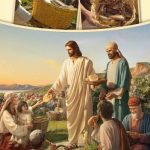
Today’s Gospel (John 12:1–11) takes us to Bethany, just one week before the crucifixion of Jesus. In the shadow of the Cross, we are given a deeply human and spiritual scene, a meal shared with friends, gratitude expressed, and hearts revealed.
Jesus is welcomed in Bethany, the home of Lazarus, whom he had raised from the dead. Instead of focusing on the suffering awaiting him in Jerusalem, Jesus chooses to spend time in love and fellowship. This moment shows us the heart of Christ, fully aware of his Passion, yet still present to friendship, love, and gratitude.
At the center of the Gospel are two contrasting attitudes:
1. The love of Mary of Bethany
Mary of Bethany expresses her love in a striking and extravagant way. She anoints Jesus’ feet with costly nard, a perfume worth nearly a year’s wages, and wipes them with her hair (John 12:3). This act is deeply symbolic, it is an act of gratitude for her brother’s restoration, an expression of total devotion, and even a prophetic gesture preparing Jesus for his burial.
Her action teaches that true love does not calculate. It gives freely, generously, and even extravagantly.
2. The hypocrisy of Judas Iscariot
Judas Iscariot objects, suggesting that the perfume should have been sold and the money given to the poor. While his words sound charitable, the Gospel reveals his true motive, he was concerned with money, not the poor (John 12:6). His reaction reminds us that even seemingly good arguments can hide selfish intentions.
Jesus defends Mary, affirming that her act has meaning beyond what others can see. Love offered to him is never wasted.
Life messages
- We are called to express our love and gratitude to Christ.
Jesus has given everything for us, his life, his grace, and his presence in the Eucharist (Luke 22:19–20). Like Mary, we are invited to respond with generous love. - We should deepen our spiritual life during Holy Week.
This sacred time calls us to prayer, participation in the liturgy, and moments of silent adoration (Matthew 26:41). - We are invited to practice penance and charity.
True love for Christ must lead to conversion and concrete acts of service, especially toward those in need (Isaiah 58:6–7). - We must examine our intentions.
Judas reminds us that outwardly good actions can be driven by wrong motives. God looks not only at what we do but at why we do it (1 Samuel 16:7). - Love for Christ should be generous, not calculated.
Mary’s example challenges us to move beyond minimalism in our relationship with God. Authentic love gives the best, not the leftovers (Mark 12:30). God Bless You.
March 31 Tuesday: Jn 13: 21- 33, 36-38.
Today’s Gospel (John 13:21–33, 36–38) places before us two powerful and contrasting figures among the Apostles, Judas Iscariot and Simon Peter. Through them, Jesus reveals both the tragedy of a hardened heart and the hope of repentance.
(A) Judas – the tragedy of hard-heartedness
Judas stands as a warning. Despite receiving repeated signs of Jesus’ love and trust, he chooses betrayal.
Jesus shows him extraordinary love even to the very end:
- He gives him a place of honor at the table (John 13:23–26).
- He offers him a morsel from his own hand, a gesture of friendship and respect.
- He entrusts him with the common purse (John 12:6), a sign of confidence.
Yet Judas remains closed. His attachment to money and misplaced expectations about a political Messiah blind him. Even in the presence of Love itself, he refuses to change. His story reminds us that grace can be resisted. A heart that clings to sin can grow cold and unresponsive (Hebrews 3:15).
(B) Peter – the path of repentance
Peter, on the other hand, represents weakness transformed by grace. He sincerely loves Jesus but fails under pressure, denying him three times (Luke 22:54–62).
Unlike Judas, however, Peter does not despair. He weeps bitterly, a sign of genuine repentance. His sorrow opens him to forgiveness and restoration. Later, he will reaffirm his love for Jesus (John 21:15–17) and ultimately give his life in faithful witness.
Peter shows us that failure is not the end. What matters is the willingness to return, to repent, and to trust in God’s mercy.
Life messages
- We are called to choose repentance over hardness of heart.
Like Peter, we will fail at times. But we must never allow sin to take root in a way that closes us to God’s grace (Psalm 51:17). - We must guard against spiritual indifference.
Repeated sin, selfishness, or attachment to worldly things can slowly harden our hearts, as happened with Judas (1 Timothy 6:10). - We should trust in God’s mercy.
No matter how far we fall, sincere repentance brings us back to God. His mercy is always greater than our sin (Isaiah 1:18). - We are invited to love through sacrifice.
Jesus sees his coming suffering as his “glory” (John 13:31). We are called to imitate him by embracing humble, self-giving service as the true measure of greatness (John 15:13). - Holy Week is a time of decision.
Each of us must ask, will I respond like Judas or like Peter? Will I resist grace or return to the Lord? God bless you.
April 1: Wednesday: Mt 26:14-25
Today, traditionally called “Spy Wednesday,” centers on the hidden betrayal of Judas Iscariot, as narrated in the Gospel (Matthew 26:14–25). It is a day that invites deep reflection on the mystery of sin, human weakness, and God’s patient love.
The Gospel tells us that Judas goes to the chief priests and asks, “What will you give me if I hand him over to you?” They agree on thirty pieces of silver, the price of a slave (cf. Exodus 21:32). From that moment, Judas begins to look for an opportunity to betray Jesus. At the same time, Jesus calmly prepares to celebrate the Passover with his disciples, showing that even in the face of betrayal, he remains in control of the unfolding plan of salvation.
During the Last Supper, Jesus announces that one of the Twelve will betray him. This revelation creates a moment of deep tension and sorrow, each disciple begins to question himself, “Surely not I, Lord?” (Matthew 26:22). Even Judas, hiding his intention, asks the same question, revealing the depth of his hypocrisy.
Why did Judas betray Jesus?
Scripture and reflection suggest several possible reasons:
- Greed
The Gospel according to John notes that Judas was entrusted with the common purse but used to steal from it (John 12:6). His attachment to money likely played a major role (1 Timothy 6:10). - Disillusionment
Judas may have expected a political Messiah who would overthrow Roman rule. When Jesus preached love, humility, and forgiveness, it may have led to frustration and disappointment (John 18:36). - Misguided expectation
Some suggest Judas may have hoped to force Jesus into action, expecting him to reveal his power dramatically. When this did not happen, despair overtook him (Matthew 27:3–5).
Whatever the exact motive, the tragedy lies in this, Judas had been loved, chosen, and trusted by Jesus, yet he chose to turn away.
Life messages
- We must examine our own hearts.
Like the disciples, we are invited to ask honestly, “Is it I, Lord?” We may not betray Jesus in dramatic ways, but we can do so through small acts of selfishness, dishonesty, or compromise (2 Corinthians 13:5). - We must guard against subtle forms of betrayal.
We can “sell” our values for money, popularity, pleasure, or convenience. These small betrayals, if unchecked, can weaken our spiritual life over time (Luke 16:10). - We must not lose trust in God when we are disappointed.
At times, we may feel that God has not answered our prayers or allowed suffering. These moments test our faith, will we remain faithful or turn away? (Isaiah 55:8–9). - Holy Week is a time for repentance and renewal.
This is a privileged moment to examine our conscience, seek forgiveness, and make concrete resolutions to change (Acts 3:19). - We must choose hope over despair.
Unlike Peter, Judas fell into despair. No sin is greater than God’s mercy, if only we return to Him (Romans 5:20).
“Spy Wednesday” reminds us that betrayal often begins quietly, in the hidden decisions of the heart. But it also reminds us that grace is always offered, and the choice to return to Christ is always open. God bless you.
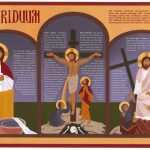
Holy Thursday, Good Friday, Holy Saturday (See Homily for Holy Triduum)


It’s very touchy and impactful.
God bless you father.
Amen