





March 2 Monday: Lk 6:36-38
Today’s Gospel from the Sermon on the Mount calls us to a higher way of living, a way marked by mercy, restraint in judgment, forgiveness, and generosity. In Gospel of Matthew 7:1–5, Jesus says plainly, “Judge not, that you be not judged.”
This does not mean we abandon moral clarity or pretend that right and wrong do not exist. Jesus is warning against something deeper and more subtle, careless, harsh, and self righteous judgment of others.
He condemns the kind of judgment that assumes we know another person’s motives, that quickly labels someone, that reduces a whole human being to one mistake.
Augustine of Hippo explains it beautifully: “What do you want from the Lord? Mercy? Give it, and it shall be given to you. What do you want from the Lord? Forgiveness? Forgive, and you will be forgiven.” The measure we use becomes the measure we receive.
Why should we not judge others?
1) Only God sees the whole truth
Only God reads the heart. Only He knows a person’s past wounds, struggles, fears, pressures, and temptations. What we see is an action. What God sees is the entire story. That is why ultimate judgment belongs to Him alone.
2) We are often prejudiced
Our judgments are shaped by personality, upbringing, culture, past experiences, and personal wounds. We think we are objective, but we rarely are. We often interpret others’ actions through our own insecurities or assumptions.
3) We do not know all the circumstances
A person’s visible failure may be the result of unseen suffering. A harsh word may come from exhaustion. A moral fall may follow a long internal battle we never witnessed. Without knowing the weight of another’s temptation, we cannot measure their responsibility fairly.
4) We share the same weaknesses
Jesus gives the unforgettable image of the man trying to remove a speck from his brother’s eye while a wooden beam is lodged in his own. The exaggeration is almost humorous, but the point is serious. We are often blind to our own faults while magnifying those of others.
Philip Neri once watched a drunk man staggering down the street and said, “There goes Philip, but for the grace of God.” That is Christian humility. Instead of superiority, gratitude. Instead of condemnation, awareness of our dependence on grace.
Judging others harshly hardens the heart. It creates distance. It feeds pride. It quietly says, “I am better.”
But mercy says, “I, too, need grace.”
When we point one finger in accusation, three point back at us. That simple image captures a profound spiritual truth. Every judgment invites self examination.
Life message
Leave final judgment to God.
This does not mean we ignore wrongdoing. It means we respond with truth wrapped in charity. It means we correct gently when necessary. It means we pray before we speak. It means we interpret others’ actions in the most charitable light possible.
A wise rabbinic saying teaches, “He who judges others favorably will be judged favorably by God.” That echoes the teaching of Jesus. The mercy we give becomes the mercy we receive.
In a world quick to criticize and slow to understand, the Christian is called to reflect the patience of God. When we choose mercy over condemnation, we resemble the Father who has been endlessly patient with us. God bless you.
March 3 Tuesday: Mt 23:1-12
This Gospel comes from the tense days of the first Holy Week. It is the third day in Jerusalem. Jesus is no longer speaking in parables to crowds in the countryside. He is confronting the religious leaders publicly. In Gospel of Matthew 23:1–12, and especially in the verses that follow, He pronounces strong words, even “woes,” against the Scribes and Pharisees.
These are not words of hatred. They are words of truth spoken in love. Jesus exposes their failures, not to humiliate them, but to awaken them. He holds up a mirror so they might see themselves as God sees them and change.
Three serious failures Jesus identifies
1) “They do not practice what they teach.”
They teach the Law, but they do not live it. There is a lack of integrity. Their words speak of justice, mercy, and fidelity, but their lives contradict those words. Jesus condemns the gap between preaching and practice.
This is always dangerous in religious life. When faith becomes language without lived commitment, it loses credibility. Hypocrisy does not simply harm the individual, it wounds the community and weakens trust in God.
2) They overburden the people.
The Torah contained 613 commandments. Over time, these were expanded into countless detailed regulations affecting daily life. The intention may have been zeal for God, but the effect was crushing. Instead of helping people draw near to God, they made religion feel like an unbearable weight.
Jesus contrasts this with His own invitation, “My yoke is easy, and my burden light” in Matthew 11:30. True leadership guides and supports. It does not suffocate.
3) They seek honor rather than service.
Jesus points to their love of public recognition. They broaden their phylacteries, lengthen their fringes, seek places of honor, and enjoy titles of respect. The problem is not the objects themselves. The problem is the motive. They use religion for self promotion.
When spiritual life becomes performance, God’s glory is quietly replaced with our own.
The deeper issue
At the heart of Jesus’ criticism is this: they have forgotten that leadership in God’s Kingdom is service.
Immediately after these warnings, Jesus says, “The greatest among you must be your servant.” Authority in the Church is not about prestige. It is about responsibility. Titles are reminders of duty, not badges of superiority.
Life messages
1) The Church must be a servant community.
The Church exists to serve. The hungry must be fed. The ignorant taught. The sick cared for. The lonely consoled. The oppressed defended. Leaders, whether clergy, parents, teachers, or ministry heads, must lead through humility. A true servant leader reflects Christ washing the feet of His disciples.
2) We must live the faith we profess.
We call one another brothers and sisters. We call God our Father. Those words must shape our behavior. Instead of judging the poor, we should serve them. Instead of criticizing people of other races or cultures, we should seek justice and understanding. Instead of ignoring the homeless or marginalized, we should find ways to help directly and structurally.
Faith without action becomes empty speech.
3) We must accept the responsibility of our roles.
Every title carries obligation. Parent, priest, teacher, employer, catechist, Christian. Each one implies service. We are stewards of what we have received. Everything we are and everything we possess is entrusted to us for the glory of God and the good of His children.
Jesus’ words in this passage are strong because love sometimes must be strong. He speaks firmly because He desires conversion. The same warning applies to us. Whenever we seek recognition more than service, whenever we demand from others what we refuse to practice ourselves, whenever we burden instead of bless, we drift from the spirit of Christ.
The remedy is simple, though not easy. Humility. Integrity. Service. When these mark our lives, the light of truth does not condemn us. It confirms that we are walking in the way of the Lord. God bless you.
March 4 Wednesday: St. Casimir: Mt 20:17-28
On July 25 the Church celebrates the feast of St James the Apostle, traditionally called James the Greater. He was the son of Zebedee, a fisherman, and Salome. The Gospels mention that his mother was among the women who followed Jesus and stood near the Cross, see Gospel of Matthew 27:56. James was the brother of John the Apostle.
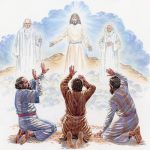
James, John, and Simon Peter formed the inner circle of Jesus’ disciples. They were present at the Transfiguration in Gospel of Matthew 17:1–8, at the raising of Jairus’ daughter in Gospel of Mark 5:37, and during Jesus’ agony in Gethsemane in Gospel of Matthew 26:36–37. Jesus nicknamed James and John “Boanerges,” meaning “sons of thunder,” according to Gospel of Mark 3:17, likely reflecting their fiery temperament and strong personalities.
He is called James the Greater to distinguish him from James the Less, another apostolic figure in the early Church. According to Acts of the Apostles 12:1–3, James the Greater was executed by King Herod Agrippa I, becoming the first of the Twelve Apostles to suffer martyrdom.
The Gospel episode
The Gospel passage often read on his feast, Gospel of Matthew 20:20–28, recounts a revealing moment. James and John, through their mother, ask Jesus for places of honor in His kingdom, one at His right and one at His left. They envision a political, triumphant Messianic reign after the defeat of Roman rule. They seek prominence, authority, and recognition.
The timing is striking. Jesus has just predicted His Passion for the third time. While He speaks of suffering, rejection, and death, they are thinking about rank and power.
Jesus’ response
Jesus does not humiliate them. Instead, He redirects their ambition. He asks if they can drink the cup He is to drink, a biblical image of suffering and sacrifice. Then He teaches the core principle of Christian leadership:
“Whoever wishes to be great among you shall be your servant… just as the Son of Man came not to be served but to serve and to give His life as a ransom for many.”
Greatness in the Kingdom is measured not by status but by service. Authority is defined by self giving love.
Life message
- Leadership in the Church is always service. The Blessed Virgin Mary describes herself as “the servant of the Lord.” The Bishop of Rome bears the ancient title “servant of the servants of God.” Ordained ministry is called ministerial priesthood precisely because it exists to serve the baptized, who share in Christ’s royal priesthood, as seen in Book of Revelation 1:6 and First Letter of Peter 2:5, 9.
- Christian ambition must be purified. It is not wrong to desire greatness. But in Christ’s Kingdom, greatness means humility, sacrifice, and love that seeks the good of others before one’s own recognition.
James began as a young man marked by zeal and ambition. He ended as a martyr who gave his life for Christ. His journey reminds us that grace can transform fiery ambition into courageous witness. True greatness is not found in power, but in faithful, sacrificial service. God bless you.
March 5 Thursday: Lk 16:19-31
The central message of today’s Gospel is a sober warning. To misuse God’s gifts, especially material wealth, in a selfish and indulgent way while ignoring the poor is not a small fault. It is a grave moral failure with eternal consequences. The rich man in the parable is not condemned simply because he was wealthy. He is condemned because he closed his heart. He ignored the Word of God and refused to live by what the Scriptures had already taught about justice, mercy, and care for the needy.
Jesus directs this parable particularly toward the Pharisees, who, as Gospel of Luke 16:14 notes, loved money. He exposes their attachment to wealth and their lack of compassion. At the same time, He challenges a widespread belief of the time, that riches were automatically a sign of God’s favor and poverty a sign of divine punishment. The story overturns that assumption. Earthly prosperity is not proof of holiness, and suffering is not proof of guilt.
The parable, found in Gospel of Luke 16:19–31, unfolds almost like a short drama in two scenes. In the first, we see sharp contrast. A rich man dresses in fine linen and feasts lavishly each day. At his gate lies Lazarus, poor, sick, and hungry, longing for scraps. The tragedy is not that the rich man was cruel in word, but that he was indifferent. Lazarus was at his door, visible, unavoidable. Yet he remained unseen in the rich man’s heart.
In the second scene, the situation is reversed. Lazarus is carried into the bosom of Abraham, a symbol of heavenly consolation. The rich man finds himself in torment. The reversal highlights divine justice. It also reflects the biblical teaching that judgment follows death. The Letter to the Hebrews reminds us that “it is appointed for men to die once, and after that comes judgment,” see Letter to the Hebrews 9:27.
This Gospel carries practical and urgent lessons.
First, every one of us is rich in some way. Wealth is not limited to money. Some are blessed with health, education, influence, time, or talents. The question is not what we have, but what we do with what we have. St John writes clearly, “If anyone has the world’s goods and sees his brother in need, yet closes his heart, how does God’s love abide in him?” see First Letter of John 3:17.
Second, generosity will be the measure of judgment. In Gospel of Matthew 25:31–46, Jesus describes the Last Judgment in terms of concrete acts, feeding the hungry, giving drink to the thirsty, welcoming the stranger, clothing the naked, visiting the sick and imprisoned. The standard is simple and direct, love expressed in action.
The parable of Lazarus and the rich man calls us to examine our consciences. Who is at our gate? Whose suffering have we grown used to seeing without responding? God’s blessings are never meant to stop with us. They are entrusted to us, so that through us they may reach others. God bless you.
March 6 Friday: Mt 21:33-43, 45-46
Proclaimed during the solemn days of Passover in Jerusalem, the parable of the wicked tenants is not just a simple story about farming. It is a powerful parable of judgment. In it, Jesus confronts the religious leaders, especially the Pharisees and chief priests, for failing to bear the fruits of repentance and renewal that God expected from those entrusted with His people. The imagery echoes the prophet’s lament in Book of Isaiah 5:1–7, where God asks, “I expected my vineyard to yield good grapes, why did it yield wild grapes?” The vineyard is Israel, lovingly planted and carefully tended, yet unfaithful.
In Gospel of Matthew 21:33–46, Jesus presents the story in allegorical form. The landowner represents God. The vineyard stands for His covenant people. The servants sent to collect the fruit symbolize the prophets of the Old Testament. Their mission was to call the people back to justice, fidelity, and righteousness. Instead, many were rejected, beaten, and even killed. The history of Israel bears witness to this tragic pattern of resistance to God’s messengers.
Finally, the landowner sends his son. This is the decisive moment. The son clearly represents Christ Himself. Rather than receiving him with respect, the tenants seize and kill him, hoping to claim the inheritance. In this, Jesus foreshadows His own rejection and crucifixion. The parable makes clear that persistent unfaithfulness has consequences. The vineyard will be entrusted to others who will produce its fruits. Early Christians understood this as the extension of God’s covenant to include Gentile believers along with faithful Jewish converts, forming the renewed People of God.
The warning, however, is not directed only to first century leaders. It reaches us. If we refuse conversion, if we remain spiritually barren, we too risk losing the privileges entrusted to us. The call is always to bear fruit worthy of our calling.
First, we are invited to be fruitful in the vineyard of the Church. Christ has not left us without help. Through Baptism we receive divine life. In the Scriptures we learn God’s will. In the Eucharist we are nourished. In Reconciliation we are restored. In Confirmation we are strengthened. In Matrimony and Holy Orders, love and service are sanctified. In the Anointing of the Sick, grace sustains us in suffering. These are not decorations of faith but living sources of grace meant to produce visible fruits, charity, justice, mercy, and fidelity.
Second, we are called to bear fruit in our families. The Christian home is a small vineyard. When family members share time, forgive faults, serve one another, honor parents, guide children, and pray together, good fruit appears. Patience replaces anger. Generosity replaces selfishness. Encouragement replaces criticism. In these ordinary acts, the Kingdom quietly grows.
The parable reminds us that belonging to God’s vineyard is a gift, but fruitfulness is our responsibility. The Lord still looks for good grapes. He still desires lives shaped by faith and love. God bless you.
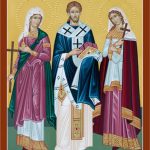
March 7 Saturday: St. Perpetua and St. Felicity, Martyrs: Lk 15:1-3.11-32
Chapter 15 of Gospel of Luke is often described as the heart of the Gospel, because it reveals with remarkable clarity the face of our Heavenly Father. The entire chapter can be seen as one great parable in three movements, the lost sheep, the lost coin, and the lost son. Each image unfolds the same truth. God does not wait passively. He searches, He longs, He rejoices. When sinners return with sincere repentance and a desire to change, He forgives without hesitation.
The parable of the lost son, found in Gospel of Luke 15:11–32, penetrates deeply into the drama of sin and mercy. It is a story of freedom misused, of dignity lost, and of love that refuses to give up.
The younger son demands his inheritance while his father is still alive. In that culture, this request is more than impatience, it is a rejection. It is as though he were saying, I prefer your possessions to your presence. The father, however, does not argue. He respects his son’s freedom and lets him go.
In a distant land the son squanders everything. The Gospel describes a life of reckless living that ends in misery. When famine strikes, he is reduced to feeding pigs, an unclean animal according to Book of Leviticus 11:7. For a Jewish listener, this detail underlines the depth of his fall. Sin always promises freedom, but it often leads to humiliation and emptiness.
Then comes the turning point. The text says he “came to himself.” He recognizes his condition and remembers his father’s goodness. Repentance begins with honest self knowledge. He decides to return, not claiming rights, but asking for mercy, willing to be treated as a servant.
The most moving moment follows. While he is still far off, the father sees him, runs to him, embraces him, and kisses him. In the ancient world, a dignified patriarch did not run. Yet love moves him beyond convention. Before the son can finish his prepared speech, the father restores him fully, robe, ring, sandals, and a feast. The fatted calf is killed, a sign of joy and reconciliation. The son who was lost is found. The one who was dead is alive again.
The parable also speaks through the older son, who struggles with resentment. He remained at home, yet his heart was distant. His anger reveals another danger, outward obedience without interior compassion. The father goes out to him as well. Mercy is offered to both.
Several lessons emerge.
First, we are invited to sincere self examination. If we are living far from God, His mercy is already seeking us. No failure is greater than His love. The Father’s embrace is always possible.
Second, forgiveness received must become forgiveness given. If we cling to grudges like the older son, we close ourselves to the joy of reconciliation. We must ask for the grace to release those who have hurt us.
Third, confession is not humiliation but restoration. To acknowledge sin honestly is the doorway to peace. When we recognize our need for God’s mercy and return with humility, we rediscover our true identity as beloved sons and daughters.
Luke 15 assures us that repentance does not end in shame. It ends in celebration. God bless you.