




![THE MOST HOLY BODY AND BLOOD OF CHRIST [Yr. A] “CORPUS CHRISTI” (June 7, 2026) Dt 8:2-3,14b-16a; I Cor 10:16-17; Jn 6:51-58) By: Rev. Fr. Clifford Atta Anim.](https://frcliffordhomilies.com/wp-content/uploads/2026/06/IMG_3230.jpeg)
Solemnity of the Most Holy Body and Blood of Christ (Corpus Christi)
Homily: The Living Manna and the Cosmic Sacrifice
In the profound mystery of His saving passion, Our Lord Jesus Christ bequeathed to His Church two final, incomparable treasures. On Holy Thursday, from the upper room, He gave us the Holy Eucharist to be our supernatural sustenance. Then, on Good Friday, from the heights of the Cross, He entrusted His own Mother, the Blessed Virgin Mary, to be our spiritual Mother. Today, as we celebrate the Solemnity of Corpus Christi, we gather not merely to remember a past event, but to celebrate the abiding, dynamic reality of Emmanuel “God-with-us”. This feast calls us into collective adoration and deepens our awe for the Infinite Value of the Sacrament, wherein the Creator of the universe humbles Himself to be received and adored by His creatures.
The Scriptural Foundation of the Real Presence
Our unwavering Catholic faith in the Real Presence of Jesus Christ in the Holy Eucharist is not a medieval invention or a poetic metaphor; it is anchored immutably in Sacred Scripture.
1. The Prophetic Promise
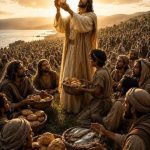
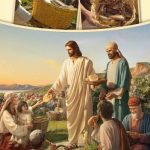
In the sixth chapter of the Gospel of John, immediately after miraculously multiplying the loaves and fishes for the five thousand, Christ shifts from physical nourishment to spiritual reality. He declares explicitly: “Amen, amen, I say to you, unless you eat the flesh of the Son of Man and drink his blood, you do not have life within you” (John 6:53).
Despite the murmurs of disbelief from His followers, Jesus did not soften His language or explain it away as a figure of speech. He insisted on its literal reality, willing to lose disciples rather than compromise this foundational truth.
2. The Institution and Command
What Christ promised by the Sea of Galilee, He fulfilled in Jerusalem. During the Last Supper, taking bread and wine, He altered their ontological reality by His divine word: “This is my body… This is my blood” (Matthew 26:26-28; Luke 22:19-20). He did not say “this represents” or “this is a symbol of.”
Furthermore, He gave His Church a perpetual mandate: “Do this in memory of me.” This anamnesis (memorial) is not a mere psychological recollection, but a liturgical action that makes the past saving event dynamically present here and now.
3. The Divine Prerogative
When human intellect stumbles at how bread and wine can become God, we recall the angelic declaration to the Blessed Virgin at the Annunciation: “Nothing will be impossible for God” (Luke 1:37). The same divine power that spoke the universe into existence from nothing, and that knit the Incarnate Word in the womb of the Virgin, acts upon our altars.
The Theology of Transubstantiation
To safeguard this mystery from distortion, Catholic theology employs the precise philosophical framework of Transubstantiation, a term definitively synthesized by Saint Thomas Aquinas.
Through the invocation of the Holy Spirit (the Epiklesis) and the pronouncement of the words of consecration by the validly ordained priest who acts in persona Christi Capitis (in the person of Christ the Head) a complete metaphysical change occurs.
• The Substance: The underlying, essential reality of what the bread and wine actually are is entirely converted into the substance of the risen, glorified Body, Blood, Soul, and Divinity of Jesus Christ.
• The Accidents: The outward physical properties, the appearance, color, texture, shape, and taste remain those of bread and wine.
Thus, what our physical eyes perceive as mere bread, the eyes of faith recognize as the Sovereign King of Glory.
Echoes of the Eucharist in Sacred Scripture
The liturgy of the Word provides a rich tapestry showing how God prepared His people for this mystery throughout salvation history.
• Deuteronomy 8:2-3, 14-16: Moses admonishes the Israelites to “remember and not forget” the miraculous manna provided in the arid desert. This supernatural bread from heaven sustained their physical lives in transit to the Promised Land. Yet, as Jesus notes, that manna was only a shadow: “Your ancestors ate manna in the desert, but they died” (John 6:49). The Eucharist is the definitive fulfillment of the manna, sustaining our supernatural life as we journey through the desert of this world toward the celestial Canaan.
• 1 Corinthians 10:16-17: Saint Paul addresses the ecclesial reality of the Sacrament. He reminds the Church at Corinth that the chalice of blessing and the broken bread are a true “koinonia” a real participation in the Body and Blood of Christ. Because there is one Bread, we, though many, become one single mystical body. The Eucharist builds the Church.
• John 6:51: In the Gospel, Jesus bridges the Old and New Covenants perfectly: “I am the living bread that came down from heaven; whoever eats this bread will live forever; and the bread that I will give is my flesh for the life of the world.”
Sacrament and Sacrifice: The Twofold Reality
The Holy Eucharist cannot be reduced to a community meal, nor can it be viewed in isolation from the Cross. It is simultaneously a Sacramental Banquet and a True Sacrifice.
The Sacramental Banquet
As a Sacrament, it is an efficacious visible sign instituted by Christ to confer sanctifying grace. Under the form of a meal, it meets our psychological and spiritual need for nourishment. Just as physical food sustains, repairs, and delights the biological body, the Holy Eucharist strengthens supernatural charity, forgives venial sins, and protects the soul from mortal fracture.
The Propitiatory Sacrifice
As a Sacrifice, the Mass is the unbloody re-presentation (making present again) of the singular, definitive Sacrifice of Calvary. The Church does not crucify Christ again; rather, the time-transcending reality of Christ’s self-offering on the Cross, completed by His glorious Resurrection, is made present on our altars. We offer this spotless Victim to God the Father in atonement for our sins, making it the highest form of worship humanly and divinely possible.
Living the Eucharistic Life
This profound mystery demands an equally profound conversion of life, manifesting in three distinct ways:
1. Cultivating Eucharistic Reverence
We must guard against the danger of familiarity breeding indifference. To receive the King of Kings, we must ensure our souls are a fit temple. This requires regular recourse to the Sacrament of Reconciliation to cleanse us of grave sin, keeping the prescribed eucharistic fast, maintaining a posture of exterior and interior reverence, and spending deliberate moments of silent thanksgiving after Communion, adoring the Lord who now dwells within us.
2. Becoming Christ-Bearers (Christophoroi)
When we leave the church doors, we become living tabernacles. Just as the Blessed Virgin Mary carried the Incarnate Word within her womb to the house of Elizabeth, we are called to convey Christ into our homes, neighborhoods, and marketplaces. We must manifest His presence through concrete acts of radical charity, unconditional mercy, patient forgiveness, and humble, sacrificial service to the poor and vulnerable.
3. Offering Our Lives on the Altar
At every Mass, when the bread and wine are brought forward in the offertory, we must spiritually place ourselves upon that paten and inside that chalice. Offer up your daily labors, your hidden sufferings, your anxieties, your triumphs, and your family needs. By joining our imperfect human offerings to the perfect, infinite sacrifice of Jesus, our ordinary lives are elevated, sanctified, and made pleasing to God the Father.
May our celebration today enkindle in our hearts a burning zeal for the Holy Eucharist, that we may cry out with the disciples on the road to Emmaus: Lord, stay with us! God bless you.
References and Sources
• Sacred Scripture: John Chapter 6 (The Bread of Life Discourse); Matthew 26:26-28; Luke 22:19-20 (The Institution Narratives); Deuteronomy 8:2-3, 14-16; 1 Corinthians 10:16-17.
• Catechism of the Catholic Church (CCC): Paragraphs 1373–1381 (The Real Presence); 1362–1372 (The Eucharistic Sacrifice); 1391–1392 (The Fruits of Holy Communion).
• Council of Trent (1551): Decree on the Most Holy Sacrament of the Eucharist (DS 1635-1661) on Transubstantiation and the Real Presence.
• Saint Thomas Aquinas: Summa Theologiae, Tertia Pars, Questions 75-77 (Philosophical formulation of substance and accidents).
• Pope John Paul II: Encyclical Letter Ecclesia de Eucharistia (2003), on the relationship between the Church and the Eucharist.
• Pope Paul VI: Encyclical Letter Mysterium Fidei (1965), on the doctrine and worship of the Holy Eucharist.

Thank you very much father.
Your reflection is quite nourishing.
God bless you
Amen and may God bless you
Thank you very much Fr 😊.
God’s bless you 🙏
Amen