





Today’s liturgy reveals one of the most beautiful attributes of God, His infinite patience united with His boundless mercy. We often expect God to act swiftly against evil, to remove sinners from our midst, and to establish justice immediately. Yet the Scriptures present a God whose justice is never separated from His mercy. Rather than rushing to condemn, He patiently waits, offering every sinner the opportunity to repent and return to Him. The readings challenge us to imitate this divine patience. Instead of becoming harsh judges of others, we are invited to become instruments of God’s mercy, recognizing that every person is capable of conversion through the grace of the Holy Spirit.
The first reading from the Book of Wisdom presents a remarkable portrait of God. Unlike the image of a harsh ruler who delights in punishment, God reveals Himself as both all-powerful and infinitely compassionate. His strength is not expressed through violence or vengeance but through mercy, patience, and forgiveness. The inspired author reminds us that true power is demonstrated by self-restraint. Because God is sovereign over all creation, He has no need to prove His authority by destroying sinners. Instead, He governs the world with justice tempered by compassion, always leaving room for repentance. This divine patience becomes a lesson for God’s people, teaching us that those who are righteous must also be kind, merciful, and slow to condemn.
Throughout the history of salvation, we repeatedly witness this patience of God. He spared Noah and his family while giving humanity ample opportunity to repent before the flood. He endured Israel’s repeated infidelities during their journey through the wilderness, continually calling them back through Moses and the prophets. King David, after committing adultery and arranging the death of Uriah, found forgiveness because he sincerely repented. The people of Nineveh, although notorious for their wickedness, escaped destruction when they listened to Jonah’s preaching and turned away from their sins. Even Saint Peter reminds us that “the Lord is not slow about His promise as some think of slowness, but is patient with you, not wishing that any should perish but that all should come to repentance” (2 Peter 3:9). Every page of Scripture proclaims a God who desires conversion rather than condemnation.
In the second reading, Saint Paul directs our attention to another expression of God’s mercy, the presence of the Holy Spirit within believers. Human weakness often leaves us uncertain about how to pray, how to persevere, or even how to remain faithful during moments of suffering and temptation. Yet we are never abandoned. The Holy Spirit Himself intercedes for us with sighs too deep for words, presenting our deepest needs before the Father. This comforting truth reminds us that Christian life is never lived by our own strength alone. Even when we fail, become discouraged, or struggle with recurring sins, the Spirit patiently accompanies us, strengthening us interiorly and gradually transforming us into the likeness of Christ. If God Himself is patient with our weaknesses, we must learn to exercise the same patience toward others.
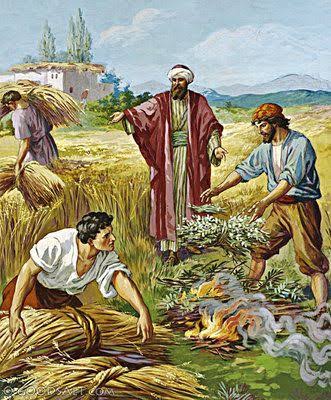
The Gospel presents the familiar Parable of the Wheat and the Weeds. A farmer sows good seed in his field, but during the night an enemy secretly scatters weeds among the wheat. When both begin to grow together, the servants immediately want to uproot the weeds. Surprisingly, the master refuses. He knows that pulling up the weeds too early may also destroy the wheat. Instead, he instructs them to allow both to grow together until harvest, when the separation can safely be made.
This parable teaches profound lessons about the Kingdom of God. The field represents the world in which both holiness and sin exist side by side. The good seed symbolizes those who strive to live according to God’s will, while the weeds represent those who resist His grace. The enemy is Satan, whose work is always to sow confusion, division, and sin among God’s people. Yet the central figure in the parable is the patient landowner, who represents God Himself. His patience should never be mistaken for indifference. God does not ignore evil, nor does He approve of sin. Rather, He delays judgment because He desires that sinners have sufficient time to repent. His mercy creates space for conversion before the final judgment arrives.
This divine patience is clearly visible in the ministry of Jesus. He welcomed tax collectors, sinners, and those rejected by society. Matthew the tax collector became an Apostle. Zacchaeus, whose life had been marked by dishonesty, encountered Christ and immediately resolved to restore what he had stolen and to give generously to the poor. The woman caught in adultery received forgiveness together with the command to “go and sin no more.” The Good Thief, who had lived a sinful life, received Paradise because he repented even in the final moments before death. Perhaps the greatest example is Saint Paul himself. Once a fierce persecutor of the Church, he became its greatest missionary after encountering the risen Christ. These examples remind us that no sinner is beyond the reach of God’s transforming grace.
The parable also contains an important warning against becoming self-appointed judges of others. The servants believed they could easily distinguish wheat from weeds, but the master knew otherwise. During the early stages of growth, wheat and darnel closely resemble one another. In much the same way, human beings cannot fully know the intentions, struggles, wounds, or future conversion of another person’s heart. Only God sees the whole picture. We may identify sinful actions, but we should never presume to determine the eternal destiny of another person. Jesus Himself warned, “Do not judge, so that you may not be judged” (Matthew 7:1). This does not mean that Christians should tolerate sin or remain silent before injustice. Rather, we are called to correct others with humility, charity, and hope, never with arrogance or condemnation.
The history of the Church itself bears witness to God’s extraordinary ability to transform what once appeared to be weeds into fruitful wheat. Saint Augustine spent years living far from God before becoming one of the greatest Doctors of the Church. Saint Mary Magdalene, once burdened by her past, became the first witness of the Resurrection. Saint Ignatius of Loyola experienced conversion after a life centered on worldly ambition and became the founder of the Society of Jesus. Their lives remind us never to give up on anyone, for grace can accomplish what human effort alone never could.
Today’s Gospel also invites us to examine our own hearts honestly. Before identifying the weeds in others, we must ask whether traces of those weeds still exist within ourselves. Pride, jealousy, resentment, greed, impatience, dishonesty, gossip, selfishness, and unforgiveness can quietly grow alongside the wheat in our own lives. The Christian journey is therefore one of continual conversion. Every examination of conscience, every celebration of the Sacrament of Reconciliation, every worthy reception of the Holy Eucharist, and every sincere act of repentance allows God to remove these spiritual weeds gradually and replace them with the fruits of the Holy Spirit: love, joy, peace, patience, kindness, generosity, faithfulness, gentleness, and self-control.
As members of Christ’s Church, we are called to cooperate with God’s patient work of salvation. This means refusing to write people off because of their past. Parents should never lose hope for children who have wandered from the faith. Husbands and wives should persevere in prayer for one another. Priests and catechists should continue preaching the Gospel even when conversion appears slow. Every Christian is called to become an instrument through whom God reaches those who have strayed. Often, a word of encouragement, an act of kindness, sincere forgiveness, patient correction, or a life of authentic holiness can become the very means through which another person returns to God.
The Eucharist we celebrate is itself a powerful sign of God’s patience. Each time we gather around the altar, Christ welcomes saints and sinners alike, continually inviting us to deeper conversion. He nourishes us with His Word and with His Body and Blood so that we may become more like Him. Having received such mercy ourselves, we cannot refuse mercy to others. As Pope Francis frequently reminds the Church, God never tires of forgiving us; it is we who grow tired of asking for His forgiveness.
May today’s celebration inspire us to become good wheat in the Lord’s field by growing daily in holiness, humility, and love. Let us entrust judgment to God alone, whose wisdom far surpasses our own. Instead of uprooting others through criticism or condemnation, may we patiently sow seeds of faith, hope, and charity, trusting that the Lord who began His good work in every human heart will bring it to completion in His perfect time. God bless you.

Thank you very much Fr. God bless you 🙏
Amen