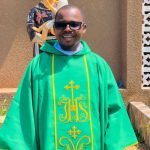



![ADVENT WEEK IV [YEAR A] (December 21, 2025) Is 7:10-14; Rom 1:1-7; Mt 1:18-24. By: Rev. Fr. Clifford Atta Anim.](https://frcliffordhomilies.com/wp-content/uploads/2025/12/IMG_1957.jpeg)
St. Joseph and the Obedience That Welcomes God
St. Joseph stands quietly at the center of today’s celebration, yet his silent presence speaks powerfully. In Matthew’s Gospel, Joseph teaches us what loving and responsive obedience to God looks like in real life. He does not speak a single word in Scripture, but his actions reveal a heart that listens, trusts, and obeys. This obedience becomes the thread that binds all of today’s readings together, especially as we reflect on the mystery of the Virgin Birth and God’s plan unfolding in ways human reason alone could never design.
In the first reading, the prophet Isaiah addresses King Ahaz at a moment of fear and political instability. God offers a sign, not one demanded by human logic, but one rooted in divine promise, “The virgin shall conceive and bear a son, and shall name him Emmanuel” (Isaiah 7:14). This prophecy speaks first to Isaiah’s own time, yet it stretches forward toward a deeper fulfillment. Matthew recognizes in this sign one of the clearest messianic prophecies, pointing to a future king from the line of David whose origin would be entirely God’s doing. Scripture repeatedly shows that God’s greatest works are often born in human weakness, Isaac from a barren Sarah (Genesis 21), Samuel from a grieving Hannah (1 Samuel 1), and now the Messiah from a virgin overshadowed by the Spirit.
The Responsorial Psalm invites us to respond personally, “Let the Lord enter; he is King of Glory” (Psalm 24). This is not just a liturgical refrain but a spiritual challenge. God does not force his way into any heart. He waits for permission. To let the Lord enter means surrendering control, allowing him to reshape our lives according to his holiness. Throughout salvation history, holiness begins when someone opens the door, Abraham leaving his land (Genesis 12), Mary saying yes (Luke 1:38), and Joseph choosing obedience over fear.
In the second reading, Saint Paul situates Jesus firmly within God’s historical plan. Jesus is “descended from David according to the flesh” and revealed as Son of God in power through the Resurrection (Romans 1:3–4). Paul reminds us that the Incarnation is not a myth or symbol but a real event rooted in history, fulfilled in Christ, and confirmed by Easter. The child born in Bethlehem is the same Lord raised in glory. Obedience leads to glory, just as the Cross leads to Resurrection.
The Gospel places Joseph at the heart of this mystery. Faced with Mary’s unexpected pregnancy, Joseph plans to act quietly and justly. Then God intervenes. In a dream, Joseph is asked to trust what he cannot fully understand. He obeys without delay. By taking Mary into his home and naming the child Jesus, Joseph legally accepts him as his son. This act gives Jesus his rightful place in the line of David and allows the prophecy to be fulfilled. Joseph is not the biological father, yet he is truly the father who protects, provides, and loves. Scripture gives us other moments where God entrusts his plan to human obedience, Moses before Pharaoh (Exodus 3), Ruth choosing fidelity (Ruth 1), and the apostles leaving their nets (Matthew 4:20). Joseph stands among these faithful servants.
Life message.
First, like Joseph, we are called to trust God and remain faithful even when life is uncertain. Financial stress, family tension, illness, and insecurity can easily overwhelm us. Joseph teaches us that faith does not remove difficulty, but it gives direction. Instead of relying only on our own plans, we are invited to pray sincerely, listen attentively to God’s word, and act with trust. “Blessed is the man who trusts in the Lord” (Jeremiah 17:7).
Second, we are invited to experience Emmanuel, God with us, and allow that presence to change the world around us. Christmas proclaims that God still desires to dwell in human hearts. When Christ enters our lives, he transforms how we love, forgive, and serve. Like Zacchaeus after welcoming Jesus (Luke 19), or the shepherds who returned glorifying God (Luke 2), an encounter with Emmanuel always leads to visible change.
Third, we are challenged to ask ourselves what gift we are bringing to the Child Jesus. Beyond decorations and celebrations, the gift Christ desires most is a heart shaped by love. Scripture is clear, “My son, give me your heart” (Proverbs 23:26). A heart filled with mercy, compassion, forgiveness, and concern for others is the true Christmas offering.
Finally, we are called to become Christmas gifts to others. Joseph believed in God’s dream for Mary and for the child entrusted to him. In the same way, we are invited to believe in the good dreams of those around us, our spouses, children, parents, friends, and even leaders. Encouraging faith, offering support, and helping others grow may be the most powerful gift we give this Christmas.
As we approach the celebration of the Lord’s birth, may St. Joseph teach us how to obey quietly, trust deeply, and welcome Emmanuel fully into our lives. God bless you.
References and Sources
Sacred Scripture:
Isaiah 7:10–14
Psalm 24
Romans 1:1–7
Matthew 1:18–25
Genesis 12, 21
1 Samuel 1
Luke 1:26–38; Luke 2
Jeremiah 17:7
Proverbs 23:26
Catechism of the Catholic Church, nn. 437–438, 456–463, 497
Second Vatican Council, Lumen Gentium, n. 56
St. John Paul II, Redemptoris Custos
St. Augustine, Sermons on the Incarnation