




April 20-25 April 20 Monday: Jn 6:22-29
Gospel Reflection: The Bread of Life Discourse
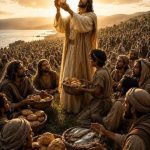
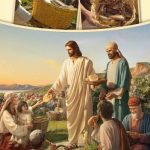
Today’s Gospel, from Gospel of John (Jn 6:22–29), introduces Jesus’ great teaching on the Holy Eucharist. The scene unfolds as the crowd, having experienced the miracle of the multiplication of loaves, searches for Jesus and finds Him in Capernaum.
Jesus immediately challenges their motivation. He tells them plainly that they are seeking Him not because they understood the sign, but because they had eaten their fill. He then redirects their desire:
“Do not work for food that perishes, but for the food that endures for eternal life” (Jn 6:27).
This shifts the conversation from material needs to spiritual hunger.
Jesus Clarifies the “Work of God”
The people ask what they must do to obtain this lasting food. Since many Jews believed that fidelity to the Law (Torah) was the path to life, they likely expected Jesus to emphasize commandments or religious duties.
But Jesus gives a surprising answer:
“This is the work of God, that you believe in Him whom He has sent” (Jn 6:29).
Faith in Jesus is not just one requirement among many, it is the foundation of eternal life. It is through faith that we receive the true nourishment that comes from God.
The Deeper Meaning
Jesus gradually reveals that He Himself is this heavenly food.
- Ordinary food sustains the body for a time.
- But Christ, the Bread of Life, nourishes the soul for eternity (cf. Jn 6:35).
This teaching reaches its fullness in the gift of the Holy Eucharist, where Jesus gives not merely something, but Himself as food for our spiritual life.
Life Message
We must seek the food that truly satisfies.
Much of our daily effort is spent on what is temporary, food, success, security, comfort. These are necessary, but they are not enough.
Jesus invites us to go deeper:
- to nourish our souls through faith in Him,
- to receive Him in the Holy Eucharist,
- and to encounter Him in the Word of God (cf. Catechism of the Catholic Church 1324–1327).
This requires preparation, repentance, and reverence. When we approach Him with sincere hearts, He becomes our strength, our peace, and our life.
Conclusion
The crowd came looking for bread.
Jesus offered them something far greater, Himself.
The same invitation is given to us today.
Not just to believe in Him, but to be nourished by Him. God bless you.
References
- Gospel of John 6:22–29, 35
- Catechism of the Catholic Church 1324–1327
April 21 Tuesday: St. Anselem, Bishop, Doctor of the Church:Jn 6:30-35
Gospel Reflection: Jesus, the True Bread from Heaven
Today’s Gospel, from Gospel of John (Jn 6:30–35), continues the Bread of Life discourse. After hearing Jesus’ claims, the crowd demands a sign. They recall how Moses gave their ancestors manna in the desert, a sign they considered proof of God’s presence (cf. Ex 16:4).
According to Jewish expectation, the Messiah would repeat this miracle. Some even believed that the prophet Jeremiah would return to reveal the hidden Ark of the Covenant containing the manna.
Jesus’ Revelation
Jesus corrects their understanding. He tells them that it was not Moses who gave the manna, but God the Father. More importantly, He declares that the manna was not the ultimate gift, it was only a preparation.
Then comes the heart of His teaching:
“I am the bread of life; whoever comes to me will never hunger, and whoever believes in me will never thirst” (Jn 6:35).
Here, Jesus does something radical. He does not just give bread, He becomes the Bread.
- Moses gave food that sustained physical life for a time.
- Jesus gives Himself as food that grants eternal life.
The manna in the desert was a sign, a foreshadowing. Jesus is the fulfillment.
The Deeper Meaning
By using the language of hunger and thirst, Jesus speaks to the deepest human longings:
- the desire for meaning,
- the search for truth,
- the hunger for love, peace, and fulfillment.
Only Christ can truly satisfy these desires. As later reflected in the Catechism of the Catholic Church, the Eucharist is “the source and summit of the Christian life” (CCC 1324), because in it we receive Christ Himself.
Life Message
1. We are invited to be nourished by Christ.
Jesus continues to fulfill His promise by feeding us with His Body and Blood in the Holy Eucharist. This is our true spiritual nourishment, sustaining us for eternal life.
2. Faith is essential.
To receive this Bread fully, we must believe in Him, trust in Him, and live according to His Word.
3. We must become bearers of Christ.
Having received Him, we are called to carry Him into our daily lives, into our homes, workplaces, and communities, radiating His love, mercy, and compassion.
Conclusion
The people asked for a sign.
Jesus gave them Himself.
The same gift is offered to us today.
Not just bread for the body, but life for the soul.
Let us come to Him, believe in Him, and be nourished by Him. God bless you.
References
- Gospel of John 6:30–35
- Book of Exodus 16:4
- Catechism of the Catholic Church 1324
April 22 Wednesday: Jn 6:35-40
Gospel Reflection: Jesus, the Bread of Life
In today’s Gospel, from Gospel of John (Jn 6:35–40), Jesus repeats and deepens His powerful claim:
“I am the Bread of Life.”
He draws a clear parallel with the manna in the desert. Just as God fed His people physically through manna (cf. Book of Exodus 16), He now feeds His people spiritually by giving them His own Son. But this time, the gift is far greater. It is not just food for the body, but nourishment for the soul.
This spiritual life is what the Church calls Sanctifying Grace, our living and life-giving relationship with God the Father, through Jesus Christ in the Holy Spirit (cf. Catechism of the Catholic Church 1997).
The Three Claims of Jesus
1. Jesus is our spiritual Food.
He offers Himself so that God’s very life may dwell within us. In the Eucharist, we do not receive something, we receive Someone.
2. Jesus promises unbroken friendship with God.
Those who believe in Him are drawn into a living relationship with the Father, a relationship that gives meaning, direction, and strength to life.
3. Jesus promises Resurrection and Eternal Life.
Faith in Him leads not only to spiritual fulfillment now, but also to a share in His Resurrection and everlasting life (cf. Jn 6:40).
Life Messages
1. We are called to live a dynamic spiritual life.
Our faith must be alive and active, nourished especially through the Holy Eucharist, where we receive the grace that strengthens our union with God.
2. We must guard our friendship with Christ.
This friendship is preserved by striving to live holy lives, turning away from sin, and seeking reconciliation when we fall.
3. We are invited to live in the joy of the Resurrection.
When we recognize Christ’s presence within us and around us, our lives are filled with hope, even in difficult moments.
4. Only God can satisfy the human heart.
No achievement, possession, or relationship can fully satisfy our deepest longings. Only Christ, the Bread of Life, can do that.
Conclusion
The hunger of the human heart is real.
But so is the answer.
Jesus does not simply point the way,
He becomes the nourishment.
Let us come to Him with faith, receive Him with reverence, and live in Him with joy. God bless you.
References
- Gospel of John 6:35–40
- Book of Exodus 16
- Catechism of the Catholic Church 1997
April 23 Thursday: St. George, Martyr; St Adalbert, Bishop & Martyr:Jn 6:44-51
Gospel Reflection: Drawn by the Father to the Bread of Life
Today’s Gospel, from Gospel of John (Jn 6:44–51), continues Jesus’ teaching on the Bread of Life. Here, Jesus reveals something very deep about faith: no one can come to Him unless the Father draws that person.
Jesus declares that He has come from Heaven and has seen the Father. Therefore, whoever listens to Him is truly hearing the voice of God. Faith is not just a human effort, it is first a gift from God, made possible through the action of the Holy Spirit.
This truth is clearly taught by the Church in Dei Verbum (no. 5): before we can believe, God gives us grace, moves our hearts, opens our minds, and enables us to accept the truth.
Jesus’ Teaching
Jesus makes three important points:
1. Faith begins with God’s initiative.
We come to Jesus not by our own strength alone, but because the Father draws us through the Holy Spirit.
2. True disciples are taught by God.
Those who listen, learn, and respond become disciples, people who are shaped from within by God’s grace.
3. Jesus gives Himself as the Bread of Life.
He declares:
“The bread that I will give for the life of the world is my flesh” (Jn 6:51).
This points directly to the Holy Eucharist, where Jesus gives His Body, Blood, Soul, and Divinity as nourishment for eternal life.
The Meaning of Eternal Life
Eternal life is not just life without end.
It is a life of communion, a living relationship of love, fellowship, and union with God that begins now and reaches its fullness in Heaven (cf. Catechism of the Catholic Church 1324).
Life Message
Holy Communion is a sacred banquet where Christ gives Himself to us.
Every time we receive the Eucharist, we receive the Risen Lord Himself, not a symbol, but a real and living presence.
Therefore, we are called to approach this great mystery:
- with a repentant heart,
- with proper preparation,
- with reverence and awe,
- and with grateful joy.
Conclusion
Faith begins with God, is nourished by Christ, and is fulfilled in communion with Him.
The Father draws us.
The Son feeds us.
The Holy Spirit transforms us.
Let us respond generously to this invitation and be nourished by the Bread of Life. God bless you.
References
- Gospel of John 6:44–51
- Dei Verbum 5
- Catechism of the Catholic Church 1324
April 24 Friday: St. Fidelis of Sigmaringen, Priest, Martyr: Jn 6:52-59
Gospel Reflection: Jesus the Bread of Life
In today’s Gospel, Jesus says something that shocked the people. He told them that they must eat His Body and drink His Blood to have eternal life.
To the Jews, this sounded very strange and even wrong, because their law forbade anything like that. But Jesus was not speaking about ordinary food. He was speaking about the Holy Eucharist, where He gives Himself to us as spiritual food.
Jesus is teaching us something very important:
- Just as food keeps our bodies alive,
- The Eucharist keeps our souls alive.
Jesus is not just giving us something, He is giving us Himself.
What Jesus is Teaching Us
- The Eucharist is real
When we receive Holy Communion, we are not receiving a symbol. We are receiving Jesus Himself, Body and Blood. - We need the Eucharist to grow spiritually
Without spiritual food, our faith becomes weak. - Receiving Jesus unites us with Him
When we receive Him, we carry Jesus within us.
Life Message for Us
- When you go for Communion, don’t go casually.
Go with faith, reverence, and a clean heart. - Remember: after receiving Jesus, you become a living tabernacle.
That means:
- Speak like Jesus
- Act like Jesus
- Love like Jesus
- Let people see Jesus in you, in your words, your behavior, and how you treat others.
Simple Line to Remember
“If we receive Jesus in the Eucharist, we must live like Jesus in the world.” God Bless You.
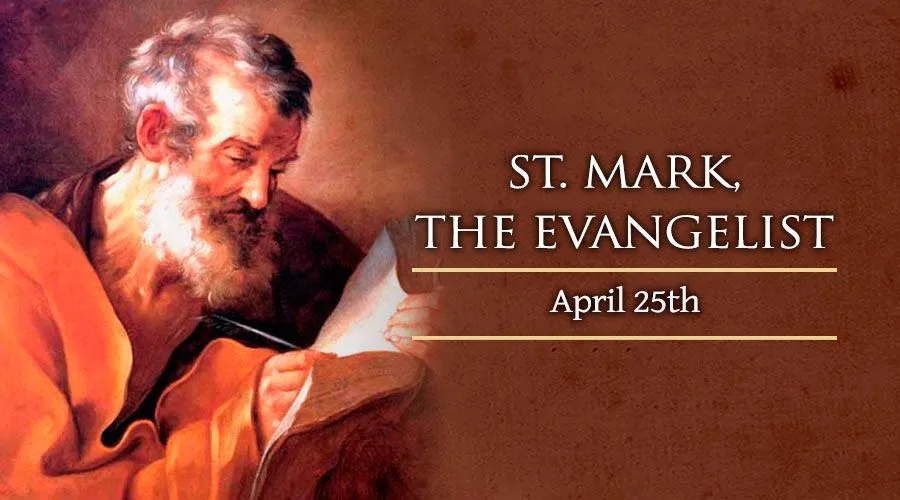
April 25 Saturday: St. Mark, Evangelist:Mk 16:15-20
St. Mark and Our Mission as Christians
Saint Mark is one of the four Gospel writers. Most of what we know about him comes from the Bible, especially the Acts of the Apostles.
- His mother had a house where early Christians gathered.
- Saint Peter was very close to him and even called him “my son.”
- He travelled with Saint Paul and Saint Barnabas on a missionary journey.
At one point, Mark left the mission early, and Paul was not happy about it. But later, they reconciled. This shows us something important: failure is not the end, God can still use you.
About the Gospel of Mark
The Gospel of Mark is:
- The shortest Gospel
- Likely the earliest written
- Written mainly for Gentile Christians in Rome
Mark presents Jesus in a powerful way:
- Jesus is the Son of God
- Yet He is rejected, suffers, and is crucified
This is the “shock” of the Gospel:
The Savior of the world is not a powerful king, but a suffering servant.
Life Lessons for Us
1. Every Christian is a missionary
Jesus tells us in Gospel of Mark:
“Go into the whole world and proclaim the Gospel.”
This is not only for priests or pastors.
It is for everyone.
- In school
- At home
- With friends
You are called to share Jesus.
2. Preaching vs Proclaiming
- We preach with words
- We proclaim with our lives
People may not listen to what you say,
but they will always watch how you live.
3. God works through imperfect people
Mark failed at one point, but he did not give up.
God still used him to write a Gospel.
So even if you fall, rise again. God is not finished with you.
4. You are not alone in your mission
When Jesus sends us, He also gives us grace and strength.
You don’t have to be perfect.
You just need to be available.
Simple Line to Remember
“Don’t just talk about Jesus, let your life show Him.” God bless you.

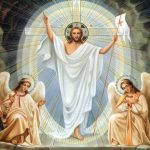
Friday message is very important
It says that when we received the Eucharist we received Jesus Christ himself
It’s for our spiritual growth
It unified us with him
We carry Jesus with us
Thank you so much 😊
It’s so owesome.
God bless you father 🙌
Amen