




![ORDINARY TIME XXV [yr. C] (Sept. 21).Am 8:4-7; I Tm 2:1-8; Lk 16:1-13. (By: Rev. Fr. Clifford Atta Anim)](https://frcliffordhomilies.com/wp-content/uploads/2025/09/IMG_1284.jpeg)
Faithful and Prudent Stewardship
The readings today remind us that we are not owners but stewards of everything we have. God entrusts us with life, time, talents, and material goods, and He expects us to use them faithfully and prudently. In the end, each of us will give an account of our stewardship before Him (Romans 14:12).
Scripture Lessons
- First Reading (Amos 8:4–7): The prophet Amos, often called the “prophet of social justice,” condemns dishonest business practices among the merchants of 8th century BC Israel. He warns them against exploiting the poor and manipulating the market to increase their profits. This text calls us to remain faithful to the covenant of justice and mercy. “Let justice roll down like waters, and righteousness like an ever-flowing stream” (Amos 5:24).
- Responsorial Psalm (Psalm 113): The psalm proclaims that the Lord “raises the poor from the dust and lifts the needy from the ash heap” (Psalm 113:7). God sees and defends the lowly, which is why our stewardship must reflect His concern for the vulnerable.
- Second Reading (1 Timothy 2:1–8): St. Paul exhorts the Christian community to intercede for all people, including rulers and pagans. He points to Jesus, the one Mediator between God and humanity (v.5), as the model steward of the Father’s saving plan. This reminds us that stewardship is not just about material goods but also about the Gospel itself.
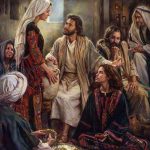
- Gospel (Luke 16:1–13): Jesus tells the parable of the dishonest but shrewd steward. Though his conduct was unethical, his foresight and urgency are meant to challenge us. We must use our resources, time, talents, health, and wealth to secure our eternal future. As Jesus concludes, “You cannot serve both God and mammon” (v.13).
Life Messages
- Be Faithful in Small Things. St. John Chrysostom said, “Faithfulness in little things is a big thing,” and St. Teresa of Calcutta taught, “Do little things with great love.” Simple acts, thanking someone, congratulating another’s success, sharing a neighbor’s sorrow, or offering help train us to be faithful stewards. Jesus Himself said, “Whoever is faithful in a very little is faithful also in much” (Luke 16:10).
- Use Spiritual Resources Wisely. The steward in Jesus’ story used all his means to secure his future. We should be no less resourceful with our spiritual gifts:
- the Real Presence of Jesus in the Eucharist (John 6:51),
- the Holy Sacrifice of the Mass (Hebrews 10:24–25),
- the Seven Sacraments as fountains of grace (CCC 1129),
- the Sacred Scriptures for daily meditation (2 Timothy 3:16–17),
- and the teaching authority of the Magisterium guided by the Holy Spirit (CCC 85).
Using these gifts faithfully prepares us for eternal life, so that the Lord may say of us, “Well done, good and faithful servant” (Matthew 25:21).
- Prepare to Give an Account. We insure our homes, cars, and lives against loss, but often forget to “insure” our souls for eternity. Jesus warns that a day of reckoning will come when each of us must give an account of our stewardship (Luke 16:2; Romans 14:10–12). The real question at our personal judgment is how wisely, lovingly, and generously we used God’s blessings for His glory and for the good of others.
Conclusion
Christian stewardship is not only about money. It is about our whole life, our faith, time, abilities, and compassion. It is about living each day with the awareness that nothing truly belongs to us, but all is entrusted to us for a purpose. If we are faithful in small things and generous with our blessings, we will share the joy of our Master forever (Matthew 25:34).
Sources:
- The Holy Bible, NRSVCE: Amos 8:4–7; Psalm 113; 1 Timothy 2:1–8; Luke 16:1–13.
- Catechism of the Catholic Church, §§2401–2409 (justice), §§1127–1129 (sacraments), §85 (Magisterium).
- St. John Chrysostom, Homilies on the Gospel of Matthew, 63.
- St. Teresa of Calcutta, Come Be My Light.

