





Oct 20 Monday:Saint Paul of the Cross, priest: Lk 12:13-21
The Parable of the Foolish Rich Man: A Warning Against Greed
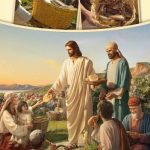
Jesus told the parable of the rich fool in response to a man who asked Him to intervene in a family dispute over inheritance (Luke 12:13–21). By narrating this story, Jesus redirected the man’s attention and ours from earthly possessions to heavenly priorities. The Lord exposes greed as a subtle but deadly spiritual disease that blinds the soul to God’s presence and dulls our sense of compassion for others. Greed, when unchecked, turns the heart inward, making wealth the source of one’s security and self-worth. In doing so, a person risks crowning himself as his own god, echoing the ancient sin of Adam who sought to live without dependence on the Creator (Genesis 3:5). Jesus therefore reminds us that “a person’s life does not consist in the abundance of possessions” (Luke 12:15).
The Teaching
Through this parable, Jesus teaches that true wisdom lies not in the accumulation of wealth, but in generosity and self-giving love. The rich man is called a “fool” not because he was rich, but because he mistook temporal riches for eternal security. He built larger barns, but not a larger heart. God calls him “fool” for several reasons: (1) He had driven God out of his heart and enthroned wealth as his idol, much like Israel’s folly in worshipping the golden calf (Exodus 32:1–6). (2) He had no room for others, shutting out the poor who are, in fact, the very face of Christ (Matthew 25:40). (3) Having filled his life with himself, he allowed greed to consume his soul. (4) Finally, he forgot his mortality and the fleeting nature of worldly goods, forgetting the psalmist’s words, “When they die, they carry nothing away” (Psalm 49:17).
Life Lessons
- We are stewards, not owners. Everything we possess, our time, talent, and treasure is a trust from God (1 Corinthians 4:7). We are accountable for how we use these gifts, and they find meaning only when shared with others.
- We must guard our hearts against greed. Greed diverts our attention from God and others to self-centered desires. Jesus teaches us to “seek first the Kingdom of God” (Matthew 6:33) so that our priorities remain rightly ordered.
- Greed takes many forms. For some, it manifests as a craving for wealth or possessions; for others, it is the desire for power, status, pleasure, or even recognition. King Solomon, who possessed everything, later confessed that all worldly pursuits are “vanity and a chasing after the wind” (Ecclesiastes 2:11).
- We must live in the light of eternity. Like the rich fool, we too can forget that life is fragile and temporary. Jesus calls us to store up “treasures in heaven” (Matthew 6:20) through acts of charity, compassion, and humility.
In the end, the parable challenges every disciple to re-examine what anchors their heart. True life, Jesus insists, is found not in what we own, but in who owns us, God Himself. When our lives are centered on Christ and shared in love, our possessions become instruments of grace rather than chains of selfishness. God bless you.
Oct 21 Tuesday: Lk 12:35-38
Faithful Watchfulness and Readiness for the Lord’s Coming
(Luke 12:35–40)
Today’s passage from the Gospel of Luke forms part of the evangelist’s eschatological teachings, one of three sections where Jesus speaks about the final things. Here, we encounter one of the two “Master and Servant” parables, which highlight the call to steadfast faith and constant vigilance. Jesus uses familiar imagery from daily life to teach His disciples about spiritual readiness. In Jewish culture, wedding feasts could last up to seven days, meaning servants had plenty of time to rest before the master’s return. To “gird one’s loins” or tie garments around the waist (Luke 12:35) symbolized readiness for action. In Scripture, this image often represents spiritual alertness and service, as in Exodus 12:11, where the Israelites ate the Passover meal with loins girded, prepared for the Lord’s deliverance. Jesus calls His followers to similar readiness, not in fear, but in loving and faithful service always prepared to do God’s will through acts of charity, humility, and self-giving.
In this parable, the master represents the risen Christ, and the servants stand for His followers who await His return. The Church Fathers, such as St. Augustine and St. Cyril of Alexandria, saw in this text a twofold meaning. In its immediate sense, it points to the Second Coming of Christ at the end of time, when the Lord will return in glory to judge the living and the dead (Matthew 25:31–46). In its broader and more personal sense, it refers to the hour of our death, the moment when each soul will meet God face to face and render an account of its stewardship (Romans 14:12). Because neither event’s timing is known, Jesus urges constant vigilance. “You also must be ready,” He says, “for the Son of Man is coming at an hour you do not expect” (Luke 12:40). Therefore, the wise disciple does not postpone good works or delay repentance. Every day should be lived as though it were our last, with hearts awake and hands busy in service.
Life Lessons
- Be watchful through prayer.
Spiritual alertness begins in prayer. Jesus often withdrew to pray (Luke 5:16), and He invites us to do the same. Prayer keeps the heart open to God’s voice, as Elijah discovered when he heard the Lord not in the wind or fire, but in a gentle whisper (1 Kings 19:11–12). We must set aside daily moments of silence to listen and speak with God, allowing His Word to shape our thoughts and guide our actions. - Recognize Christ in daily encounters.
The Lord often comes to us in unexpected ways, disguised in the faces of those we meet each day. Jesus assures us that whatever we do “for the least of these brothers and sisters” (Matthew 25:40), we do for Him. Readiness, then, is not passive waiting but active love, serving Christ in the poor, the lonely, the sick, and the marginalized. In serving others, we welcome the Lord Himself. - Live every moment in faithfulness.
True readiness means doing our present duties well. St. Francis de Sales once said, “Do not look forward to what might happen tomorrow; the same everlasting Father who cares for you today will care for you tomorrow and every day.” Our faithfulness in the small things prepares us for the greater encounter with God.
Ultimately, Jesus’ message is simple yet profound: stay awake in faith, live each day in love, and keep your heart uncluttered by fear or distraction. The Lord’s coming, whether at the end of time or at the end of our lives, will not surprise those who live in daily friendship with Him. God bless you.
Oct 22 Wednesday: Saint John Paul II. Lk 12: 39-48
“Be dressed for action and have your lamps lit.” (Luke 12:35, NRSV)
Today’s Gospel passage is the second of three eschatological discourses in Luke’s Gospel. Following Jesus’ exhortation to vigilance, Peter asks, “Lord, are you telling this parable for us, or for everyone?” (v. 41). Jesus responds with two related parables: the “Faithful and Unfaithful Servant” and the “Thief in the Night.” Both emphasize the need for faith and constant readiness in the lives of His disciples. Jesus wants His followers to live in perpetual preparedness, faithfully doing God’s will through humble and sacrificial service to others (cf. Matthew 24:45–51).
In these parables, the master represents the risen Jesus, and the servants represent His disciples, all of us who await His return. In a narrower sense, Jesus speaks about His Second Coming (Parousia) when He will return to judge the living and the dead (cf. 2 Peter 3:10–12). In a broader sense, His words also refer to the moment of our death, when we will each meet the Lord and give an account of how we lived our lives.
In the earlier part of this chapter, Jesus teaches about the true treasure we must guard: our relationship with God, a life of sanctifying grace that leads to eternal life (cf. Luke 12:33–34). This treasure, however, is not secure by default. It can be lost through negligence, sin, or spiritual complacency, or even stolen by the devil’s deception (cf. 1 Peter 5:8).
That is why Jesus calls His followers to vigilance, to be like servants who stay awake and alert, waiting for their master’s return. To be vigilant means to nurture a living relationship with God through prayer, participation in the Sacraments, reading and meditating on Scripture, and performing acts of charity. As the Catechism of the Catholic Church teaches, “Since the Lord’s coming is certain, though the time is unknown, we must constantly be ready” (CCC 673–674).
Through this vigilance, we learn that faithfulness in ordinary duties, done with love, is the surest preparation for the Lord’s return. God’s grace sustains us in this readiness, and He promises a great reward: “Blessed is that servant whom his master finds doing so when he comes” (Luke 12:43).
Life Messages
- Stay Spiritually Awake:
Vigilance is not fear-driven watchfulness but loving attentiveness to God’s presence. Daily prayer, spiritual reading, and acts of repentance keep our hearts awake and focused on the Lord. Prayer is our chief way of listening to and speaking with God, ensuring our lamps never go out (cf. 1 Thessalonians 5:6–8). - Live Readiness through Service:
True readiness is not about predicting the end but about serving faithfully in the present. When we care for others, forgive, and act with compassion, we are serving Christ Himself (cf. Matthew 25:40). Through such service, we rediscover that God often comes to us disguised in the people we meet, especially the poor and suffering. - Treasure What Truly Matters:
Our relationship with Christ is the most precious possession we have. We safeguard it through confession, Eucharistic life, and perseverance in virtue. Like a treasure that must be guarded, our soul requires daily care, discipline, and renewal in grace (cf. Philippians 2:12–13).
Conclusion
The message of today’s Gospel is simple yet demanding: Live each day as if it were your last, but love as if you will live forever. God is not asking for anxious fear but for faithful love. He calls us to be servants whose readiness is proven in daily faithfulness, humble obedience, and love for one another. God bless you.
References:
St. Augustine, Sermon 93 on the Shepherds: “The Lord delays so that we may be vigilant, not negligent.”
The Holy Bible, New Revised Standard Version Catholic Edition (NRSVCE).
Catechism of the Catholic Church, nn. 673–674, 1036.
Pope Francis, General Audience on Vigilance and Faithfulness, 11 August 2021.
Oct 23 Thursday: Saint John of Capistrano, priest. Luke 12:49-53
“I have come to set the earth on fire, and how I wish it were already blazing!” (Luke 12:49)
Today’s Gospel contains some striking and even unsettling words from Jesus. On the surface, they appear to contradict the image of Christ as the “Prince of Peace.” Yet, when read in context, they reveal the purifying, demanding, and transformative nature of Christ’s mission. Jesus uses three strong images—fire, baptism, and division—to describe the cost and urgency of discipleship.
1. “I have come to set the earth on fire” (v. 49)
In Jewish thought, fire is often a symbol of divine judgment and purification (cf. Malachi 3:2–3; Jeremiah 23:29). When Jesus speaks of bringing fire to the earth, He is not speaking of destruction for its own sake but of the purifying presence of God’s word and Spirit. His fire consumes sin, burns away falsehood, and refines hearts to bear fruit in holiness.
Just as gold is refined by fire, so the Gospel purifies the soul. The fire Jesus kindles is also the fire of the Holy Spirit, who enlightens, warms, and empowers believers (cf. Acts 2:3–4). This is the same fire that made the hearts of the disciples “burn within them” on the road to Emmaus when Jesus explained the Scriptures (Luke 24:32).
Thus, Jesus’ desire that the earth be “already blazing” expresses His longing for a world transformed by divine love, a love that judges evil, heals wounds, and rekindles faith.
“The Gospel is a fire that gives both light and heat. It enlightens the mind and inflames the heart with the love of God.”
2. “There is a baptism with which I must be baptized” (v. 50)
The Greek verb baptizein means “to dip” or “to immerse.” Jesus uses it metaphorically here to refer to the suffering and death He must endure. His “baptism” is His Passion, the overwhelming flood of pain, rejection, and sacrifice through which He will redeem humanity.
Until this baptism is complete, Jesus says, His heart is in anguish. This reveals His deep awareness of the cross as the central act of salvation (cf. Mark 10:38–39). His mission cannot be fulfilled without this passage through suffering and death. The waters of His Passion will cleanse the world, and through them, believers will receive the baptism of the Spirit and fire promised by John the Baptist (Luke 3:16).
This image reminds us that Christian discipleship inevitably involves sharing in Christ’s suffering. Through trials, we too are “baptized” into His death and rise with Him to new life (Romans 6:3–4).
3. “Do you think that I have come to bring peace on earth? No, I tell you, but rather division” (v. 51)
These words can seem shocking since Jesus is elsewhere called the Prince of Peace (Isaiah 9:6) and at His birth the angels sang, “Peace on earth to those on whom His favor rests” (Luke 2:14). However, the peace Jesus offers is not cheap comfort or superficial harmony. It is the deep, interior peace that comes from being reconciled to God, a peace that the world cannot give (cf. John 14:27).
When this peace enters a divided world, it inevitably provokes conflict. The Gospel challenges injustice, unmasks hypocrisy, and calls people to radical conversion. As a result, even families may be divided between those who accept and those who reject Christ (Luke 12:52–53).
In the early Church, this division was starkly visible: converts were often rejected by their families and persecuted by society. The Romans despised Christianity precisely because it placed loyalty to Christ above all earthly allegiances. As St. Cyril of Alexandria explained, “The peace of Christ is war against sin and the world’s deceit.”
Life Message
- Be courageous in your convictions.
The fire of Christ’s word still burns today, purifying and dividing hearts. We must stand firm in faith, even when following Jesus sets us apart. As St. Paul reminds us, “Do not be conformed to this world, but be transformed by the renewal of your mind” (Romans 12:2). - Embrace the baptism of daily sacrifice.
Every trial, every act of love that costs us something, is a share in Christ’s baptism of suffering. We are called not only to believe in Him but also to suffer for His sake (Philippians 1:29). - Spread the fire of love and truth.
Like candles lit from one flame, we are meant to carry Christ’s fire to others, through our witness, compassion, and fidelity to the truth. In a world often indifferent or hostile to faith, this is the fire that renews the earth. God bless you.
References:
Pope Benedict XVI, Jesus of Nazareth, Vol. I (2007), pp. 118–121.
The Holy Bible, New Revised Standard Version Catholic Edition (NRSVCE).
Catechism of the Catholic Church, nn. 696 (fire as symbol of the Spirit), 606–607 (Christ’s baptism of death).
St. Ambrose, Exposition of the Gospel of Luke, Book 7.
St. Cyril of Alexandria, Commentary on Luke 12:49–53.
Oct 24 Friday: Saint Anthony Mary Claret, Bishop. Lk 12:54-59
“You know how to interpret the appearance of the earth and the sky, but why do you not know how to interpret the present time?” (Luke 12:56)
In today’s Gospel, Jesus rebukes the crowds, especially the religious leaders, for their spiritual blindness and failure to recognize God’s presence in their midst. They could read the weather but not the signs of God’s saving activity. Despite witnessing Jesus’ miracles, hearing His teaching, and knowing the prophetic signs of the Messiah, many still refused to believe. Their pride and prejudice hardened their hearts, making them blind to the light of truth.
1. Reading the Signs of the Times
Jesus uses a vivid illustration from first-century Palestinian weather forecasting. Farmers and fishermen were skilled at observing the color of the sky, the direction of the wind, and the formation of clouds to predict coming weather. A wind from the west meant rain from the Mediterranean Sea; a south wind from the desert meant heat. Everyone could read these natural signs easily.
But Jesus’ point is clear: if they can interpret nature, why can they not interpret God’s actions? His preaching, miracles, and fulfillment of prophecy were unmistakable signs of the arrival of the Messianic age. Yet many refused to see them because faith requires humility, repentance, and openness of heart.
As the Catechism of the Catholic Church explains, “Faith is a free response to God’s revelation, and it requires the cooperation of man’s will and intellect” (CCC 154). Without good will, even the clearest divine signs go unnoticed.
2. Recognizing God’s Presence in History and in Our Lives
St. Thomas Aquinas reminds us that God is present in all things “by essence, presence, and power” (Summa Theologiae, I, q.8, a.3). Therefore, His activity can be discerned not only in nature but also in the events of history and in the movements of our hearts.
When Jesus tells His listeners to “interpret the present time,” He is calling them to spiritual discernment to recognize that in Him, God’s Kingdom has broken into human history (cf. Luke 11:20). Every miracle, every teaching, and every act of mercy was a sign that the long-awaited Messiah had come.
Today, Jesus continues to act in our world through the Church, the Sacraments, the Scriptures, and even the daily events of our lives. The challenge is to remain spiritually alert so that we do not miss His presence in the ordinary.
“The Lord is always knocking at the door of our hearts, not forcing His way in, but seeking our free response.”(Pope Francis)
3. The Urgency of Reconciliation
Jesus’ second warning in this passage shifts from discernment to personal accountability. He urges His listeners to “judge for yourselves what is right” and to settle disputes quickly, before reaching the divine court of judgment (Luke 12:57–59). This is an urgent call to repentance and reconciliation with God and with one another.
God’s grace is available now. His mercy is extended now. But this time of grace will not last forever. As St. Paul writes, “Now is the acceptable time; now is the day of salvation” (2 Corinthians 6:2). The wise person seeks reconciliation today, not tomorrow, because delaying conversion risks eternal loss.
Forgiveness and reconciliation with others are also central. As Jesus taught in the Lord’s Prayer, “Forgive us our trespasses, as we forgive those who trespass against us” (Matthew 6:12). Harboring resentment or pursuing vindictive justice contradicts the mercy we ourselves seek from God.
Life Messages
- Read the Signs of God’s Call to Conversion.
God continually sends us reminders, through Scripture, the Church, global events, and even private revelations such as Marian apparitions, to return to Him. The message is consistent: repent, renew your heart, and live faithfully. As Our Lady has often warned in her apparitions, humanity must return to prayer, penance, and peace before it is too late. - Reconcile Daily with God and Others.
Forgiveness is not weakness; it is the strength of those who live by grace. Reconciliation should be our daily goal, whether in families, parishes, or communities. We must not allow pride or legalistic attitudes to poison our relationships. Each of us stands in constant need of God’s mercy, and therefore we must extend mercy freely to others (cf. Matthew 18:21–35). - Live Each Day in Readiness.
Like those first-century farmers who watched the skies, we must watch for the movement of God in our daily lives. Every moment is an opportunity to grow in holiness, mend relationships, and act justly before we stand before the ultimate Judge. God bless you.
References:
- The Holy Bible, New Revised Standard Version Catholic Edition (NRSVCE).
- Catechism of the Catholic Church, nn. 154, 1847–1849, 2842–2845.
- St. Thomas Aquinas, Summa Theologiae, I, q.8, a.3.
- Pope Francis, Angelus Address, October 13, 2013.
- St. John Chrysostom, Homilies on the Gospel of Matthew, Homily 16: “He shows that judgment begins already, when we refuse to reconcile.”
Oct 25 Saturday:Lk 13:1-9
Unless you repent, you will all perish as they did.” (Luke 13:5)
Today’s Gospel passage invites us to reflect deeply on God’s mercy and justice. It shows how the Lord, like a patient gardener, gives His people repeated chances to repent and bear fruit. Yet Jesus also warns that God’s patience is not endless. There comes a time when we must turn away from sin and renew our lives before the opportunity passes.
1. The God Who Corrects out of Love
Jesus reveals to us a Father who disciplines His children, not out of anger but out of merciful love (cf. Hebrews 12:6). Painful or confusing experiences are sometimes permitted by God to awaken our conscience, lead us to repentance, and help us produce “the fruits of love, mercy, forgiveness, and humble service.” These experiences are not signs of divine cruelty but invitations to conversion.
As the Catechism of the Catholic Church explains, “The human heart is heavy and hardened. God must give man a new heart. Conversion is first of all a work of the grace of God who makes our hearts return to Him” (CCC 1432). God’s grace works through both His blessings and His corrections to bring about repentance.
2. Two Tragic Events and a Timeless Warning
Jesus refers to two contemporary tragedies to drive home His message. The first was the massacre of Galileans by Pontius Pilate, who had brutally suppressed a protest after he misused Temple funds to build an aqueduct in Jerusalem. The second was an accident at Siloam, where eighteen workers were killed when a tower collapsed during construction work.
In Jesus’ time, people commonly believed that such disasters were divine punishments for personal sin (cf. John 9:1–3). But Jesus rejects that notion. He makes it clear that tragedy is not always a sign of guilt. Instead, He calls His listeners to see these events as a warning for everyone, a reminder that life is fragile and repentance is urgent.
His message is simple but profound: “Do not assume others suffer because they are worse sinners. Rather, take their suffering as a call to examine your own life.” The Gospel reminds us that none of us knows when our time will come, so the time to repent is always now.
“Repentance is the medicine which heals the wounds of sin and restores life to the soul.” (St. John Chrysostom)
3. The Parable of the Barren Fig Tree
Jesus then tells a parable that brings the lesson home. A landowner finds a fig tree that has borne no fruit for three years. Disappointed, he wants to cut it down. But the gardener, a symbol of Christ Himself pleads for more time: “Sir, leave it for one more year. I will dig around it and put manure on it” (Luke 13:8).
This parable captures both God’s mercy and His justice. The barren tree represents a soul that has not borne the fruits of repentance and good works. God, the landowner, is patient, but His patience has limits. Jesus, the gardener, intercedes for us, nourishes us with grace, and gives us time to change. Yet if we continue to resist, judgment must eventually come.
This echoes St. Paul’s warning: “Do you not realize that God’s kindness is meant to lead you to repentance?” (Romans 2:4). Every new day, every breath, every opportunity to do good is a sign of God’s patient mercy. But the day of reckoning will arrive. Therefore, repentance cannot be postponed.
Life Messages
- Live a life of ongoing repentance.
We never know when our earthly journey will end or when tragedy might strike. Repentance is not only for sinners in crisis but for every believer who seeks to grow in grace. To repent daily is to live in peace with God, others, and ourselves. Repentance leads to forgiveness and inner freedom, allowing us to live joyfully and die without fear (cf. Acts 3:19). - Repentance renews; refusal to repent ruins.
Scripture teaches that repentance brings forgiveness, healing, and renewal of purpose (cf. 1 John 1:9). On the other hand, refusal to repent leaves us spiritually barren, restless, and burdened by guilt. Sin hardens the heart, but repentance restores peace. The choice is ours, either to live in the freshness of grace or in the misery of spiritual decay. - Bear fruit that lasts.
God’s patience gives us time not just to say “I’m sorry” but to produce tangible fruits of conversion: mercy, forgiveness, generosity, humility, and service. The real proof of repentance is a changed life. As Jesus says elsewhere, “Every tree is known by its fruit” (Luke 6:44). God bless you.
References:
- The Holy Bible, New Revised Standard Version Catholic Edition (NRSVCE).
- Catechism of the Catholic Church, nn. 1427–1432, 1847.
- St. John Chrysostom, Homilies on Repentance and Almsgiving.
- Pope Francis, General Audience on God’s Patience, 11 September 2013.
- Hebrews 12:6; Romans 2:4; Acts 3:19; Luke 13:1–9.