


Good Shepherd Sunday: Called to Lead and to Follow
On this Fourth Sunday of Easter, often called Good Shepherd Sunday, the Church also observes the World Day of Prayer for Vocations. The liturgy places before us the rich biblical image of the shepherd and the flock, an image that runs through both the Old and New Testaments to describe God’s loving relationship with His people. Today, we are reminded of a double calling: to be good shepherds to others and faithful sheep within Christ’s flock, and to pray earnestly for vocations to the priesthood, diaconate, and consecrated life.
Scripture Lessons
In the first reading, taken from Peter’s preaching on the day of Pentecost (Acts 2:36–41), we see Peter already exercising his role as a shepherd of the early Church. Filled with the Holy Spirit, he calls his listeners to repentance and invites them into the new community founded by Christ. “Repent and be baptized” (Acts 2:38), he tells them. In this moment, Peter becomes an instrument through which Christ gathers His flock. As entrusted by Jesus, “Feed my sheep” (John 21:15–17), Peter opens the gate of the Church to all who believe.
This pastoral role echoes God’s promise in the Old Testament. Through the prophet Ezekiel, God declared, “I myself will search for my sheep and will seek them out” (Ezekiel 34:11). Now, in the New Covenant, Christ fulfills this promise through His Apostles and their successors.
The Responsorial Psalm beautifully proclaims, “The Lord is my shepherd; there is nothing I shall want” (Psalm 23:1). This Psalm expresses deep trust in God’s providence. The shepherd leads, protects, nourishes, and remains close to the sheep even in the darkest valleys. This image reaches its fullness in Jesus, who calls Himself “the Good Shepherd” (John 10:11).
In the second reading, Saint Peter encourages Christians who are suffering persecution to remain faithful by following the example of Christ (1 Peter 2:21–25). Jesus is presented as the Suffering Servant who bore our sins and whose wounds bring healing. “You were straying like sheep, but have now returned to the shepherd and guardian of your souls” (1 Peter 2:25). The image reminds us that Christ not only guides us but also redeems us through His sacrifice.
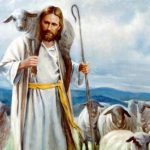
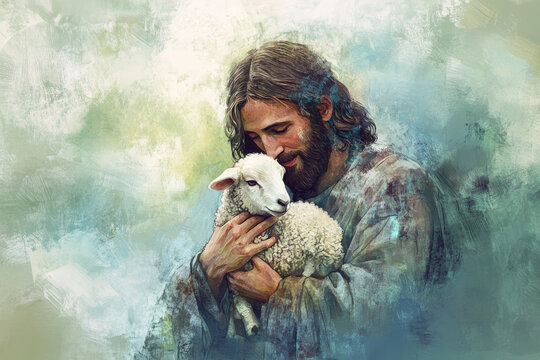
In the Gospel, Jesus uses two closely connected images (John 10:1–10). First, He presents Himself as the Good Shepherd who knows His sheep, calls them by name, and leads them to life. Unlike the hired hand who abandons the flock in danger, the Good Shepherd lays down His life for the sheep (John 10:11).
Second, Jesus describes Himself as the gate of the sheepfold: “I am the gate; whoever enters through me will be saved” (John 10:9). This means that access to salvation comes through Him alone. He is both the one who leads and the way by which we enter into eternal life.
This dual image is echoed elsewhere in Scripture. Jesus says, “I am the way, and the truth, and the life” (John 14:6), and the Letter to the Hebrews calls Him “the great shepherd of the sheep” (Hebrews 13:20). Together, these texts affirm that Christ is both guide and gateway.
Life Messages
1. We are called to be good shepherds in our responsibilities
Every person entrusted with the care of others shares in the role of a shepherd. Parents guide their children, teachers form their students, leaders serve their communities, and priests care for their parishes. To be a good shepherd means to love sacrificially, to protect those entrusted to us, and to seek their well-being.
Jesus gives the model of true leadership: “The Son of Man came not to be served but to serve” (Mark 10:45). A good shepherd does not dominate but serves, not for personal gain but for the good of others. Parents, in particular, are called to form their children in faith, teaching them by word and example (Deuteronomy 6:6–7).
2. We are called to be good sheep who listen and follow
To belong to Christ’s flock means to recognize and follow His voice. Jesus says, “My sheep hear my voice; I know them, and they follow me” (John 10:27). In the life of the Church, we hear this voice through Scripture, through the teaching of the Church, and through the guidance of our pastors.
As members of the Church, we are nourished by the sacraments, especially the Eucharist (John 6:54–56), and strengthened by prayer and community life. We are also called to support our shepherds through prayer, cooperation, and encouragement, recognizing that they too depend on God’s grace.
3. We must pray for vocations and support those called
On this World Day of Prayer for Vocations, the Church urges us to pray that many will hear and respond to God’s call. Jesus Himself instructed us, “Pray therefore to the Lord of the harvest to send out laborers into his harvest” (Matthew 9:38).
Vocations to the priesthood, diaconate, and consecrated life are gifts to the Church. They ensure that the flock continues to be guided, nourished, and sanctified. At the same time, every Christian has a vocation, a personal call to holiness and service. Whether in marriage, priesthood, or consecrated life, each vocation is a path to loving God and serving others.
Conclusion
Good Shepherd Sunday invites us to reflect deeply on our relationship with Christ. He is the Shepherd who knows us, the Gate who leads us to salvation, and the Savior who gave His life for us.
As we listen to His voice and follow Him faithfully, may we also become instruments of His care for others. And as we pray for vocations, may many generous hearts respond to His call, so that the Church may continue to be guided by faithful shepherds until the end of time. God bless you.
References and Sources
Sacred Scripture
Acts 2:36–41
Psalm 23:1–6
Ezekiel 34:11–16
John 10:1–18, 27
John 14:6
John 21:15–17
1 Peter 2:21–25
Hebrews 13:20
Mark 10:45
Deuteronomy 6:6–7
John 6:54–56
Matthew 9:38
Catechism of the Catholic Church
CCC 754 (The Church as sheepfold)
CCC 874–896 (The shepherding role in the Church)
CCC 1548–1551 (Priesthood as service in the person of Christ the Head)
Church Documents and Theological Sources
Second Vatican Council, Lumen Gentium (on the pastoral mission of the Church)
St. Gregory the Great, Pastoral Rule
St. Augustine, Sermons on Shepherds
Pope Francis, Messages for the World Day of Prayer for Vocations