


![LENT WEEK III [YR. A] (Mar. 8, 2026): Ex 17:3-7; Rom 5:1-2, 5-8; Jn 4:5-42. BY: REV. FR. CLIFFORD ATTA ANIM.](https://frcliffordhomilies.com/wp-content/uploads/2026/03/IMG_2420.jpeg)
Baptism, Living Water, and the Gift of New Life
The central theme of today’s readings is Baptism and the new life that God offers through the gift of “living water.” In Scripture, living water is a powerful image of the Holy Spirit and the life that flows from God into the human heart. Through Baptism, the Holy Spirit enters our lives, cleanses us from sin, and begins a new relationship with God. This divine life does not remain outside us. It reaches every part of our existence and satisfies the deepest spiritual thirst of the human soul.
The Church teaches that God continues to pour out this living water through the Word of God, the Sacraments, and the presence of the Holy Spirit in the life of believers. We gather in the Church to receive this gift again and again. We were first washed in this living water at Baptism, we are nourished by it in the Eucharist, and we are reminded of it whenever the Word of God is proclaimed. Each day the Holy Spirit strengthens and renews us so that our faith does not grow dry or weak. Today’s Gospel invites us to remain spiritually thirsty, always longing for the living water that only God can give.
Jesus speaks clearly about this living water when he says that whoever drinks of the water he gives will never thirst again, because that water becomes a spring within the person flowing to eternal life (John 4:14).
Scripture Lessons Explained
The First Reading
The first reading recalls the story of Israel in the desert when the people complained because they had no water. Even though they doubted God and grumbled against Moses, God showed mercy and commanded Moses to strike the rock at Horeb. When he did, water flowed out for the people to drink (Exodus 17:1–7).
This event later received a deeper meaning in the New Testament. Saint Paul teaches that the rock in the desert pointed toward Christ himself. He writes that the Israelites drank from a spiritual rock that followed them, and that rock was Christ (1 Corinthians 10:4). Through Jesus, the true living water flows to humanity.
The story also reveals how easily the human heart can become hardened, even after experiencing God’s blessings.
The Responsorial Psalm
Psalm 95 reflects on this same experience. It calls believers to worship the Lord who is the Rock of our salvation, but it also warns us not to harden our hearts as the Israelites did in the desert.
The Psalm reminds us that our hearts must remain open to God’s voice. Through prayer, fasting, repentance, and works of mercy, our hearts are softened and prepared to receive the grace of the Holy Spirit.
The Second Reading
Saint Paul explains that through Jesus Christ we are reconciled with God. He tells us that the love of God has been poured into our hearts through the Holy Spirit who has been given to us (Romans 5:5).
This means the Christian life is not sustained merely by human effort. It is sustained by the Spirit of God living within us. The Holy Spirit becomes the inner source of hope, strength, and transformation.
The Gospel
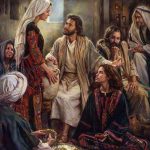
The Gospel presents the well known encounter between Jesus and the Samaritan woman at the well (John 4:5–42). The woman comes to draw ordinary water, but she leaves with something far greater because she meets the One who can satisfy the deepest thirst of the human heart.
The Samaritan woman had a complicated and painful life and was socially rejected. Yet Jesus speaks to her with dignity and compassion. Through their conversation, he awakens in her a deeper desire for truth, healing, and integrity. Gradually she begins to realize that Jesus is not only a teacher but the promised Messiah.
In this encounter Jesus reveals himself as the true source of living water, the grace that leads to eternal life. Those who drink from the water he gives will never thirst again, because that water becomes a spring within them flowing toward eternal life (John 4:13–14).
The story also shows how transformation happens. The woman who once came quietly and alone to the well becomes a witness who brings others to Christ.
Life Messages
1. Allow Jesus into the hidden parts of our lives
Jesus desires to enter the most personal areas of our lives, not to shame or condemn us, but to heal us. He knows our struggles, wounds, and failures, yet he still offers us the living water of grace.
We receive this grace through the Sacraments, through prayer, and through reading and reflecting on the Scriptures. The Catechism of the Catholic Church teaches that Baptism frees us from sin and makes us children of God (Catechism of the Catholic Church, 1213). Lent is a special time to rediscover these sources of spiritual renewal.
2. Become witnesses to Christ
After encountering Jesus, the Samaritan woman immediately shared her experience with others. Because of her testimony, many people from her town came to believe in Jesus (John 4:39).
Christians are called to do the same. Our lives should quietly lead others to Christ through charity, truth, patience, and justice.
3. Leave behind unhealthy attachments
The Gospel also invites us to examine our own lives. The Samaritan woman had several broken relationships, yet her encounter with Christ opened the path to a new beginning.
Lent challenges us to let go of whatever enslaves us. This may include unhealthy habits, addictions, or attachments that distance us from God. Scripture reminds us that anyone who is in Christ becomes a new creation (2 Corinthians 5:17). God bless you