




![Ordinary Time Week XI [Yr. A] (June 14, 2026) Ex 19:2-6; Rom 5:6-11; Mt 9:36–10:8. By: Rev. Fr. Clifford Atta Anim.](https://frcliffordhomilies.com/wp-content/uploads/2026/06/IMG_3267.jpeg)
SENT TO PROCLAIM THE GOOD NEWS
The central message of today’s readings is that every Christian is commissioned and sent by God to proclaim and embody the Good News of His love, mercy, forgiveness, and salvation revealed in Jesus Christ. Christianity is not merely a belief to be held but a mission to be lived. From the moment of our Baptism, we become participants in Christ’s mission, called to bring His healing presence and saving message into the world.
Throughout Sacred Scripture, God reveals Himself as a God who sends. He sent Moses to liberate Israel from slavery. He sent the prophets to call His people back to faithfulness. In the fullness of time, He sent His only Son into the world for our salvation (John 3:16-17). After His Resurrection, Jesus sent His apostles to continue His mission, and through them, He continues to send every member of His Church.
God’s Compassion for His People
The first reading presents a God whose heart is filled with compassion for His people. The God who revealed Himself on Mount Sinai is not a distant or indifferent deity. He is a loving Father who sees the suffering of His children and acts to save them.
Israel experienced this saving love in a remarkable way. God heard their cries in Egypt, delivered them from slavery, guided them through the wilderness, and established a covenant relationship with them. He invited them to become His “special possession,” “a kingdom of priests,” and “a holy nation” (Exodus 19:5-6).
This covenant reveals an important truth: God blesses His people not merely for their own sake but so that they may become instruments of blessing for others. Israel was chosen to be a light to the nations. Likewise, Christians are chosen and sent to bring the light of Christ to the world.
The Greatest Proof of God’s Love
In the second reading, Saint Paul reflects on the astonishing depth of God’s love. Human beings might be willing to sacrifice themselves for a righteous person, but God demonstrated His love in a far more extraordinary way. Christ died for us while we were still sinners (Romans 5:8).
The Cross is the supreme revelation of God’s love. At Calvary, Jesus took upon Himself the burden of human sin and opened the way to reconciliation with the Father. Through His death and Resurrection, humanity received the possibility of a new relationship with God.
Saint Paul reminds us that salvation is not something we earn by our own efforts. It is God’s free gift. We are loved before we deserve it, forgiven before we ask for it, and called before we are worthy. Such love demands a response. Having received God’s mercy freely, we are called to share it generously with others.
Jesus Commissions His Disciples
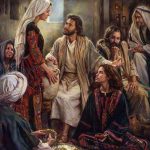
In today’s Gospel, Jesus extends His own mission to His disciples. Up to this point, He had been the principal preacher, teacher, healer, and miracle worker. Now He entrusts His mission to ordinary men whom He has chosen and formed.
The disciples are sent to proclaim that the Kingdom of Heaven is at hand. They are commanded to heal the sick, raise the dead, cleanse lepers, and cast out demons. They are to continue the very works of Christ Himself.
Jesus also reminds them: “Without cost you have received; without cost you are to give” (Matthew 10:8).
Everything they possess has been received as a gift from God. Their mission, therefore, is not about personal gain, prestige, or power. It is about generous service.
The same is true for us today. The gifts of faith, life, family, education, talents, opportunities, and spiritual blessings are all gifts from God. They are entrusted to us so that we may use them for the good of others and the glory of God.
The Mission of the Church
The commissioning of the Twelve marked the beginning of a movement that would eventually reach every corner of the world. What began in Galilee expanded into Judea, Samaria, Asia Minor, Europe, Africa, and beyond.
After Pentecost, the apostles courageously proclaimed Christ despite persecution and suffering. Peter preached in Jerusalem. Philip evangelized Samaria. Paul carried the Gospel throughout the Roman world. Missionaries throughout history continued this work, bringing the Gospel to every continent.
Today that mission belongs to us.
The Church continues to exist not merely to preserve memories of Jesus but to make Him present in every generation. Every Christian is called to be a missionary disciple.
Pope Francis frequently reminds the Church that every baptized person is a missionary. We do not need to travel to distant lands to be missionaries. We begin in our homes, workplaces, schools, parishes, and communities.
Life Messages
1. Be Jesus-Presenters
Jesus remains alive and active in His Church. He speaks through Sacred Scripture. He nourishes us through the Sacraments. He guides us through the Holy Spirit.
The Holy Spirit continues the work of Christ by teaching us, reminding us of His words, and empowering us to live the Gospel (John 14:26).
People should be able to encounter Jesus through our lives. Our words, actions, attitudes, and choices should reflect His presence. Like Saint Paul, we should be able to say, “It is no longer I who live, but Christ who lives in me” (Galatians 2:20).
Saint Teresa of Avila beautifully expressed this truth:
“Christ has no body now on earth but yours; no hands but yours; no feet but yours.”
When people experience our kindness, compassion, honesty, forgiveness, and humility, they should catch a glimpse of Christ Himself.
2. Be Healers in a Wounded World
The mission of healing remains as urgent today as it was in the time of Jesus.
Many people suffer from physical illness, emotional wounds, loneliness, depression, anxiety, grief, hopelessness, and spiritual emptiness. Others are burdened by family conflicts, broken relationships, poverty, injustice, and addiction.
While we may not perform spectacular miracles like the apostles, we can become instruments of God’s healing grace.
A kind word can heal a wounded heart.
A listening ear can restore hope.
A forgiving spirit can mend broken relationships.
A generous act can lift a burden from someone’s shoulders.
To “cleanse lepers” in today’s world means restoring dignity to those who have been rejected, marginalized, or forgotten. Jesus consistently reached out to those whom society pushed aside: lepers, tax collectors, sinners, widows, and foreigners.
We are called to do the same.
We must welcome the lonely, defend the vulnerable, assist the poor, comfort the grieving, and accompany those who feel excluded from society.
3. Help Others Break Their Chains
The Gospel also speaks of casting out demons. While demonic possession exists, many people today are enslaved by other powerful forces.
Some are trapped by addictions to alcohol, drugs, pornography, gambling, greed, anger, resentment, or destructive habits.
Others are imprisoned by fear, despair, jealousy, pride, or unforgiveness.
The Christian mission includes helping people find freedom in Christ.
Before we can effectively help others, however, we must first allow God to free us from our own chains. Through prayer, the Sacraments, spiritual direction, accountability, and supportive Christian communities, God gradually transforms our lives.
Having experienced His healing ourselves, we become better equipped to help others experience the same freedom.
Conclusion
Today’s readings remind us that Christianity is not a spectator religion. Every baptized person is called, gifted, and sent.
God has loved us, forgiven us, and blessed us abundantly. Now He sends us into the world as His ambassadors.
May we become faithful witnesses of Christ’s love.
May we reveal His presence through our words and actions.
May we bring healing to the wounded, hope to the discouraged, and compassion to the forgotten.
And may our lives proclaim the Good News so clearly that others, encountering us, encounter Jesus Himself. Amen. God bless you.
References and Sources
Sacred Scripture
Catechism of the Catholic Church
- CCC 849-856 (The Missionary Mandate)
- CCC 863-865 (The Church’s Apostolic Mission)
- CCC 897-913 (The Mission of the Lay Faithful)
- CCC 1816 (Witnessing to Christ)
Church Documents
- Second Vatican Council, Lumen Gentium §§31-38
- Second Vatican Council, Ad Gentes §§1-7
- Pope Paul VI, Evangelii Nuntiandi
- Pope Francis, Evangelii Gaudium
Patristic and Spiritual Sources
- Saint Teresa of Avila, Christ Has No Body But Yours
- Saint John Chrysostom, Homilies on Matthew
- Saint Augustine, Sermons on Christian Mission
- Saint Gregory the Great, Pastoral Rule

God bless you Fr 🙏
We pray God continue to use you to inspire us 🙏 🙌