
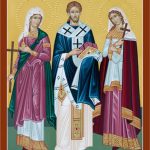


Dec 29 Monday: St. Thomas Becket, Bishop, Martyr. Lk 2:22-35
Today’s Gospel presents St. Joseph, the head of the Holy Family, faithfully obeying God’s Law as given through Moses. In humble obedience, Joseph brings Mary and the infant Jesus to the Temple in Jerusalem to fulfill two prescriptions of the Mosaic Law, the purification of the mother after childbirth and the redemption of the firstborn son. These events are traditionally celebrated on February 2 with the Feast of the Presentation of the Lord, but the Church also reflects on them during the Christmas season to gather all the mysteries of Christ’s infancy into a single contemplation.
This celebration is known by several interconnected names. It is called the Feast of the Presentation of the Lord because Jesus, the firstborn Son, is solemnly offered to the Father in the Temple. It is also known as the Feast of the Purification of Mary, since Mary humbly submits to a ritual of purification forty days after childbirth, even though she is without sin. In the Eastern tradition, it is called the Feast of the Encounter, or Hypapante, because it marks the meeting of the Old Covenant, represented by Simeon and Anna, with the New Covenant, embodied in the Child Jesus. On February 2, the Church also celebrates Candlemas, blessing candles as a sign of Christ, the Light of the world.
Obedience to the Law and humility before God
According to the Law of Moses, every firstborn male belonged to the Lord and had to be redeemed by an offering (Ex 13:2, Nm 18:15). At the same time, a mother was required to offer sacrifice after childbirth for ritual purification (Lv 12:6–8). Luke notes that Mary and Joseph offered a pair of turtledoves or pigeons, the offering of the poor. This detail quietly reveals the poverty and humility of the Holy Family and their total submission to God’s will (Lk 2:22–24). Joseph’s role stands out clearly. Though Jesus is the Son of God, Joseph fulfills his responsibility as legal father by leading the family in obedience to God’s commandments.
The encounter with Simeon and Anna
In the Temple, the Holy Family encounters Simeon and Anna, two elderly figures who embody faithful Israel waiting in hope. Guided by the Holy Spirit, Simeon recognizes the Child as the promised Messiah and proclaims Him as “a light for revelation to the Gentiles and glory for your people Israel” (Lk 2:32). His canticle, known as the Nunc Dimittis, announces that salvation has now entered human history.
Simeon’s blessing, however, also carries a prophecy of suffering. He warns Mary that Jesus will be a sign of contradiction and that a sword will pierce her own soul. This prophecy links the joy of Christmas to the sorrow of Calvary and reminds us that redemption will come through suffering and self-giving love. Anna, the prophetess, adds her witness by praising God and speaking of the Child to all who were awaiting the redemption of Jerusalem (Lk 2:36–38).
Life message
Every Holy Mass we attend is a moment of presentation. Though we were formally presented to God in Baptism, we continue to offer ourselves, our families, and our daily lives to the Father through Jesus Christ at every Eucharist. The Presentation reminds us that we belong to God and that our lives are meant to be lived in holiness, obedience, and trust. Like Mary and Joseph, we are called to place Christ at the center of our worship and to carry His light into the world through faithful Christian living. God bless you.
Dec 30 Tuesday: LK 2: 36-40.
Today’s Gospel draws our attention to Anna, the elderly prophetess who recognized and proclaimed the Infant Jesus as the long-awaited Redeemer when Joseph brought Mary and the Child to the Temple to fulfill the Law concerning purification and the redemption of the firstborn.
Anna and her prophetic witness
Anna is presented as an eighty-four-year-old widow who never left the Temple but worshipped God night and day through fasting and prayer. Her long years of faithful waiting were not wasted. At the precise moment when salvation entered the Temple in human form, her eyes were opened by the Holy Spirit to recognize the Messiah, not as a triumphant ruler, but as a helpless child in His parents’ arms. Overcome with gratitude, she praised God and spoke about the Child to all who were longing for the redemption of Jerusalem. Like Simeon, Anna becomes a bridge between the Old Covenant and the New, showing that those who persevere in prayer will never miss God’s decisive moments.
Her testimony echoes the long biblical tradition of God revealing Himself to the humble and the faithful. Like Hannah, who rejoiced before the Lord after receiving Samuel, and like the psalmists who waited patiently for God’s salvation, Anna teaches us that hope rooted in prayer is never disappointed.
The Child’s growth in wisdom and grace
The Gospel concludes by affirming that the Child Jesus grew and became strong, filled with wisdom, and that the favor of God rested upon Him. Reflecting on this mystery, St. Bede explains that Jesus, in His human nature, truly experienced growth and development, while in His divine nature He remained eternally perfect. This balance safeguards our faith in Christ as fully human and fully divine. The same Jesus who learned to walk and speak is the eternal Word through whom all things were made.
Life messages
First, Anna reminds us that the Holy Spirit delights in using ordinary men and women of simple faith as powerful witnesses to Christ. Age, weakness, or obscurity do not limit God’s work.
Second, every parish and Christian community needs praying Annas, people who quietly sustain the Church through prayer, fasting, and hidden sacrifices. Their contribution, though unseen, is indispensable.
Third, Anna’s life teaches us to live in constant readiness for our final encounter with the Lord. Like her, we must train our hearts to recognize Jesus, not only in the Temple, but in the poor, the suffering, and the forgotten.
Finally, Anna’s prophetic witness calls each of us to cultivate an interior life rooted in prayer and penance, directing all we do toward the glory of God and the salvation of souls. In this way, her life becomes a living prophecy of every Christian vocation. God bless you.
Dec 31 Wednesday: St. Sylvester I, Pope. John 1: 1-18
Biblical scholars commonly agree that the Prologue of John’s Gospel (Jn 1:1–18) is a carefully crafted hymn. Its purpose is to proclaim the mystery of Jesus’ origin and identity as the eternal Word, the true Light, and the Only-Begotten Son of the Father. Unlike the genealogies of Matthew and Luke, which trace Jesus’ human ancestry, John traces Jesus’ “genealogy” back to God Himself. From the opening words, “In the beginning,” John deliberately echoes Genesis, revealing that the One born in time existed before all time.
The Church has long recognized several core teachings within this Prologue. First, it affirms the divinity and eternity of the Word, who was with God and was God. Second, it proclaims the Incarnation, the astonishing truth that the Word became flesh and dwelt among us. Third, it highlights the role of the Word in creation and redemption, for through Him all things were made and through Him humanity is restored. Fourth, the Prologue honestly acknowledges human freedom, showing that some welcomed the Word in faith while others rejected Him. Finally, it presents John the Baptist as the witness chosen by God to testify to the presence of the Word in the world.
The importance of this witness becomes clear in verses 6–9, where John the Baptist is carefully distinguished from Jesus. He is not the Light, but the one sent to point to the Light. The true Light, who enlightens every person, was coming into the world. This strong distinction may reflect the Evangelist’s desire to correct groups who exalted John the Baptist beyond his mission. Scripture itself shows that John never claimed glory for himself. He openly declared that the One coming after him existed before him and surpassed him in every way. Like Moses lifting up the bronze serpent in the desert, John pointed beyond himself so that others might look and live.
Later in the Gospel, especially in John 1:19–28, John the Baptist models authentic Christian witness. He refuses titles of honor, denies being the Messiah or Elijah in a literal sense, and identifies himself simply as a voice crying out in the wilderness. In doing so, he teaches us that true witness is not self-promotion but humble transparency that allows Christ to be seen.
Life messages
First, we are called to bear witness to Christ the Light. Through Baptism, we become members of Christ’s family and participants in His mission. When Jesus tells His disciples, “You are the light of the world,” He entrusts us with the responsibility of reflecting His light, not generating our own. Like the moon that reflects the sun, our lives must reflect Christ through faith, integrity, and charity.
Second, the Christmas season reminds us that Christ’s light shines most brightly in darkness. Many people live burdened by sin, fear, loneliness, or confusion. Others are distracted by empty promises that leave them spiritually blind and restless. Still others feel rejected and forgotten. They are waiting, often unknowingly, for someone to reflect the light of Christ into their lives. By offering forgiveness, compassion, and hope, we allow the Word made flesh to continue dwelling among His people. God bless you.
Jan 1, 2026 (I wish you a prosperous New Year): Thursday: Solemnity of Mary, the Holy Mother of God. Lk 2: 16-21
As we celebrate the Feast of Mary, the Mother of God on the first day of the New Year, it is fitting to extend heartfelt wishes for a peaceful and blessed year ahead. Beginning the year with Mary places our lives under the gentle care of the woman whom God Himself chose to bring His Son into the world. As we step into a new calendar year with its hopes and uncertainties, the Church invites us to entrust everything to Jesus through the powerful intercession of His Mother. On this same day, the Church also marks the World Day of Peace, calling us to pray earnestly for lasting peace in our families, our nation, and the entire world.
Scripture lessons summarized
The first reading offers a beautiful priestly blessing from the Book of Numbers, invoking God’s protection, favor, and peace upon His people, a blessing especially appropriate at the beginning of a new year. The Responsorial Psalm echoes this prayer, pleading that God’s gracious face may shine upon us. In the second reading, Saint Paul reminds us that God’s Son truly entered human history by being born of a woman, so that through Him we might receive adoption as sons and daughters of God. The Gospel recounts how the shepherds, after encountering the newborn Savior, became joyful messengers of the Good News, while Mary quietly pondered and treasured all these events in her heart. It also notes that on the eighth day, the Child was circumcised and given the name Jesus, the name chosen by God, revealing His mission to save His people.
Mary, Mother of God
We honor Mary above all because God honored her first. He chose her to be the Mother of Jesus, the eternal Son of the Father, the second Person of the Holy Trinity. Through her free and faithful consent, the Word became flesh and dwelt among us. Gabriel’s message makes this clear when he announces that her Son will be great and will be called the Son of the Most High. Elizabeth, filled with the Holy Spirit, confirms this truth by addressing Mary as the Mother of her Lord. Guided by this apostolic faith, the Church solemnly proclaimed at the Council of Ephesus that Mary is truly Theotokos, the Mother of God, a truth reaffirmed at the Council of Chalcedon. This title safeguards our belief that Jesus is one divine Person with both a true human and a true divine nature.
Life messages
First, as children of such a holy Mother, we are called to reflect her virtues in our lives. Like Mary, we are invited to live with trusting faith, humble obedience to God’s word, purity of heart, and generous service to others.
Second, let us make the New Year meaningful by giving each day a purpose, something noble to hope for, something good to do, and someone to love, above all Jesus Christ, who walks with us through every moment of the year.
Third, let us sanctify each day of the New Year. We can do this by offering every morning’s work to God, seeking the daily strength of the Holy Spirit, remaining faithful to prayer and Scripture, asking pardon for our daily failures, and entrusting ourselves to God’s protection at night. As we rest, we may echo the words of Jesus on the cross, placing our lives entirely in the Father’s hands. God bless you.
Jan 2 Friday: St. Basil the Great & St. Gregory Nazianzen, Bishops and Doctors of the Church: Mt 23: 8-12
It was the third day of Holy Week in Jerusalem, a tense moment marked by confrontation and public controversy. Jesus was no longer teaching in parables but speaking directly and sharply. The religious leaders had rejected him as Messiah, and in response, Jesus exposed the inner corruption beneath their outward religiosity. This discourse belongs to Jesus’ final prophetic denunciation before his Passion, similar to the Old Testament prophets who confronted Israel’s leaders when worship became empty ritual rather than obedience to God.
Biblical scholars generally agree that Matthew 23 presents Jesus acting as a prophetic judge, condemning hypocrisy, abuse of authority, and the distortion of God’s Law, not Judaism itself. The chapter prepares the way for the Passion by revealing why Jesus was perceived as a threat by the religious elite.
The Three Sins of the Scribes and Pharisees
Jesus raises three major objections against the scribes and Pharisees.
First, they do not practice what they preach. Although they teach the Law of Moses, they fail to live by it. This contradiction weakens their moral authority and turns religion into outward performance rather than genuine conversion of heart. Jesus warns that authentic faith must unite teaching and living.
Second, they impose a narrow and burdensome interpretation of the Law. Instead of guiding people toward God’s mercy, they reduce the Torah to oppressive regulations. Jesus says they “tie up heavy burdens, hard to bear, and lay them on the shoulders of others” (Mt 23:4). This stands in contrast to Jesus’ own invitation, “My yoke is easy, and my burden is light” (Mt 11:30).
Third, they seek public recognition and honor. Jesus exposes their desire to be admired rather than to glorify God. Their religion becomes a display. He highlights how they widen their phylacteries, lengthen their fringes, seek places of honor at banquets and synagogues, and enjoy prestigious titles like “rabbi” (Mt 23:5–7). In doing so, they claim glory that belongs to God alone.
“Call No Man Your Father” (Matthew 23:9)
Jesus’ instruction, “call no man your father on earth,” must be understood in context. He is not abolishing legitimate titles or relationships but condemning titles used to assert absolute authority or spiritual superiority. Sacred Scripture itself affirms spiritual fatherhood. Saint Paul speaks of himself as a father to the Corinthians, saying that he became their father in Christ Jesus through the Gospel (1 Cor 4:14–15).
The Church has consistently taught that all authority in the Church is derived from Christ and must be exercised in humility and service.
Life Messages
1. A Call for Servant Leadership
Jesus proposes a radically different model of leadership. Authority in the Church exists to serve, not to dominate. The Christian community is meant to be a servant Church where the hungry are fed, the ignorant taught, the sick cared for, the homeless sheltered, the distressed consoled, and the oppressed set free. “The greatest among you will be your servant” (Mt 23:11) remains the defining principle of Christian leadership.
2. Responsibility That Comes with Titles
Titles in the Church and in society are not privileges but reminders of responsibility. Whether one is called priest, teacher, parent, or leader, the title points to service, sacrifice, and accountability before God. Jesus warns that seeking honor without responsibility empties faith of its meaning. Everything we are and have must be used for the glory of God and the good of His people. God bless you.
Jan 3 Saturday: Jn 1:29-34
The central theme of today’s Gospel is a challenge to live like the Lamb of God and to die like the Lamb of God. The passage presents two closely connected themes, John the Baptist’s witness to Jesus, and Jesus’ public identification and epiphany as the Lamb of God. This Gospel is both a personal and a communal call to become witnesses to the Lamb who takes away the sin of the world.
John the Baptist gives clear testimony to Jesus by identifying Him as the Lamb of God, the One who existed before him, the One upon whom the Holy Spirit descended and remained, and the Son of God. Among all the titles given to Jesus in Sacred Scripture, “Lamb of God” is one of the most profound and theologically rich.
The Meaning of “Lamb of God”
When John introduced Jesus as the Lamb of God, his Jewish listeners would immediately have recalled several powerful biblical images.
First, there is the lamb of yearly atonement, often associated with the scapegoat ritual described in Leviticus. On the Day of Atonement, one victim was sacrificed for the sins of the people, while another symbolically carried away the sins of Israel into the wilderness. This ritual expressed the hope that sin could be removed and forgiven.
Second, there is the lamb of daily atonement. Every morning and evening, a spotless lamb was offered in the Temple as a continual sacrifice for the sins of the people. This unceasing offering symbolized constant dependence on God’s mercy.
Third, there is the Paschal Lamb. The blood of the lamb saved the firstborn of Israel in Egypt, and the lamb was eaten as a sign of deliverance. Every Passover thereafter recalled God’s saving action, pointing forward to Christ’s definitive sacrifice.
Fourth, there is the lamb of the prophets. The prophets spoke of a gentle and innocent servant who would suffer silently for the sins of the people. These texts clearly foreshadow Christ’s passion and redemptive suffering.
Finally, there is the lamb of the conquerors. In Jewish history, the lamb was also a symbol of victorious power, especially during the Maccabean period. This image reminds us that Christ conquers not through violence but through self-giving love and sacrifice.
Life Messages
1. Living like the Lamb of God
To live like the Lamb of God means leading a life marked by purity, humility, innocence, and selfless love. It means obeying Christ’s commandment of love in our daily relationships. It also means trusting in the loving providence and protective care of the Good Shepherd who watches over His Church. We are strengthened for this life by feeding on the Body and Blood of Christ and by drawing spiritual strength from the Holy Spirit through prayer and the sacraments.
2. Dying like the Lamb of God
To die like the Lamb of God does not necessarily mean physical death alone, but a life of daily self-offering. It means sacrificially sharing our blessings of health, wealth, time, and talents with others in our families, parishes, and communities. It means bearing witness to Christ through illness, pain, and suffering. Above all, it means offering our sufferings for the salvation of souls and in reparation for our sins and the sins of the world. God bless you.