


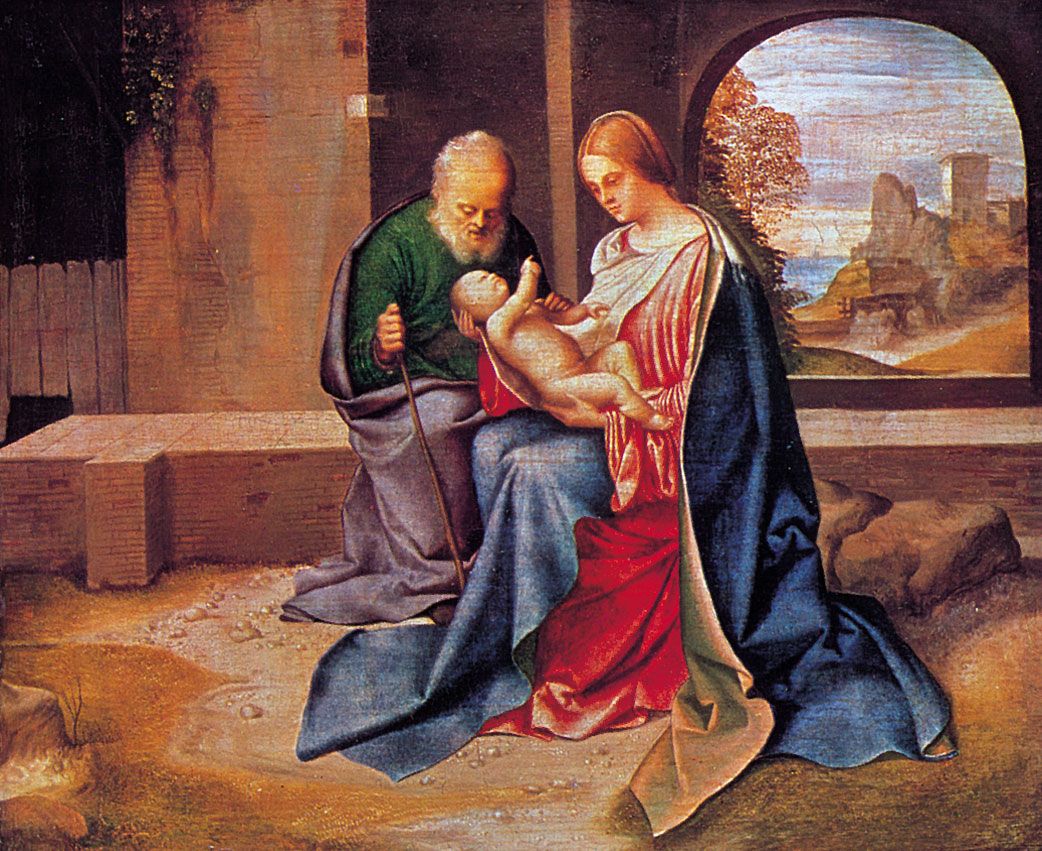
On this last Sunday of the year, the Church invites us to pause and reflect on the Feast of the Holy Family, Jesus, Mary, and Joseph. As we stand at the threshold of a new year, we come before the altar carrying our own families in our hearts. We offer our parents and children, our struggles and joys, our brokenness and hopes, asking God to bless, heal, and strengthen our homes. The Feast of the Holy Family reminds us that holiness is not lived only in monasteries or churches, but first and foremost in the ordinary, demanding, and sacred space of family life.
The first reading from the Book of Sirach reflects deeply on the fourth commandment, “Honor your father and your mother” (Exodus 20:12). Sirach speaks with realism and tenderness, knowing that honoring parents is not always easy, especially as they grow old or become dependent. Yet he insists that faithfulness in this duty draws God’s blessing. He highlights two rewards promised by God, a life filled with blessing and a long life rooted in God’s favor (Sirach 3:1–16). Scripture consistently affirms this truth. Noah’s sons are blessed when they respect their father (Genesis 9), Ruth is praised for her loyalty to Naomi (Ruth 1), and Jesus himself remains obedient to Mary and Joseph at Nazareth (Luke 2:51). Respect within the family is never wasted, it becomes a channel of grace.
In the second reading, Saint Paul addresses the Christian community at Colossae with practical wisdom for family life. He urges believers to clothe themselves with compassion, kindness, humility, patience, and forgiveness, above all, love, which binds everything together in perfect harmony (Colossians 3:12–17). These words form part of what scholars often call the “Household Code.” While cultural expressions may change over time, the heart of Paul’s message remains timeless. Christian families are called to be places where gratitude replaces bitterness, forgiveness overcomes resentment, and love shapes every relationship. Paul reminds us that holiness grows when family members choose daily to care for one another. This echoes Jesus’ teaching that love, lived in concrete actions, is the true mark of discipleship (John 13:34–35).
The Gospel presents the Holy Family not in a peaceful moment at Nazareth, but in flight and danger. Joseph and Mary must protect the Child Jesus from the murderous threat of King Herod by escaping into Egypt (Matthew 2:13–15). This scene reminds us that the Holy Family was not spared suffering or uncertainty. They knew fear, displacement, and hardship. Yet, in all this, they trusted God’s guidance. Joseph listens attentively to God’s voice in dreams and acts decisively. Mary carries both the Child and the mystery in her heart. Jesus, though divine, shares fully in the vulnerability of human life. Scripture shows that God often saves through families who trust him, from Noah’s household preserved through the flood (Genesis 7), to the Passover families protected by obedience (Exodus 12).
From today’s celebration, several important life lessons emerge.
First, we are invited to learn from the Holy Family. Jesus, Mary, and Joseph lived a simple life marked by hard work, mutual respect, and deep faith. Joseph provided through honest labor, Mary nurtured the home with love and trust, and together they helped Jesus grow “in wisdom, age, and favor before God and people” (Luke 2:52). Their home was not perfect because it was free of difficulty, but because it was rooted in obedience to God and care for one another.
Second, we are challenged to make our families places of mercy rather than judgment. A wise saying compares the family either to a courtroom or a confessional. In a courtroom, everyone defends themselves and accuses the other, and no one truly wins. In a confessional, there is honesty, humility, forgiveness, and healing. Scripture urges this attitude, “Bear with one another and forgive one another” (Colossians 3:13). Families grow strong not when members are faultless, but when they are willing to admit faults and begin again.
Third, we are reminded that marriage is a sacrament of holiness. Through the Sacrament of Matrimony, Christ dwells within the family, sanctifying spouses and children alike. Holiness in family life is achieved not through extraordinary deeds, but through fidelity in daily responsibilities, patience in trials, prayer in moments of weakness, and trust in God’s grace. As Joshua declared, “As for me and my house, we will serve the Lord” (Joshua 24:15).
As we close this year, the Feast of the Holy Family invites us to renew our commitment to our own families. May our homes become places where God is welcomed, love is practiced, forgiveness is offered, and faith is passed on from one generation to the next. God bless you.