


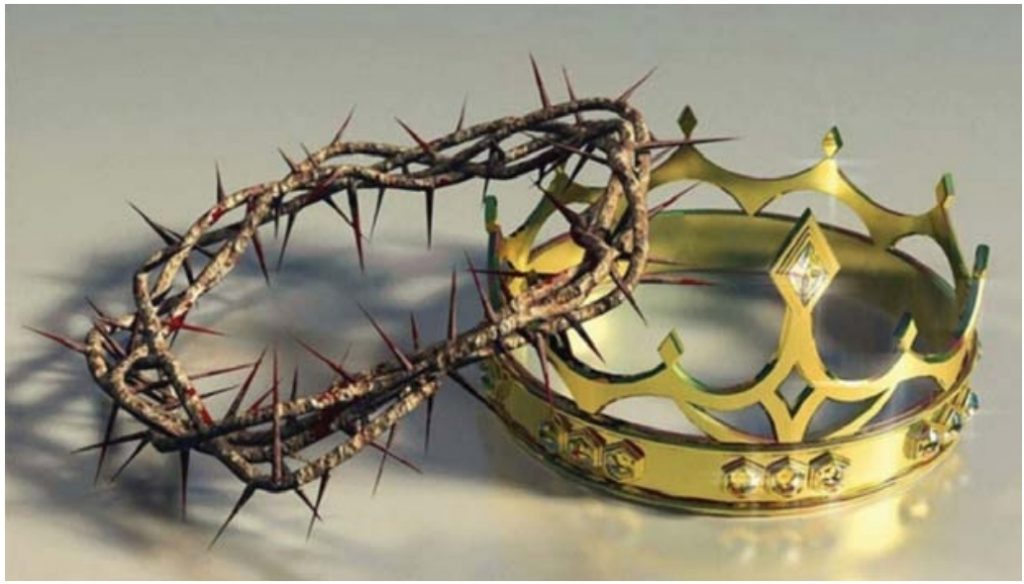
The thirty fourth Sunday in Ordinary Time closes the Church’s liturgical year, so the readings turn our eyes to Christ who now reigns in glory. This year also marks one hundred years since Pope Pius XI instituted the Feast of Christ the King in 1925 with the reminder that true peace is found only when Christ reigns in our hearts. His message was simple, we enter the peace of Christ when we give him first place every day, trust him as our Lord and Savior and let his grace guide our choices.
1. Biblical foundations of the feast
A. Old Testament background
The idea of Christ as King grows out of the Old Testament vision of God’s Kingdom. Many messianic prophecies describe the coming Savior as a royal figure. God promises David a ruler whose kingdom will stand forever (2 Samuel 7:12 to 16). Isaiah announces a child who will reign with justice and peace (Isaiah 9:6 to 7). Jeremiah speaks of a righteous King who will shepherd his people (Jeremiah 23:5 to 6). Daniel sees a mysterious Son of Man receiving everlasting dominion from the Ancient of Days (Daniel 7:13 to 14). These texts pointed Israel toward a Messiah whose rule would be both divine and eternal.
B. New Testament testimony
The New Testament places the kingship of Christ at the center of his mission.
- At the Annunciation, the angel tells Mary that her son will inherit the throne of David and that his kingdom will never end (Luke 1:32 to 33).
- The Magi arrive in Jerusalem asking for the newborn King of the Jews (Matthew 2:2).
- On Palm Sunday, the crowd greets Jesus with royal praise, “Blessed is the King who comes in the name of the Lord” (Luke 19:38).
- During the trial before Pilate, Jesus acknowledges his kingship, explaining that he came into the world to testify to the truth (John 18:37).
- At Calvary the sign above his head reads, “Jesus of Nazareth, the King of the Jews” (Luke 23:38, and also Matthew 27:37, Mark 15:26, John 19:19 to 20). To the repentant thief who asks to be remembered in his Kingdom, Jesus promises paradise that same day (Luke 23:42 to 43).
- After the Resurrection, Jesus declares that all authority in heaven and on earth has been given to him (Matthew 28:18).
- Jesus also teaches that the Son of Man will return in glory to judge the nations (Matthew 25:31 to 46).
Other passages shed light on his royal identity. He begins his ministry proclaiming that the Kingdom of God is at hand (Mark 1:14 to 15). He blesses the poor in spirit and calls the Kingdom theirs (Matthew 5:3). Paul calls Jesus the “King of kings and Lord of lords” (1 Timothy 6:15). The Book of Revelation announces that the kingdoms of the world have become the Kingdom of the Lord and of his Christ, and that he shall reign forever (Revelation 11:15).
2. Life lessons for believers
First, we are invited to accept Christ as our King and surrender our lives to him.
This surrender is shown in the daily decisions where we choose his teaching over our own preferences, especially in moral choices. Faith becomes real when we let Christ guide our thoughts, desires, relationships, and priorities. Saint Paul describes this kind of surrender when he says, “It is no longer I who live but Christ who lives in me” (Galatians 2:20).
Second, we are called to be serving disciples of a Servant King.
Jesus washed the feet of his disciples and reminded them that true greatness is found in humble service (John 13:12 to 15). We honor Christ’s kingship when we notice him in the poor, the forgotten, and the wounded, and when we offer them practical love. He tells us that whatever we do for the least of his brothers, we do for him (Matthew 25:40).
Third, we are invited to accept Jesus as the King of love.
His entire mission reveals the Father’s love, and he commands us to love one another as he has loved us (John 15:12). His cross is the clearest sign of this love, since he gives himself for sinners while we are still far from him (Romans 5:8). We let Jesus reign in us when we forgive, show patience, build peace, and treat others with the same mercy he shows us.