
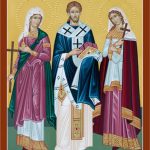


Sept 22 Monday: Lk 8:16-18
Receiving and Radiating the Light of Christ” (Luke 8:16-18)
After speaking the parable of the sower, Jesus turns to another image, that of light and lamp, to teach us how the Word we have received must be shared. We are reminded that we are “the light of the world” (Matthew 5:14) and that our duty is to receive and then radiate around us Christ’s light of love, mercy, compassion and forgiveness.
The image of light and lamp.
A lamp is not meant to be hidden under a jar or under the bed but placed on a stand so that all in the house can see (Luke 8:16; Matthew 5:15). Lamps enable people to see, move and work in the dark, and their light keeps us from stumbling. For the Jews, light was a symbol of God’s own beauty, truth and goodness. “The Lord is my light and my salvation” (Psalm 27:1). God’s light illumined the shepherds at Bethlehem (Luke 2:9), blazed around Saul on the road to Damascus (Acts 9:3; 22:6), and Scripture says He “dwells in unapproachable light” (1 Timothy 6:16). That is why Jesus can say, “I am the light of the world; whoever follows me will not walk in darkness but will have the light of life” (John 8:12). When His light shines in our hearts, we begin to recognize who we are, who our neighbors are, and who God is. We also see clearly how we are related to God and others, and we stop hiding truths about ourselves from God, from others or from ourselves. Christ’s light also exposes the danger of clinging to the darkness of sinful habits.
“To the one who has, more will be given.”
Jesus adds a paradoxical comment: “Take heed how you hear; for to him who has, more will be given” (Luke 8:18). This is not about material wealth but about our openness to grace. If we listen to Jesus with humble, open minds and walk in His light, the small bit of wisdom and faith we already have will grow and deepen. If, on the other hand, our hearts are closed, even the little we think we have can be lost. When we prayerfully immerse ourselves in Scripture, we are encountering the living God. As our roots sink deeper into Him, our spirits become richer and fuller, like a lamp fed with fresh oil. But if our connection to Christ is only superficial, the flame will flicker and die.
Life messages.
Since Jesus calls us the “light of the world” (Matthew 5:14), it is our duty
- to ask the Holy Spirit to remove any darkness within us;
- to ask Him to help us remove darkness around us;
- to let His light, ideals and teaching bloom within us so that others can glimpse the true light through our model Christian lives. God bless you.
References: Luke 8:16-18; Matthew 5:14-16; Psalm 27:1; Luke 2:9; Acts 9:3; 1 Timothy 6:16; John 8:12.
Sept 23 Tuesday: Saint Pius of Peitrelcina, priest: (St. Padre Pio): Lk 8:19-21
Who Is My Mother? Who Are My Brothers?” (Luke 8:19-21; cf. Mark 3:20-35)
As Jesus’ preaching became more direct and His criticism of the religious leaders sharper, His relatives grew worried. Mark tells us “they set out to seize Him, for they were saying, ‘He is out of His mind’” (Mark 3:21). Luke records that His Mother and His “brothers” arrived and could not get through the crowd (Luke 8:19-20). Some scholars suggest that His relatives may have brought Mary along, hoping that her presence would persuade Him to return quietly to Nazareth. They feared for His safety and perhaps for their own, because His public ministry was now drawing dangerous opposition.
Jesus’ plain statement.
On the surface, His reply seems abrupt: “My mother and my brothers are those who hear the word of God and do it” (Luke 8:21). Yet this was not a rejection of His Mother. Everyone present knew the deep love between Jesus and Mary and how He had cared for her until He began His public ministry. In fact, Jesus’ statement was a hidden praise of Mary, who perfectly embodies the one who “hears the word of God and keeps it” (cf. Luke 1:38; 2:19, 51). Vatican II notes that Mary “faithfully persevered in union with her Son” (Lumen Gentium, 58). By this response Jesus also dismissed any claim of family privilege that might interfere with His Messianic mission. He was teaching a new lesson about true kinship with God: discipleship is not a matter of flesh and blood but of faith and obedience.
Adopted into God’s family.
Through Baptism God graciously adopts us as His sons and daughters (Galatians 4:4-7; Romans 8:14-17). This adoption creates a new order of loyalty in which God and His Kingdom become the center of our being, the source of every thought, word and deed, and the focus of our choices. Everyone who does the Father’s will is Christ’s brother, sister and mother, because he or she imitates Jesus who always fulfilled His Father’s will (John 4:34). This transforms all our relationships: we are called to recognize in every person a potential brother or sister in Christ.
Life messages.
- Remember your dignity. By Baptism we become children of God, brothers and sisters of Jesus, and members of the heavenly family. This obliges us to treat others with respect and to show love concretely through the corporal and spiritual works of mercy (Matthew 25:31-46).
- Be hearers and doers. Like Mary, let us grow as true disciples by both hearing and doing the word of God (James 1:22), so that we may be ready for the great family reunion in Heaven. God bless you.
References: Luke 8:19-21; Mark 3:20-35; Luke 1:38; Galatians 4:4-7; Romans 8:14-17; James 1:22; Lumen Gentium, 58.
Sept 24 Wednesday: Lk 9:1-6
The Mission of the Twelve (Luke 9:1-6; cf. Matthew 10:1-15; Mark 6:7-13)
Today’s Gospel narrates how Jesus formally commissions the Twelve. He “gave them power and authority over all demons and to cure diseases” (Luke 9:1) and sent them to proclaim the Kingdom of God and to heal. This moment echoes Moses sending the twelve spies to survey the promised land (Numbers 13:1-2) and foreshadows the risen Christ sending the apostles to “make disciples of all nations” (Matthew 28:18-20). Their mission blends word and deed, preaching and healing, just as Jesus Himself did.
Jesus’ instructions and travel tips.
Jesus orders them to take “nothing for their journey” (Luke 9:3)—no staff, bag, bread, money or extra tunic. These radical instructions forced them to rely completely on God’s providence and the hospitality of believers. In first-century Palestine, hospitality was both a religious duty and an honor (cf. Genesis 18:1-8). By depending on it, the apostles became living reminders of God’s generosity and of Israel’s vocation to care for the stranger. They were also to avoid the greed and acquisitiveness of some religious leaders of the time (cf. Ezekiel 34:1-10; Matthew 23:25), showing instead a simplicity of life that matched their message. Sent out in pairs (Mark 6:7), they were to bless each household with peace (Luke 10:5-6), stay where they were welcomed without looking for better quarters, and shake the dust from their feet where the Gospel was rejected (Luke 9:5).
Life messages.
- Our witness-bearing mission. Every baptized Christian is not only a disciple but also an apostle (cf. Acts 1:8). We are sent to evangelize by sharing our lived experience of Jesus, not only doctrines or ideas. Transparent Christian lives, marked by simplicity, compassion and integrity, make the message credible (Philippians 2:15-16).
- Our liberating mission. Like the apostles, we confront “demons” that enslave people—addictions, violence, pornography, consumerism, self-centeredness. Only Christ’s power can break these chains (John 8:36). We ourselves must first seek His freedom through prayer, sacramental grace and self-discipline, and then cooperate with Him in liberating others through mercy, accompaniment and the witness of a holy life. God bless you.
References: Luke 9:1-6; Matthew 10:1-15; Mark 6:7-13; Numbers 13:1-2; Matthew 28:18-20; Acts 1:8; Philippians 2:15-16; John 8:36.
Sept 25 Thursday: Lk 9:7-9
Herod’s Troubled Conscience (Luke 9:7-9; cf. Matthew 14:1-12; Mark 6:14-29)
Although King Herod Antipas “feared John, knowing him to be a righteous and holy man” (Mark 6:20), he did not repent. Manipulated by his vengeful, immoral wife Herodias, he allowed himself to be maneuvered into executing the Baptist. When Herod began hearing reports about Jesus, some people were saying that John had been raised from the dead, others that Elijah had appeared (Luke 9:7-8). Herod, haunted by guilt, feared that John had come back to life to judge him. He expressed a desire to “see Jesus” (Luke 9:9), not to hear His teaching or to be converted, but out of curiosity and a hope for spectacle. This desire was finally granted during Jesus’ Passion, when Pilate sent Him to Herod. Yet Jesus refused to perform a miracle or answer Herod’s questions, fulfilling Isaiah’s prophecy of the Suffering Servant who “opened not his mouth” before His oppressors (Isaiah 53:7).
The haunting conscience.
Herod Antipas, son of Herod the Great (the murderer of the Holy Innocents, Matthew 2:16-18), ruled Galilee and Perea from about 4 BC to AD 39. His unlawful union with Herodias, his niece and his brother’s wife was a flagrant violation of Leviticus 18:16. His cooperation in the murder of John compounded his guilt. Instead of responding with contrition, Herod’s conscience produced fear and superstition. Sin without repentance clouds judgment and destroys peace of mind, as David himself confessed: “When I kept silent, my bones wasted away…day and night your hand was heavy upon me” (Psalm 32:3-4).
Life messages.
- Keep the conscience clean. Like Herod, we can become fascinated by the things of God without ever allowing them to convert us. The remedy is daily repentance and a clean conscience through prayer, examination of conscience, and sacramental confession when needed. Otherwise, unrepented sin will “haunt” us and erode our joy.
- Recognize Who Jesus truly is. We must seek Jesus not for wonders or emotional highs but as the Son of God, our personal Lord and Savior (John 20:28). True discipleship means adopting His ideas, ideals and way of life, so that our faith transforms our attitudes, habits, and relationships. Without this change, our encounters with Christ will remain superficial, like Herod’s curiosity, and our “mountain-top” moments will bear no lasting fruit. God bless you.
References: Luke 9:7-9; Mark 6:14-29; Matthew 14:1-12; Isaiah 53:7; Leviticus 18:16; Psalm 32:3-4; John 20:28.
Sept 26 Friday: Saints Cosmas and Damian. Lk 9:18-22
“You Are the Christ of God” (Luke 9:18-22; cf. Matthew 16:13-19; Mark 8:27-30)
Today’s Gospel contains two pivotal moments: Peter’s confession of Jesus as the Messiah and Jesus’ first prediction of His Passion, death and Resurrection. Together, these verses form a turning point in the Gospel narrative.
Jesus as the Christ, our Lord and Savior.
At Caesarea Philippi (modern Banias), about 25 miles northeast of the Sea of Galilee, Jesus put two probing questions to His disciples. First, “Who do the crowds say that I am?” The answers echoed public opinion: John the Baptist, Elijah, or one of the ancient prophets (Luke 9:19). Then came the more personal question: “But who do you say that I am?” Peter, speaking for the group, replied, “You are the Christ of God” (Luke 9:20). In Matthew’s version Jesus blesses Peter for receiving a revelation from the Father (Matthew 16:17). Immediately after this confession, Jesus “strictly charged” the disciples not to tell anyone and foretold His Passion: “The Son of Man must suffer greatly…be rejected…be killed, and on the third day be raised” (Luke 9:22). In other words, Messiahship cannot be separated from the Cross.
Why this moment matters.
If the apostles did not know who Jesus truly was, His ministry and His death would appear meaningless. Likewise, our own faith loses its center if we treat Jesus merely as a moral teacher or miracle-worker. We must accept Him as “the Christ, the Son of the living God” (Matthew 16:16) and understand that His saving work came through suffering, death and Resurrection.
Life messages.
- Experience Jesus as Lord and Savior.
We grow in personal knowledge of Christ by (a) meditative daily reading of Scripture (Psalm 119:105), (b) speaking with Him in personal and family prayer, (c) offering our lives at the altar by frequent Mass and Holy Communion, (d) nightly examination of conscience with acts of contrition, and (e) receiving the Sacrament of Reconciliation whenever needed (John 20:22-23; CCC 1425-1429). - Surrender our lives in service.
Faith in Jesus as Messiah must bear fruit in humble, loving service to others, recognizing Him in every person (Matthew 25:40). As Pope Francis has said, “Faith and charity are inseparable” (Lumen Fidei 14). Only when we live this surrender does our confession of Jesus become more than words. God bless you.
Sept 27 Saturday: Saint Vincent de Paul, priest. Lk 9:43b-45
“The Son of Man Is to Be Delivered into the Hands of Men” (Luke 9:37-45; cf. Mark 9:14-32; Matthew 17:14-23)
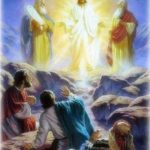
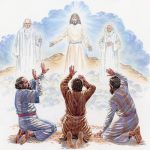
Coming down from the mountain of the Transfiguration with Peter, James and John, Jesus healed an epileptic boy whom the nine remaining apostles had been unable to heal. Today’s Gospel opens with the crowd’s reaction to that miracle: “And all were astonished at the majesty of God” (Luke 9:43). Yet Jesus immediately used that moment of acclaim to reveal the deeper mystery of His mission: “The Son of Man is to be delivered into the hands of men” (Luke 9:44).
Jesus’ least understood prediction: His coming suffering and death.
Three times in the Synoptic Gospels Jesus foretells His Passion, betrayal and death (Luke 9:22; 9:44; 18:31-33). The apostles could not grasp these prophecies because they were still dreaming of a political Messiah who would restore Israel’s kingdom (Acts 1:6). They had seen Jesus transfigured in glory (Luke 9:28-36) and had just watched Him heal a boy instantly when they themselves had failed, so it seemed inconceivable that any human power could harm Him without divine permission (John 10:17-18). Fear also clouded their understanding, since accepting Jesus’ path might mean embracing the same fate themselves (John 15:20).
Most likely, too, they had not fully internalized Isaiah’s prophecy of the Suffering Servant who “was wounded for our transgressions…by his stripes we are healed” (Isaiah 53:5). When Jesus called Himself “the Son of Man,” they probably pictured Daniel’s vision of a glorious figure “coming with the clouds of heaven” (Daniel 7:13-14) rather than a Servant who would suffer.
Life messages.
- Live as free children of God.
Jesus ransomed us with His own blood (Mark 10:45; 1 Peter 1:18-19). Rising from the dead, He freed us from the tyranny of sin and death (Romans 6:6-11). Therefore we are called to live and die as free children of God, breaking the chains of every sinful habit or addiction (Galatians 5:1). - Carry our daily crosses with Him.
We should continually ask Jesus for grace to carry our daily crosses in the same spirit of atonement with which He bore His (Luke 9:23). Our sufferings united to His become redemptive not only for our own sins but also, in a mysterious way, for the good of others (Colossians 1:24). God bless you.