



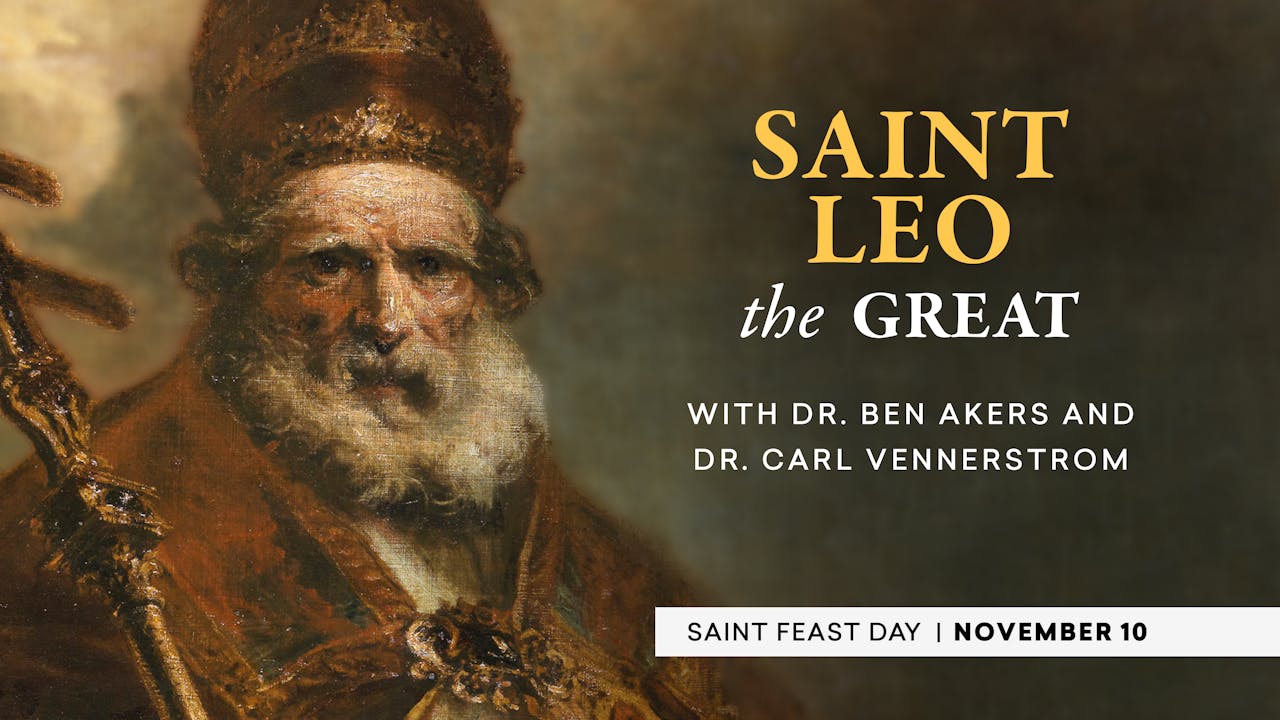
Nov 10 Monday: Saint Leo the Great, pope and doctor of the Church. Luke 17:1-6
Reflection on Today’s Gospel: Avoiding Scandal and Practicing Forgiveness
In today’s Gospel, Jesus gives us two essential warnings that lie at the heart of Christian discipleship: first, we must never be the cause of scandal to others; second, we must cultivate a spirit of limitless forgiveness. To live both commands faithfully, Jesus reminds us that we need deep, trusting faith in the power of God working in us.
The Seriousness of Scandal
The word scandal comes from the Greek skandalon, meaning a trap or stumbling block. It refers to anything, words, actions, or omissions that leads another person into sin or weakens their faith. The Catechism of the Catholic Church defines scandal as “an attitude or behavior which leads another to do evil” (CCC 2284). This is not just a personal failing; it can destroy souls.
Jesus warns that giving scandal, especially to “little ones” whether children, new believers, or the spiritually vulnerable is a grave offense. He uses shocking imagery: it would be better for the guilty person to be cast into the sea with a millstone around the neck than to face divine judgment for leading others astray (Luke 17:2). This shows how deeply Christ values the purity and faith of each soul.
We can cause scandal not only by open sin but also through hypocrisy, gossip, corruption, or bad example. King David’s sin with Bathsheba, for example, caused great scandal in Israel, prompting the prophet Nathan to tell him, “You have made the enemies of the Lord show utter contempt” (2 Samuel 12:14). Scandal spreads like ripples in water, it wounds the innocent and can shake faith for generations.
The Call to Forgive Without Measure
Jesus also commands us to forgive those who offend us, not once or twice, but as often as they repent. In Matthew’s Gospel, He expands this teaching with Peter’s question: “Lord, how often must I forgive my brother if he wrongs me? Up to seven times?” Jesus replies, “Not seven, but seventy-seven times” (Matthew 18:21–22), meaning forgiveness must have no limit.
True forgiveness is not easy; it demands humility, compassion, and strength. It does not mean allowing injustice or abuse, but it calls us to let go of hatred and resentment. Forgiveness is both an act of will and a work of grace. As St. Paul wrote, “Forgive one another, as God in Christ has forgiven you” (Ephesians 4:32).
We also have a duty to correct one another with love. Jesus says, “If your brother sins, rebuke him; and if he repents, forgive him” (Luke 17:3). Fraternal correction should never humiliate but should seek to restore. When forgiveness is sincere, it heals both the offended and the offender. Joseph’s forgiveness of his brothers in Genesis 50:15–21 is one of the most moving examples he not only forgave them but also cared for them, seeing God’s plan even in their betrayal.
Faith: The Root of Both Virtues
After giving these commands, the apostles say to Jesus, “Increase our faith!” (Luke 17:5). They recognized that forgiving constantly and avoiding scandal are impossible without divine help. Jesus responds that even faith as small as a mustard seed can work wonders, reminding us that with God’s grace, transformation is possible.
Faith teaches us to trust that God can bring good out of painful situations, heal wounded relationships, and strengthen our resolve to live with integrity. It is only through faith that we can rise above pride, bitterness, or vengeance and live as true disciples of mercy.
Life Messages
- Be vigilant against scandal: Every word and action can either build up or tear down faith in others. Let us strive to live in a way that inspires, not confuses or harms, those around us, especially children and the weak in faith.
- Forgive as Christ forgives: Ask God daily to enlarge your heart, to give you the strength to let go of grudges, and to mirror His mercy. True forgiveness frees both the giver and the receiver and opens the heart to peace. God bless you.
Nov 11 Tuesday: Saint Martin of Tours, bishop. Luke 17:7-10
Humble Service Without Expectation of Reward
In today’s Gospel, Jesus warns against spiritual complacency through the parable of a servant and his master. The servant is tasked with both working in the field and preparing his master’s meal. After a long day’s labor, he must still serve dinner before taking his own rest. Jesus asks whether such a servant should expect gratitude for simply doing what was required of him. The answer, of course, is no. This parable challenges not only the disciples but also the Pharisees of His time, who believed their strict observance of the Law made God indebted to them. Jesus corrects this attitude, reminding us that faithful service to God is our duty, not a favor we do for Him.
Everything we have belongs to God, and our lives are a trust from His goodness. We are not owners but stewards of His gifts. As Scripture says, “The earth is the Lord’s and all it holds” (Ps 24:1). Whatever we accomplish, no matter how great, cannot compare with the graces and mercies God continually bestows upon us. Our prayers, sacrifices, and good works are not ways to make God owe us but acts of love flowing from gratitude. Even the strength to serve comes from Him (Phil 2:13).
The Blessed Virgin Mary embodies this truth perfectly. When the angel Gabriel announced God’s plan, she humbly replied, “Behold, I am the handmaid of the Lord” (Lk 1:38). Mary recognized that all she was and had came from God, so her response was one of obedience and service. Similarly, St. Paul reminds us, “What do you have that you did not receive?” (1 Cor 4:7). Humility is the proper posture before God who gives freely.
This spirit of humility is seen also in St. Bernadette Soubirous of Lourdes. Though famous for her visions of Our Lady, she chose a hidden life in a convent. When asked why she withdrew from the world, she compared herself to a broom: once used to clean, it is placed back in the corner. She understood that her role was to serve and then to disappear, letting God’s work, not her fame, shine.
Life Messages
- Offer gratitude through prayer and service. Every prayer of thanksgiving and act of kindness is a way of acknowledging God’s grace working in us. Gratitude deepens humility and opens the heart to more blessings.
- See service as sacred duty. Serving others is not optional charity but a spiritual obligation flowing from God’s generosity. Jesus said, “Whatever you did for one of these least brothers of mine, you did for me” (Mt 25:40).
- Let love, not reward, be your motive. God’s love should move us to give Him our best without seeking recognition. True discipleship is found not in applause but in quiet, faithful service.
When we serve God and others with this humble heart, we echo the words of Jesus: “We are unworthy servants; we have only done what was our duty” (Lk 17:10). God bless you.
Nov 12 Wednesday: Saint Josaphat, bishop and martyr. Luke 17:11-19
Healing of the Ten Lepers: Gratitude, Faith, and Reconciliation
As Jesus journeyed along the border between Galilee and Samaria, He encountered ten lepers who stood at a distance and cried out, “Jesus, Master, have mercy on us!” (Lk 17:13). Among them were both Jews and Samaritans, people ordinarily divided by prejudice but now united by shared suffering. Leprosy had not only ravaged their bodies but also cut them off from family, worship, and society. In compassion, Jesus sent them to the priests, and on the way, they were cleansed. Yet only one, a Samaritan, returned to give thanks, falling at Jesus’ feet in gratitude.
This story reveals a God whose heart longs for thanksgiving and whose love is wounded by human forgetfulness. Nine of the healed walked away, perhaps eager to reclaim their place in society or assuming that their healing was deserved. The lone Samaritan, considered a “foreigner,” recognized that mercy is never a right but a gift. His gratitude became an act of worship, and Jesus commended him: “Rise and go; your faith has made you well” (Lk 17:19). Gratitude, therefore, is not just courtesy, it is a mark of genuine faith.
Faith and gratitude are inseparable. True faith acknowledges God’s mercy and responds in thanksgiving. The nine lepers received physical healing, but only the grateful Samaritan received spiritual restoration. In his act of returning, he was reconciled not only to society but also to God. Scripture often links thanksgiving with faith: “Give thanks in all circumstances, for this is God’s will for you in Christ Jesus” (1 Thes 5:18). The ungrateful heart distances itself from God’s grace, while the thankful heart becomes a dwelling place for His presence (Ps 100:4).
The ingratitude of the nine mirrors humanity’s tendency to forget God’s favors. Like Israel in the desert, we often remember our needs more than our blessings (Ex 16:2-8). Yet gratitude transforms the soul. It opens our eyes to God’s constant action in our lives, from daily provisions to spiritual deliverance.
The Blessed Virgin Mary offers the perfect example of thanksgiving in her Magnificat: “My soul magnifies the Lord, and my spirit rejoices in God my Savior” (Lk 1:46-47). Her song reminds us that every grace deserves praise. Likewise, the Samaritan’s thanksgiving echoes in every heart that turns back to God after healing.
Life Messages
- Cultivate a grateful heart. We often receive much from God yet take His blessings for granted. Gratitude should become a daily habit, expressed not only to God but also to those who help us, parents, teachers, friends, doctors, and pastors. Let our prayer be: “Lord, heal me from the leprosy of ingratitude.”
- Celebrate the Eucharist as thanksgiving. The very word “Eucharist” means “thanksgiving.” In every Mass, we join Christ in offering thanks to the Father for the gift of redemption. It is the highest form of gratitude, where we receive the Body and Blood of Christ and are strengthened to bring His presence to others.
- Seek healing from spiritual leprosy. Though we may not bear the marks of physical disease, sin isolates us from God and others in a similar way. Jesus continues to heal us through the Sacrament of Reconciliation. Like the lepers who obeyed His command, we too must approach Him in faith, confess our sins, and receive His mercy.
When we live in gratitude, we reflect the heart of the Samaritan and recognize God’s grace at work in every moment. Gratitude turns healing into holiness, and faith into joyful communion with God.
Nov 13 Thursday: Saint Frances Xavier Cabrini, virgin. Luke 17:20-25
The Coming of the Kingdom: The Messiah Within and Among Us
The Jewish people in Jesus’ time eagerly awaited the coming of the Messiah. They expected His arrival to be marked by extraordinary cosmic signs and political upheaval. Many believed the Messiah would overthrow foreign rulers and establish an earthly kingdom that would restore Israel’s former glory. Thus, when the Pharisees questioned Jesus about the signs of the Messiah’s coming, they were looking for visible proof of power and dominance rather than a spiritual transformation.
Jesus answered that the kingdom of God was not something to be observed with human eyes, for “the kingdom of God is within you” (Lk 17:21). The Greek expression entos hymōn can mean both “within you” and “among you.” In the first sense, Jesus teaches that the kingdom begins in the human heart when we allow God to reign within us. The true revolution the Messiah brings is not political but spiritual, transforming hardened hearts into hearts filled with love, mercy, and compassion (cf. Ez 36:26). The reign of God starts when His will shapes our choices and renews our relationships.
In the second sense, “the kingdom is among you,” Jesus reveals that the kingdom is already present in His own Person. God’s reign is made visible in Jesus’ words, deeds, and saving mission. Wherever Jesus acts, heals, forgives, or loves, the kingdom becomes tangible. As He told His disciples elsewhere, “If I drive out demons by the finger of God, then the kingdom of God has come upon you” (Lk 11:20). The Pharisees, however, were blind to this reality standing before them.
Jesus also warned them not to run after false signs or false messiahs. The true coming of the Son of Man will be unmistakable, as sudden and brilliant as lightning that flashes across the entire sky (Lk 17:24). Until then, the kingdom continues to grow quietly, like yeast in dough or a mustard seed in the soil (Mt 13:31-33), transforming the world from within.
Life Messages
- Let Christ reign in your heart. To be true citizens of God’s kingdom, we must let Jesus rule every part of our lives, our thoughts, decisions, and relationships. His kingdom advances wherever His love governs.
- Give Jesus first place in all things. Being “Kingdom people” means allowing Christ’s values to direct our priorities. When we forgive, serve others, and seek holiness, we make the invisible kingdom visible.
The kingdom of God does not arrive with spectacle or noise but grows wherever hearts surrender to Christ. In the words of St. Paul, “The kingdom of God is not a matter of food and drink, but of righteousness, peace, and joy in the Holy Spirit” (Rom 14:17). God bless you.
Nov 14 Friday. Luke 17:26-37
Jesus’ Prophecy of the End: Readiness for Judgment and the Kingdom of God
In today’s Gospel, Jesus speaks of three intertwined endings: the conclusion of His public ministry, the destruction of Jerusalem, and the final end of the world. These warnings are not meant to inspire fear but vigilance. Jesus reminds His listeners that the end will come suddenly and without warning. Those who delay repentance or postpone conversion will find that the moment of grace has passed. Through this prophecy, the Lord invites us to live in constant readiness, prepared both for His Second Coming and for the hour of our own death, which may come at any time.
Jesus points to history as a teacher. In the days of Noah, people were absorbed in ordinary pleasures, eating, drinking, and marrying until the flood swept them away (Gen 7:21-23; Mt 24:38-39). Likewise, in the days of Lot, men and women lived carelessly in Sodom and Gomorrah until fire and brimstone consumed the cities (Gen 19:24-25). Both stories reveal how people can ignore God’s call until it is too late. Only those who listened and obeyed, Noah and Lot’s family were saved.
These examples also foreshadow later events. In AD 70, Jerusalem was destroyed by the Romans, fulfilling Jesus’ prediction (Lk 21:20-24). And one day, the final judgment will come upon all humanity. At that hour, there will be no time for last-minute conversions. Two people may be working side by side; one will be taken, and the other left (Lk 17:34-35). The difference will not be external deeds but the interior state of the heart, our personal relationship with Jesus and our fidelity to His grace.
The real sign of the Kingdom is not found in spectacular events but in lives transformed by the Gospel. Wherever people love God and serve their neighbor with humility, there the Kingdom of God is present (Lk 17:21). To live as citizens of that Kingdom is to reflect Christ’s mercy, compassion, and justice in daily life.
Life Messages
- Live in a state of readiness. Holiness and prayerful vigilance are the best ways to be prepared for the Lord’s coming. As Jesus said, “Be dressed for action and have your lamps lit” (Lk 12:35). Readiness is not fear-driven but love-driven, a joyful expectation of meeting the One we serve.
- Repent and renew your life daily. Now is the time for conversion, not later. We must make reparation for past sins and live lives of penance, charity, and faith. Works of mercy, prayer, and self-giving prepare our hearts to welcome Christ as Judge and Savior.
To live each day as if it were our last is not pessimism but wisdom. The true disciple stays faithful even in ordinary tasks, knowing that the Lord could appear “like lightning that flashes across the sky” (Lk 17:24). When that moment comes, may He find us ready, faithful, and at peace. God bless you.
Nov 15 Saturday: Saint Albert the Great, bishop and doctor of the Church. Luke 18:1-8
Parable of the Persistent Widow: Faith That Never Gives Up
Today’s Gospel recounts a parable Jesus told during His final journey to Jerusalem. At that point, His disciples still expected the coming of the Kingdom and His return in glory to happen soon. Yet by the time St. Luke wrote this Gospel, years had passed, and the early Christians were facing persecution from both Jewish authorities and the Roman Empire. Their faith was being tested by suffering and the apparent delay of the Lord’s return. In that context, this parable served as a source of hope and reassurance: God does not ignore the cries of His people, and He will ultimately vindicate their faith. Jesus wanted His followers, then and now, to persevere in prayer, trusting that divine justice never fails, even when it seems delayed.
Jesus describes a widow, one of the most vulnerable figures in ancient society, seeking justice from a corrupt judge. This judge, appointed by Herod or the Romans, had no reverence for God and no respect for people. He represents a system where truth and fairness were often sold to the highest bidder. Lacking money or influence, the widow had only her persistence. Day after day, she pleaded with him until, weary of her insistence, he finally granted her request.
Through this striking contrast, Jesus reveals two truths. First, if even a selfish and unjust judge can be moved by perseverance, how much more readily will a loving and righteous God respond to the constant prayers of His children? Second, persistence in prayer strengthens our faith. It shapes our hearts to align with God’s will rather than trying to bend His will to ours.
The parable also carries a deeper social meaning. God’s justice reaches out especially to the weak and the powerless. The widow symbolizes every person who suffers silently under oppression or injustice. God does not remain indifferent to their pain. “Will not God bring about justice for His chosen ones who cry to Him day and night?” (Lk 18:7). Jesus assures us that even when the answer seems delayed, God’s timing is always perfect.
Life Messages
- Prayer unites us with God’s will. Persistent prayer does not change God but changes us. It trains the heart to listen, trust, and cooperate with divine wisdom. When we pray with perseverance, we grow in faith and readiness to accept God’s plan, echoing Jesus’ own prayer: “Not my will, but yours be done” (Lk 22:42).
- Trust God’s timing. We often want answers immediately, but God sees the full picture, past, present, and future. What seems like delay is often His preparation. Faith means believing that God’s answer, whenever it comes, will be what is truly best. Our task is to keep praying, believing, and waiting with confidence.
The widow’s persistence mirrors the faith of every believer who refuses to give up on God, even when heaven seems silent. Through patient and trusting prayer, our hearts are formed to recognize the God who always listens, acts, and saves in His perfect time. God bless you.