


Feb 16 Monday: Mk 8:11-13
In the time of Jesus, many Pharisees held specific expectations about the signs the true Messiah would perform. Tradition had developed long lists of extraordinary wonders that, in their view, would unmistakably prove the identity of the promised Savior and distinguish him from false claimants. In earlier periods, some self-proclaimed messianic figures had boasted that they could divide the waters of the Jordan or cause the massive walls of Jerusalem to collapse by a word. Against this background, the Pharisees approached Jesus and demanded that he produce a sign from heaven that would meet their expectations.
Jesus understood their hearts. He knew that many among them were proud, hardened, and unwilling to accept the signs he had already performed, healings, exorcisms, and acts of mercy that fulfilled the prophecies of Scripture. Others were not seeking truth at all, but simply wanted to witness something spectacular. According to Mark’s Gospel, Jesus firmly refused to grant their demand for another sign. However, in Matthew and Luke, he speaks of one final sign that would be given, the sign of Jonah. Just as Jonah spent three days in the belly of the great fish, so the Son of Man would spend three days in the heart of the earth before rising again. The Resurrection would be the definitive sign of his divine authority. Yet even this greatest of signs would not convince hearts closed by pride and prejudice.
Life message:
It is tragic when people search restlessly for extraordinary wonders while ignoring the daily and living presence of Christ. Even today, some travel great distances to witness alleged supernatural phenomena, yet fail to recognize Jesus where he has truly promised to remain, in Sacred Scripture, in the Holy Eucharist, in the worshipping community, and in the faces of their brothers and sisters. The greatest sign has already been given in the death and Resurrection of Christ. Our task is not to demand new signs, but to open our hearts in faith to the One who is already present among us. God bless you.
Feb 17 Tuesday: The Seven Holy Founders of the Servite Order.Mk 8:14-21
In Jewish thought, yeast or leaven was often seen as a symbol of corruption. Because fermentation was associated with decay, leaven became a biblical image for hidden influence that could slowly spread and spoil what was good. That is why Jesus used leaven as a warning. He spoke of the “leaven of the Pharisees” and the “leaven of Herod,” referring to the corrupting influence of hypocrisy, pride, and moral compromise. As the disciples crossed the lake with him, Jesus cautioned them not to allow these destructive attitudes to shape their hearts.
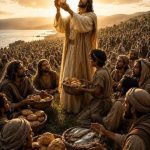
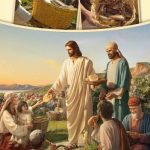
The disciples misunderstood his words. Thinking only in material terms, they assumed he was rebuking them for forgetting to bring enough bread. Jesus gently corrected them by reminding them of the two miraculous feedings. When he fed five thousand people, twelve baskets of leftovers were gathered. When he fed four thousand, seven baskets remained. These miracles were not only acts of compassion but also powerful signs. The twelve baskets symbolize the twelve tribes of Israel, God’s chosen people. The seven baskets can represent fullness and universality, pointing toward the nations beyond Israel and the extension of salvation to the Gentiles.
Through these signs, Jesus makes it clear that salvation is offered to all, yet it comes through him alone. He is the true bread from heaven. He warns his disciples not to be misled by the rigid legalism of the Pharisees or the worldly, self-serving politics of Herod and his followers. Both paths distort God’s plan, one through religious hypocrisy, the other through moral corruption and compromise.
Life messages:
- With trusting faith, we are invited to rely on God’s providence in our daily lives. The same Lord who multiplied bread continues to nourish us through his Word and through the Holy Eucharist. When we faithfully do our part, God supplies what we lack.
- We must remain vigilant against the subtle “leaven” of our own time, hypocrisy, immorality, pride, prejudice, and materialism. Instead of allowing society’s negative influences to shape us, we are called to rely on the Holy Spirit who dwells within the Church, guiding, protecting, and strengthening us in truth. God bless you.
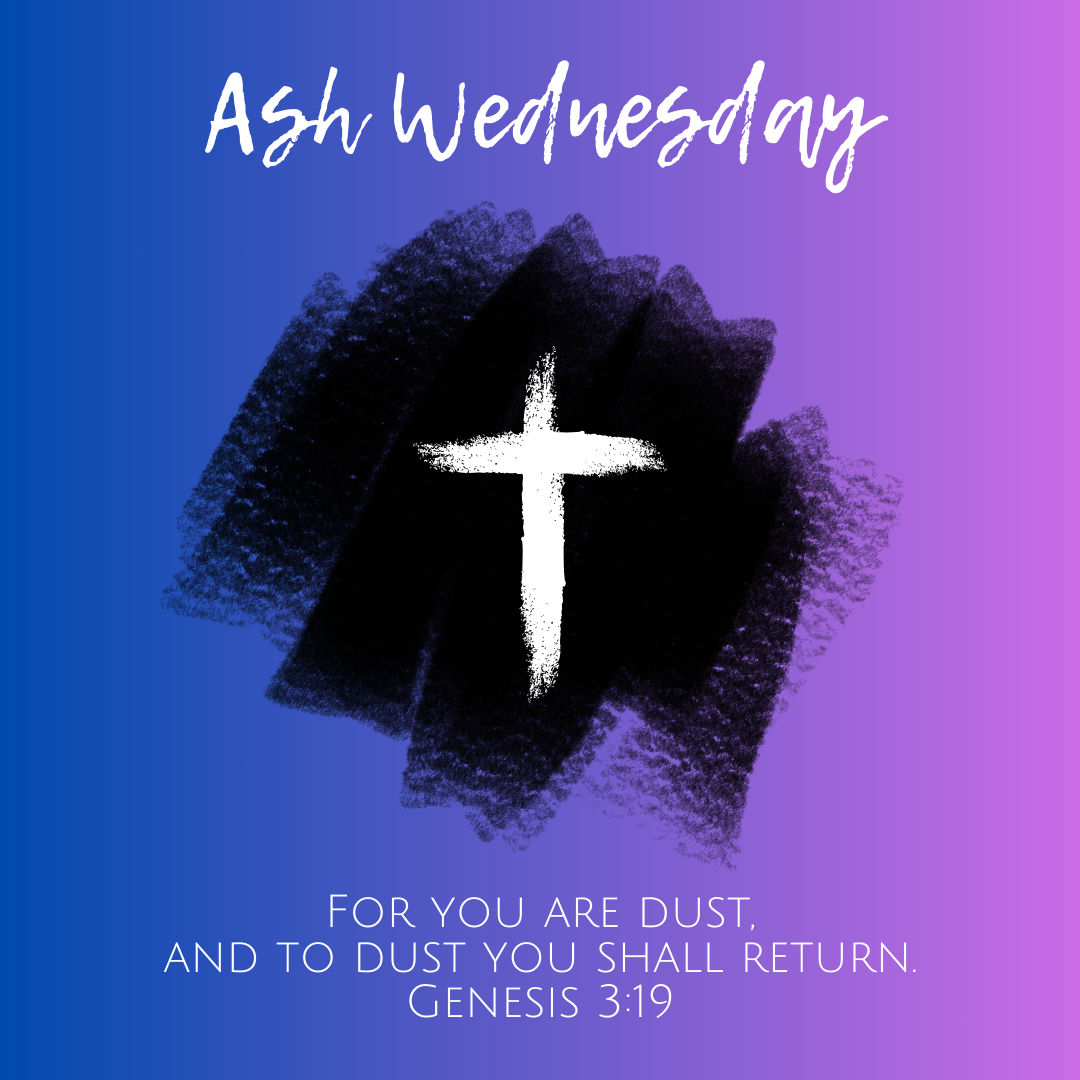
Feb 18 Wednesday: ASH WEDNESDAY: Mt 6: 1-6, 16-18
Ash Wednesday: A Call to Conversion
Ash Wednesday, traditionally called dies cinerum or “Day of Ashes,” marks the beginning of Lent, a season of repentance and renewal. The use of ashes has deep biblical roots. In the Old Testament, wearing sackcloth and ashes was a visible sign of sorrow for sin and sincere repentance. The people of Nineveh responded to Jonah’s preaching with fasting and ashes. Queen Esther fasted and prayed in distress. Such gestures expressed humility before God and an acknowledgment of human frailty.
In the early Church, Christians who had committed serious sins sometimes performed public acts of penance, wearing sackcloth and ashes as signs of their repentance. Today, the Church continues this ancient tradition in a sacramental way. Ash Wednesday and Good Friday are observed as days of fasting and abstinence, while the Fridays of Lent are days of abstinence. These practices are not mere rules, they are spiritual disciplines meant to strengthen our prayer and deepen our repentance.
The Scripture readings
The prophet Joel calls us to a true conversion of heart. “Return to me with all your heart,” he says, reminding us that God desires inward transformation, not empty ritual. Psalm 51 gives us one of the most beautiful prayers of repentance, “Create in me a clean heart, O God.” Saint Paul urges us to be reconciled with God, to accept the grace that is offered to us now. In the Gospel, Jesus teaches that prayer, fasting, and almsgiving must come from the heart, not as public display but as sincere acts done for God alone.
The meaning of the ashes
During the liturgy, ashes made from the palms of the previous year’s Palm Sunday are blessed. The priest traces the sign of the cross on each forehead, saying either, “Remember that you are dust and to dust you shall return,” or “Repent and believe in the Gospel.”
This simple gesture carries profound meaning.
First, it reminds us of our mortality. We are fragile, our lives are brief, and our time is a gift.
Second, it warns us of the seriousness of sin and the need for reconciliation with God.
Third, it invites us lovingly to return to our merciful Father, just as the prodigal son returned home in humility and trust.
The ashes are not a sign of despair, but of hope. They remind us that God is ready to forgive and to renew our lives if we turn back to Him.
Ash Wednesday messages
- Lent is a time to purify and renew our lives through genuine repentance. Repentance means more than regret, it means turning away from sin and turning toward God. We express this conversion by daily prayer, by seeking forgiveness from those we have hurt, and by offering forgiveness to those who have hurt us.
- We are called to practice prayerful fasting and acts of penance, following the example of Jesus who fasted before beginning his public ministry. Fasting disciplines our desires and weakens unhealthy attachments. It gives us greater spiritual clarity and strength. It creates space for prayer and reminds us to share what we have with those in need. When we fast with the right spirit, we become more receptive to God’s Word and more prepared to receive Christ in the Holy Eucharist.
Ash Wednesday stands at the doorway of Lent as a loving call from God. It invites us to humility, conversion, and renewal, so that by Easter we may rise with Christ in newness of life. God bless you.
Feb 19 Thursday: Lk 9:22-25
First, deny yourself. This does not mean self-hatred or the rejection of our dignity. Rather, it means removing self-centeredness from the throne of our hearts. It involves cleansing the heart of sinful habits, unhealthy attachments, and destructive tendencies, with the help of the Holy Spirit. It requires placing God at the center of our lives and dedicating ourselves to Him. When God reigns in the heart, we are able to surrender our lives in loving service to others for His glory.
Second, take up your cross. This means more than passively accepting suffering. It includes embracing the sacrifices that come with living faithfully, serving others, sharing our blessings, and resisting temptation. Every disciple carries some form of cross, illness, disappointment, misunderstanding, responsibility, or sacrifice. When we remember those who suffer far more severely, such as the seriously ill or those living in harsh and unjust conditions, our own burdens can be placed in perspective. Most importantly, we believe that Christ does not ask us to carry our crosses alone. He walks with us, strengthening us and transforming suffering into a path of grace.
Third, follow me. To follow Jesus is to shape our lives according to his word. It means obedience rooted in trust. We follow him by listening to Scripture, by conforming our decisions to his teaching, and by remaining faithful to the guidance he provides through his Church. Discipleship is not occasional enthusiasm, it is daily commitment.
Jesus then presents a striking paradox about saving and losing life. The word “life” carries a double meaning. It refers both to our earthly existence and to eternal life with God. Whoever clings selfishly to earthly security and comfort at any cost risks losing eternal life. But whoever spends his earthly life generously for Christ and the Gospel will gain eternal life. In losing what is temporary for the sake of what is eternal, one truly finds lasting life.
Life message:
We are invited not to fear the cross but to embrace it. We honor the cross, we carry the crosses entrusted to us, and we allow them to become instruments of salvation. When united with Christ and guided by the Holy Spirit, even suffering becomes redemptive and leads us toward the fullness of life he promises. God bless you.
Feb 20 Friday: Mt 9: 14-15: Mt 9:14-15
Today’s Gospel presents Jesus’ response to a sincere question raised by some disciples of John the Baptist about fasting. In Jewish religious life, prayer, fasting, and almsgiving were central practices. Since John’s disciples and the Pharisees regularly fasted, they were puzzled to see Jesus’ disciples sharing meals with him and not observing additional fasts.
Jesus answers their question with rich imagery. In the Gospel accounts, he uses three comparisons, the wedding guests, the patch on a torn garment, and new wine in old wineskins. In Matthew’s version, he focuses on the image of the wedding feast. He compares his disciples to the friends of the bridegroom who celebrate with him during the wedding festivities. As long as the bridegroom is present, fasting would be out of place. A wedding is a time of joy, not mourning. Jesus identifies himself as the Bridegroom, revealing something profound about his identity and mission. When he is taken away, referring to his Passion and death, then his followers will fast.
Joy is a mark of Christian life. Saint Paul lists joy immediately after love among the fruits of the Spirit, showing that authentic faith is not gloomy but life-giving. The Fathers of the Church saw deep meaning in the image of the Bridegroom and the Bride. Christ is the Bridegroom, and the Church is his Bride. As long as we live in close communion with him, our lives are marked by spiritual joy. But when sin separates us from him, that is the time for repentance, tears, and fasting. Some spiritual writers also connect this image with the Holy Eucharist, where the Bridegroom remains present among his people.
Jesus does not reject fasting itself. He does not criticize John’s discipline or the legitimate fasts prescribed by the Law. What he challenges is the imposition of additional burdens that miss the deeper meaning of religious practice. Fasting must flow from love and relationship, not from mere external observance.
Life messages:
- Fasting remains a valuable spiritual discipline. It helps us control unhealthy attachments and weakens sinful habits. In this sense, it reduces what we might call “spiritual obesity,” the accumulation of selfish desires. Fasting creates space for prayer, strengthens self-discipline, and reminds us to share what we have with the needy. It also unites us more closely to the suffering Body of Christ, as Saint Paul teaches.
- We are called to be spiritually flexible, open to the guidance of the Holy Spirit in the life of the Church. The same Spirit who inspired the early community continues to guide the Church’s teaching and pastoral practice. True fidelity does not mean rigid attachment to customs for their own sake, but generous obedience to Christ as he leads his Church in every age. God bless you