




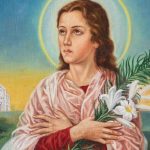
July 6 Monday: St. Maria Goretti, Virgin, Martyr. Mt 9:18-26
Two Miracles of Faith
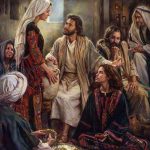
Today’s Gospel recounts two remarkable miracles, the healing of a woman suffering from a hemorrhage and the raising of a synagogue ruler’s daughter. Jesus performed both miracles in response to the sincere faith of those who sought his help. Although their faith was imperfect, it was genuine and trusting, and Jesus rewarded it with healing and restored life.
The Synagogue Ruler and the Woman
The synagogue ruler, despite belonging to the Jewish religious establishment, humbly turned to Jesus when all human help had failed. Even after hearing that his daughter had died, he remained with Jesus in faith. Likewise, the woman with the hemorrhage courageously ignored religious and social restrictions to touch the fringe of Jesus’ garment, believing she would be healed. Through their faith, both the woman and the young girl were restored, one to health and the other to life, and both were welcomed back into their community.
3. Life Message
Jesus welcomes us with all our weaknesses and imperfect faith. We should never hesitate to bring our physical, emotional, or spiritual struggles to him, trusting in his healing mercy. We also share in Christ’s healing mission by caring for the sick, praying for them, encouraging them with our presence and words, and becoming instruments of God’s compassion and hope. God bless you.
July 7, Tuesday: Mt 9:32-38
Today’s Gospel describes the healing of a deaf and mute man by an exorcism which Jesus performed during one preaching and healing journey. It also mentions the Pharisees’ accusation that Jesus used the power of Beelzebub to heal the man, and then describes Jesus’ sympathy for the whole of the leaderless people.
Jesus had a double mission, to preach the Good News of God’s love and salvation to the “lost sheep” of the House of Israel, and to liberate people from the power of sin, illnesses, and evil spirits. The first part of today’s Gospel describes the misinterpretation of Jesus’ liberating mission by the Pharisees when Jesus healed a deaf and mute man by exorcism. In the second part, Jesus expresses true compassion for the shepherdless sheep of Israel because their shepherds were more interested in the external observance of the Law and its sacrifices than in giving people God’s word and promoting by example and word, the practice of love, mercy, and justice. That is why Jesus reminds the listeners to pray for genuine shepherds to feed them and lead them.
Life message1) We need to share Christ’s preaching and liberating mission. Let us remember te words of St. Teresa of Avila: “Now Jesus has no other mouths, eyes, ears, hands and feet than ours.” Jesus places a preaching and healing mission in our care and helps us to continue it. The most effective way of preaching Christ is by leading a transparent Christian life, radiating Jesus’ love, mercy, and forgiveness. But we cannot liberate others as long as we are in chains. Hence, let us first receive Jesus’ liberation of us from the chains which bind us. God bless you.
July 8, Wednesday: Mt 10:1-7
Today’s Gospel recounts the calling and first mission of the Twelve Apostles. It marks a decisive moment in the public ministry of Jesus. Having proclaimed the Kingdom of God and demonstrated its power through His teaching, miracles, and compassion, Jesus now shares His mission with ordinary men whom He has chosen to become His closest collaborators. They are sent as His representatives to announce that God’s long-awaited promises are being fulfilled. This passage reminds us that the mission of the Church begins not with extraordinary people, but with ordinary believers transformed by God’s grace.
The first missionary was God Himself. Out of His infinite love for the world, God the Father sent His only-begotten Son, Jesus Christ, into human history. As Jesus Himself declared, “For God so loved the world that he gave his only Son” (John 3:16). The Incarnation is the beginning of the greatest missionary movement in history. Jesus came to reveal the Father’s boundless mercy, to call sinners to repentance, to heal the brokenhearted, and to save humanity through His Passion, Death, and Resurrection. The apostles were therefore not beginning a new mission of their own; they were continuing the mission of Christ, who had first been sent by the Father (John 20:21).
Before choosing the Twelve, Jesus spent the whole night in prayer (Luke 6:12-13). His choice was neither accidental nor based on human standards. He selected men who appeared unremarkable in the eyes of the world. Most were fishermen, accustomed to hard work, perseverance, patience, and teamwork. Matthew had been a tax collector, despised by many of his fellow Jews for collaborating with the Roman authorities. Simon the Zealot belonged to a movement that passionately opposed Roman occupation and longed for political liberation. Humanly speaking, Matthew and Simon represented opposite ends of the political spectrum, yet Jesus united them in a common mission. Their unity did not arise from similar personalities or backgrounds but from their common love for Christ. The Gospel demonstrates that the Church is built not on human compatibility but on communion with Jesus.
Jesus did not merely appoint the apostles; He empowered them. He entrusted them with authority over unclean spirits and the power to heal the sick. These signs confirmed that the Kingdom of God was breaking into human history. Their mission was to proclaim, “The Kingdom of Heaven is at hand” (Matthew 10:7). The miracles they performed were not ends in themselves but visible signs that God’s reign was already present in the person of Jesus. Their preaching and works of mercy went hand in hand, revealing both the truth and the compassion of God.
The choice of such ordinary men reveals an important spiritual principle. God delights in working through human weakness so that His power may be clearly seen. As Saint Paul the Apostle would later write, “We have this treasure in earthen vessels, that the surpassing power may belong to God and not to us” (2 Corinthians 4:7). The effectiveness of the apostles did not come from their education, wealth, eloquence, or influence, but from their complete dependence on Christ and the transforming action of the Holy Spirit.
The Church continues this missionary mandate today. Through Baptism, every Christian shares in Christ’s prophetic mission. The Second Vatican Council teaches that every baptized person is called to participate in the Church’s mission of evangelization. The decree Apostolicam Actuositatem reminds us that the apostolate belongs not only to bishops, priests, and religious, but also to the laity, who are called to bear witness to Christ in their families, workplaces, schools, and communities.
Life Messages
- Recognize your missionary vocation. Every Christian is sent by Christ. Whether we are parents, teachers, students, workers, priests, or religious, we are called to make Christ known through our words, actions, and example. The first sermon people often hear is not from a pulpit but from the witness of a holy life.
- Trust that God can use ordinary people. We sometimes feel inadequate because of our weaknesses or limitations. The apostles remind us that God does not call only the qualified; He qualifies those whom He calls. If we remain faithful and available, He can accomplish extraordinary things through us.
- Seek unity in Christ despite differences. Just as Matthew and Simon learned to serve together despite their opposing backgrounds, Christians today are called to place Christ above politics, culture, ethnicity, and personal preferences. Our unity is rooted in our common discipleship.
- Support the Church’s missionary work. We participate in Christ’s mission by praying for missionaries, encouraging vocations, contributing generously to missionary efforts, and sharing the Gospel wherever God has placed us. As Saint Thérèse of Lisieux, Patroness of the Missions, demonstrated, one can be a powerful missionary through prayer and sacrificial love.
- Remain close to Christ through prayer. Jesus prayed before choosing and sending the apostles. Likewise, every fruitful mission begins in prayer. Before speaking about Christ, we must first spend time with Him in Scripture, the Holy Eucharist, and personal prayer.
As Jesus says to every disciple in every generation, “As the Father has sent me, so I send you” (John 20:21). May we respond with generosity, trusting that the same Lord who called the Twelve continues to call, strengthen, and send His Church into the world today. God bless you.
July 9, Thursday: St. Augustine Zhao Rong, Priest and Companion- Martyrs. Mt 10:7-15
Today’s Gospel presents Jesus commissioning the Twelve Apostles and sending them on their first missionary journey to prepare the towns and villages for His arrival. He sends them out two by two, entrusting them with the sacred mission of proclaiming the nearness of the Kingdom of God, calling people to repentance, announcing God’s forgiveness, and bringing healing and liberation to those oppressed by sin and evil. Their mission was not merely to deliver a message, but to become living witnesses of Christ through their simplicity, faith, and total dependence on God. Just as God sent Moses to confront Pharaoh (Exodus 3:10), the prophets to call Israel back to covenant fidelity (Jeremiah 1:7-10), and later Paul and Barnabas to preach to the nations (Acts 13:2-3), so now Jesus sends His Apostles as ambassadors of the New Covenant, continuing God’s saving work in the world.
Jesus’ instructions reveal the spirit that should characterize every authentic missionary. They were to take no extra provisions for the journey, neither bread nor money nor unnecessary possessions, relying completely on God’s providence rather than on material security. In doing so, they would demonstrate that the One who feeds the birds of the air and clothes the lilies of the field (Matthew 6:25-34) would also provide for His servants. Their poverty was not a sign of weakness but of profound trust in God. Like Elijah, who was sustained by the widow of Zarephath during famine (1 Kings 17:8-16), and later by the angel in the wilderness (1 Kings 19:5-8), the Apostles were to experience God’s faithful care through the generosity of those who welcomed them.
Furthermore, Jesus wanted His disciples to distinguish themselves from religious leaders who sought prestige, wealth, or personal advantage. Their authority was to flow from holiness rather than possessions, from humble service rather than worldly influence. They were instructed to stay in one worthy home, offer the blessing of God’s peace upon it, gratefully accept whatever food and shelter were provided, and avoid moving from house to house in search of greater comfort. Such contentment would testify that their treasure was not earthly gain but the Kingdom of God. Their ministry was to be accompanied by concrete signs of God’s reign: preaching that “the Kingdom of Heaven is at hand,” healing the sick, cleansing lepers, casting out demons, and even raising the dead. These miraculous works fulfilled the prophetic vision of the Messianic age and confirmed that in Jesus, God had visited His people with salvation (Isaiah 35:5-6; Luke 7:22).
Life Messages
1) Every Christian shares in Christ’s missionary mandate. Through Baptism and Confirmation, each of us is called not only to follow Christ as a disciple but also to participate in His mission as an apostle. Before ascending into heaven, Jesus entrusted the Church with the universal command: “Go therefore and make disciples of all nations” (Matthew 28:19-20). Evangelization is therefore not reserved for priests, religious, or missionaries; it is the vocation of every believer. We proclaim Christ most effectively not simply through eloquent words or theological arguments, but through lives transformed by His grace. Like the early Christian community whose witness attracted many to the faith (Acts 2:42-47), and like St. Paul who urged believers to “imitate me as I imitate Christ” (1 Corinthians 11:1), our integrity, charity, humility, forgiveness, and joyful hope become the most convincing testimony to the Gospel. In a world often marked by selfishness and despair, our lives should reflect the compassion, mercy, and holiness of Jesus.
2) We are also called to participate in Christ’s ministry of liberation. The Gospel reveals Jesus as the One who came “to proclaim liberty to captives” (Luke 4:18). Although demonic possession exists, many people today are enslaved by forces that destroy their dignity and freedom. The demons of addiction to drugs, alcohol, nicotine, pornography, gambling, uncontrolled sexual immorality, greed, consumerism, materialism, pride, hatred, and despair continue to bind countless lives. These modern forms of slavery separate people from God and from one another. Like the Good Samaritan who compassionately cared for the wounded man (Luke 10:25-37), Christians are called to become instruments of Christ’s healing and restoration. Through prayer, the sacraments, works of mercy, patient accompaniment, and the courageous proclamation of God’s truth, we help others encounter the liberating power of Christ. At the same time, we must constantly seek His grace to overcome our own weaknesses, remembering that true freedom is found only in the One who declared, “If the Son makes you free, you will be free indeed” (John 8:36). As St. Paul reminds us, “For freedom Christ has set us free” (Galatians 5:1), calling us to live no longer as slaves to sin but as sons and daughters of God. God bless you.
July 10, Friday: Mt 10:16-23
Matthew’s Gospel was written for a predominantly Judeo-Christian community living through a time of intense suffering and opposition because of their faith in Christ. The Lord’s prophetic warnings to His Apostles, “You will be handed over to governors and kings because of Me,” and, “Brother will betray brother to death, a father his child, and children will rise against their parents,” had begun to unfold before their very eyes. The martyrdom of St. James at the hands of King Herod (Acts 12:1-2), the imprisonment of St. Peter (Acts 12:3-11), the stoning of St. Stephen (Acts 7:54-60), and the relentless persecutions endured by St. Paul (2 Corinthians 11:23-28) all confirmed that fidelity to Christ often demanded heroic sacrifice. By recalling these words of Jesus, Matthew sought to strengthen his community, assuring them that God never abandons those who remain steadfast. The same Lord who promised, “I am with you always, to the end of the age” (Matthew 28:20), would sustain His disciples through every trial by the power of His grace and the presence of the Holy Spirit.
Jesus never concealed the cost of discipleship. Instead of promising worldly success or an easy life, He spoke honestly about the suffering that accompanies faithful witness to the Gospel. “If they persecuted Me, they will also persecute you” (John 15:20). The early Christians experienced persecution from several directions. The Roman authorities viewed them with suspicion because they refused to worship the emperor or participate in pagan religious ceremonies. Many Jewish religious leaders opposed them because they proclaimed Jesus as the promised Messiah, while even members of their own families often rejected and betrayed those who embraced the Christian faith. Thus, Jesus’ prediction that loyalty to Him could divide households (Matthew 10:34-36) became a painful reality.
The accusations levelled against the first Christians were often false and malicious. Because Christians spoke of eating the Body and drinking the Blood of Christ in the Eucharist, they were falsely accused of cannibalism. Since they rejected the worship of the Roman gods, they were branded atheists. Their secret gatherings for worship gave rise to slanderous accusations of immorality, while their proclamation of Christ as Lord led some to accuse them of disloyalty and sedition against the Empire. Moreover, the Christian teaching that every person possesses equal dignity before God, whether Jew or Greek, slave or free, male or female (Galatians 3:28), challenged the social structures of an empire built upon inequality and slavery. Their commitment to charity, justice, and the sanctity of life stood in sharp contrast to the values of the surrounding culture, making them objects of misunderstanding and hostility. Yet, despite imprisonment, torture, and martyrdom, the Church continued to grow because the blood of the martyrs became, in the words of Tertullian, “the seed of Christians.”
The history of the Church continues to testify that persecution has never been able to extinguish the light of the Gospel. From the sufferings of the Apostles to the witness of countless martyrs throughout every century, God’s people have remained faithful because they trusted not in human strength but in the grace of Christ. Even today, many Christians across the world continue to endure imprisonment, violence, discrimination, and social exclusion simply because they profess the name of Jesus. Their courageous witness reminds us that the Cross always precedes the Resurrection and that those who persevere faithfully will share in Christ’s eternal glory (Romans 8:17).
Life Messages
1) We are called to remain faithful to Christ in a culture that often challenges religious belief. Although many societies guarantee freedom of religion, believers increasingly encounter subtle forms of opposition that seek to confine faith to the private sphere. Aggressive secularism, moral relativism, and growing indifference toward God frequently ridicule Christian convictions and undermine the values taught by the Gospel. Through entertainment, social media, and other forms of communication, many people, especially the young, are exposed to messages that weaken faith and obscure objective moral truth. This quiet but persistent pressure has often been described as a form of “white martyrdom,” where Christians suffer not through physical violence but through ridicule, exclusion, discrimination, and the constant temptation to compromise their beliefs. In such circumstances, believers must remember St. Paul’s exhortation: “Do not be conformed to this world, but be transformed by the renewal of your mind” (Romans 12:2).
2) Parents and Christian families have a sacred responsibility to form the faith of the next generation. The family is rightly called the “domestic Church” because it is the first place where children encounter God through prayer, love, forgiveness, and the witness of Christian living. While parishes, Catholic schools, and catechists provide invaluable support, parents remain the primary educators of their children in the faith. As Moses instructed Israel, God’s commandments are to be taught diligently to children and spoken of at home and throughout daily life (Deuteronomy 6:6-7). Likewise, St. Paul reminds parents to bring up their children “in the discipline and instruction of the Lord” (Ephesians 6:4). Through family prayer, participation in the Holy Eucharist, regular reception of the Sacrament of Reconciliation, study of Sacred Scripture, and lives of charity and integrity, parents lay a solid spiritual foundation that equips their children to remain faithful amid the challenges of the modern world. In every age, the Church flourishes when Christian families become schools of faith, hope, and love, raising disciples who are prepared not only to believe in Christ but also to bear courageous witness to Him before the world. God bless you.
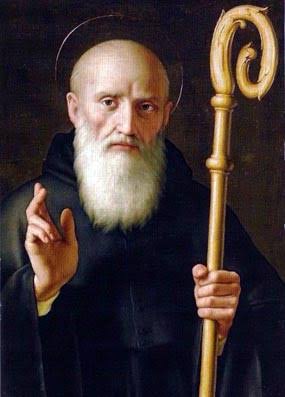
July 11, Saturday: St. Benedict, Abbot. Mt 10:24-33
Today’s Gospel brings us to the conclusion of Jesus’ missionary discourse, in which He commissions the Twelve Apostles to continue His ministry of preaching the Gospel, healing the sick, and proclaiming the coming of God’s Kingdom. Having instructed them to embrace a life of simplicity, dependence on divine providence, and unwavering commitment to their mission, Jesus now prepares them for the inevitable opposition they will encounter. He does not promise them an easy path, but He assures them that persecution and rejection will never have the final word. Instead, three times He repeats the reassuring command, “Do not be afraid.” This repeated exhortation reveals both the reality of suffering and the certainty of God’s abiding presence. Just as the prophets before them faced hostility for speaking God’s truth, and as Jesus Himself would endure rejection, so His disciples are called to remain steadfast, confident that the victory ultimately belongs to God. Throughout salvation history, the Lord has continually encouraged His servants with the same words. He told Joshua, “Be strong and courageous; do not be frightened” (Joshua 1:9). Through the prophet Isaiah He declared, “Fear not, for I am with you” (Isaiah 41:10), and the angel Gabriel greeted the Blessed Virgin Mary with the reassuring words, “Do not be afraid” (Luke 1:30). God’s faithful presence has always been the source of courage for His people.
Jesus offers three compelling reasons why His Apostles, and every Christian disciple, should live free from fear. The first reason is the certainty that God’s truth will ultimately triumph. Human beings may attempt to silence the Gospel, distort the truth, or persecute its messengers, but they cannot frustrate God’s saving plan. Jesus declares, “Nothing is covered that will not be revealed, or hidden that will not be known.” Every deception, injustice, and hidden act of evil will one day be brought into the light of God’s judgment. As St. Paul reminds us, “The Lord will bring to light the things now hidden in darkness and will disclose the purposes of the heart” (1 Corinthians 4:5). This assurance sustained countless biblical figures. Joseph, though falsely accused and imprisoned, was eventually vindicated by God (Genesis 41). Susanna, falsely condemned through malicious testimony, was rescued when God revealed the truth through the prophet Daniel (Daniel 13). Above all, the Resurrection of Christ stands as the definitive proof that truth can never be permanently buried and that God’s justice will ultimately prevail over every form of evil.
The second reason for courage is that the power of earthly persecutors is limited. Jesus acknowledges that His followers may suffer physically, even to the point of martyrdom, but He reminds them that human power extends only to the body. No earthly authority can destroy the immortal soul that belongs to God. Therefore, true fear should be directed not toward those who can inflict temporal suffering, but toward losing communion with God through sin. This perspective enabled the Apostles, the early martyrs, and countless saints to remain faithful even in the face of torture and death. St. Stephen forgave his executioners while gazing upon the glory of heaven (Acts 7:54-60). St. Peter and the other Apostles rejoiced that they were considered worthy to suffer for the name of Jesus (Acts 5:41). Their courage flowed not from human strength but from the conviction that eternal life far surpasses every earthly hardship. As St. Paul beautifully expressed, “I consider that the sufferings of this present time are not worth comparing with the glory about to be revealed to us” (Romans 8:18).
The third and greatest reason not to fear is the loving providence of our Heavenly Father. Jesus illustrates God’s tender care by pointing to the sparrows, birds of little commercial value that nevertheless never escape the Father’s attention. If God lovingly watches over even the smallest creatures, how much more does He care for those created in His own image and redeemed by the Blood of His Son? Jesus assures us that even the hairs of our heads are all counted, emphasizing that nothing in our lives is insignificant before God. This profound truth echoes the words of the Psalmist: “The Lord is my shepherd, I shall not want” (Psalm 23:1), and reminds us of St. Peter’s encouragement to “cast all your anxieties on Him, because He cares for you” (1 Peter 5:7). Throughout Scripture, God’s providence is evident. He fed Israel with manna in the wilderness (Exodus 16), protected Daniel in the lions’ den (Daniel 6), preserved the three young men in the fiery furnace (Daniel 3), and miraculously sustained Elijah during famine (1 Kings 17). The same faithful God continues to guide and sustain His children today, even when His presence seems hidden amid suffering.
Life Messages
1) Christ invites us to overcome every fear by placing our complete trust in God. Fear is one of the most common human experiences. We fear illness, accidents, and death. We fear losing those we love, our livelihood, our possessions, or our good name through misunderstanding and false accusations. Some struggle with anxieties arising from emotional or psychological burdens, while others worry about global crises such as wars, terrorism, economic instability, pandemics, natural disasters, and social unrest. Yet the Gospel repeatedly reminds us that fear must never govern the life of a disciple. Confidence in God’s providence does not eliminate suffering, but it enables us to face every trial with hope, knowing that our lives remain securely in His loving hands. As the Psalmist proclaims, “Even though I walk through the darkest valley, I fear no evil; for You are with me” (Psalm 23:4).
2) We should remember every day that we are infinitely precious in the eyes of God. Jesus’ words, “Do not be afraid; you are worth more than many sparrows,” reveal the immeasurable value that God places upon each human person. We are not forgotten, abandoned, or insignificant. Through Baptism we have become beloved sons and daughters of the Father, members of the Body of Christ, and temples of the Holy Spirit. Whatever trials we encounter, we can confidently entrust ourselves to the God who knows us completely and loves us perfectly. This confidence should inspire us to persevere in faith, deepen our prayer, receive strength through the sacraments, and become instruments of hope for those burdened by fear and discouragement. When we place our trust in Christ, we discover that His promise remains true in every age: “Take courage; I have conquered the world” (John 16:33). God bless you.

May God heal us from from illness and raise every dead thing in or lives.Amen
Amen