


Zechariah 9:9-10
Romans 8:9, 11-13
Matthew 11:25-30
OVERVIEW OF THE READINGS
The first reading from Zechariah announces a humble king who enters Jerusalem on a donkey and brings peace to the nations. The second reading from Romans declares that those who have the Spirit of Christ dwelling in them will receive life even for their mortal bodies. The Gospel from Matthew presents Jesus thanking the Father for revealing divine truth to the childlike and inviting all who labour to take his gentle yoke. The common theme uniting the readings is the reversal of worldly expectations: true power appears in humility, true life comes through the Spirit, and true rest is found in Christ’s gentle yoke.
REFLECTION
My brothers and sisters in Christ, the prophet Zechariah addresses a people who had returned from exile but continued to live under foreign domination. Their hopes of a glorious restoration remained unfulfilled. Although they had come back to their homeland, the temple had lain in ruins for sixteen years, and the people felt abandoned and discouraged. Into this atmosphere of disappointment, the prophet proclaims the coming of a king. Yet this king overturns every human expectation. He does not ride a warhorse like the rulers of Persia or the conquerors of Babylon. Instead, he comes “humble and riding on a donkey.” In the ancient Near East, the donkey was a symbol of peaceful kingship, in sharp contrast to the warhorse, which represented military conquest. The original word rendered “humble” also carries connotations of poverty, affliction, and complete dependence on God.
This king’s strength does not rest on chariots or cavalry. His authority comes from the righteousness and salvation bestowed on him by God. Rather than advancing through violence, he will remove the weapons of war from the land and proclaim peace to the nations. His reign will extend from sea to sea, not by force of arms but through the transforming and persuasive power of peace.
Let me illustrate this with a story. A powerful king once visited a remote village known for its resistance to outside authority. The villagers expected him to arrive with soldiers and chariots. Instead, the king came walking alone, carrying water to a sick woman’s house. The villagers, moved by his humility, welcomed him with open hearts. This story helps to show how true authority wins allegiance not through force but through humble service, just as Zechariah’s king wins peace by abandoning the weapons of war.
The Church Fathers saw in this prophecy the very character of the Messiah. Justin Martyr writes that the king riding on a donkey reveals a kingdom of peace rather than political domination (Dialogue with Trypho, 53). Jerome adds that the contrast between the donkey and the warhorse signifies the substitution of a kingdom achieved through humility for one achieved through worldly force (Commentary on Zechariah, Book 3, 9:9). God’s way of ruling overturns every human expectation about power.
Dearly beloved in Christ, Saint Paul writes to the Christians in Rome about what it means to live in the Spirit. He tells them that if the Spirit of God truly dwells in them, they are no longer in the flesh. The word in the original language for “flesh” does not mean the physical body. It means the whole sphere of human existence lived apart from God, relying on one’s own strength, lineage, or achievements. To live in the Spirit means to be transferred into a new realm where God’s presence makes its home in the believer. The word in the original language for “dwells” means to settle down permanently, not just to visit occasionally. This same Spirit who raised Jesus from the dead will give life to our mortal bodies. Paul then draws the practical conclusion: if we live according to the flesh, we will die. But if by the Spirit we put to death the deeds of the body, we will live. This is not a threat but a description of reality. Life oriented away from God leads to death. Life oriented towards the Spirit, cooperating with his transforming power, leads to life.
Let me offer a brief illustration. A master carpenter took on an apprentice who could barely lift the heavy tools. The master did not give the apprentice lighter work and walk away. Instead, he worked alongside the apprentice, placing his own strong hands under the heavy beam so that the apprentice felt only half the weight. The apprentice grew stronger not by bearing the load alone but by sharing it with someone stronger. This is what the Spirit does for us. We are not left to struggle on our own. The Spirit who raised Jesus from the dead dwells within us and carries the weight of our transformation.
As Saint John Chrysostom teaches, the Holy Spirit’s indwelling is not merely symbolic but a living and active presence that makes believers sharers in the divine life. The Spirit dwells within us and transforms us from within (Homilies on Romans, Homily 13 on Romans 8:9). As Saint Ambrose explains, the Spirit will give life to our mortal bodies just as he raised Christ from the dead. Far from leaving us unchanged, the Spirit prepares us even now for the resurrection to come (Homilies on Romans, Homily 13).
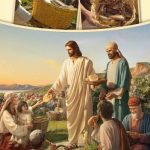
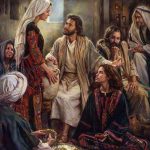
My dear People of God, the Gospel presents Jesus at a moment of widespread rejection. The towns where he performed mighty works have refused to repent. John the Baptist, from his prison cell, has begun to doubt. The religious leaders have rejected Jesus’ message. Yet in this dark moment, Jesus turns to the Father in thanksgiving. He thanks the Father for hiding these things from the wise and understanding and revealing them to the childlike. The word in the original language for “childlike” means infants who cannot yet speak, people who have no pretensions, no status, no achievements to present. Jesus then declares that all things have been delivered to him by the Father. No one knows the Son except the Father, and no one knows the Father except the Son and anyone to whom the Son chooses to reveal him. This is an astonishing claim to unique mediatorship. Jesus then issues an invitation: Come to me, all who labour and are heavy laden, and I will give you rest. Take my yoke upon you and learn from me, for I am gentle and lowly in heart. The word in the original language for “yoke” refers to a teaching or discipline. In Jewish tradition, the yoke of the Torah was a honoured obligation. But Jesus offers his own yoke, which he describes as “easy” and his burden as “light.” The word for “easy” means well-fitting, kind, and perfectly suited to the one who wears it.
Let me illustrate. A young father struggled to carry his crying child up a steep hill. His arms grew tired. His back ached. Then the child’s older brother came alongside and said, “Put your arm around my shoulder. I will walk with you.” With the older brother bearing much of the father’s own weight, the journey became bearable. The child was still carried. The hill was still steep. But the load was shared. This is what Jesus does. He does not remove the demands of discipleship. He does not promise an easy life without struggle. But he walks alongside us, carrying the heavy end of the yoke. He is the older and stronger one who shares our burden. His yoke fits because he made it for us.
The Church Fathers understood this invitation as the heart of the Gospel. John Chrysostom writes that Jesus calls not a select few but all who labour, regardless of their status, and promises that his yoke does not crush but enables (Homilies on the Gospel of Matthew,Homily 38, 11:28-30). Augustine explains that the rest Jesus promises is not idleness but the peace that comes from being united to him, the soul’s true rest found only in God (Sermons on the New Testament, Sermon 126.4). Jesus is the Wisdom of God who calls the weary to himself and gives them rest that the world cannot give.
THE REFLECTION IN A NUTSHELL
My brothers and sisters in Christ, today’s readings call us to recognise that God’s kingdom is established not through power or violence but through humility, obedience, and love. Christ, the humble King, invites us to lay aside our pride and entrust ourselves completely to him. The Holy Spirit dwells within us, strengthening us each day to put to death all that separates us from God and to live as his faithful children. Christ does not promise a life free from trials, but he assures us that we will never bear our burdens alone, for his yoke is well fitting and his grace is always sufficient. As we approach the altar to receive the Lord in Holy Communion, may we open our hearts more fully to his transforming presence. May the peace of Christ reign in our families, our communities, and our world. And may our lives bear witness to the humble King whose reign extends from sea to sea and whose victory is won through the power of sacrificial love.