




June 22 Monday: St. Paulinus of Nola, Bishop. Mt 7:1-5.
In today’s passage from the Sermon on the Mount, Jesus warns His disciples against the habit of judging others rashly, harshly, or unfairly. While Christians are called to recognize right from wrong and to correct others with charity when necessary, Jesus condemns the tendency to assume the worst about another person’s motives, intentions, character, or actions. Such judgment belongs ultimately to God alone, Who alone sees the whole truth and knows the depths of every human heart.
Jesus gives several reasons why we should refrain from judging others. First, only God possesses the perfect knowledge necessary for a just judgment. Human beings see only outward appearances, but God sees hidden intentions, struggles, wounds, and circumstances that often remain unknown to others. As the Lord reminded Samuel, “Man looks on the outward appearance, but the Lord looks on the heart” (1 Sm 16:7).
Second, we rarely know all the facts surrounding another person’s actions. We do not always understand the pressures, temptations, fears, emotional burdens, or personal history that may have influenced a person’s behavior. What appears to us as weakness or failure may conceal a difficult struggle known only to God. Therefore, humility demands that we avoid quick conclusions and leave final judgment to the Lord.
Third, Jesus reminds us that we often possess the very faults we criticize in others. Using the striking image of a person trying to remove a speck from another’s eye while carrying a wooden beam in his own, Jesus exposes the hypocrisy of self-righteous judgment. Before correcting others, we must first examine our own conscience and seek conversion. The saints understood this well. St. Philip Neri, upon seeing a drunkard staggering through the streets, remarked, “There goes Philip, but for the grace of God,” recognizing that every virtue is ultimately a gift of divine grace.
Finally, human judgment is often distorted by prejudice, personal preferences, past experiences, emotions, and incomplete information. We may unintentionally judge others according to standards that favor ourselves while overlooking our own shortcomings. For this reason, Jesus calls His followers to practice mercy, understanding, and compassion rather than criticism and condemnation.
This teaching does not mean ignoring sin or abandoning moral truth. Rather, it means approaching others with humility, recognizing our own need for God’s mercy. As Jesus demonstrated in His encounters with sinners such as the woman caught in adultery (Jn 8:1-11), He combined truth with compassion, correction with mercy, and justice with love.
Life Messages
1. Let us leave final judgment to God.
Only God knows the full truth about every person. We should avoid making assumptions about people’s motives, intentions, or spiritual condition.
2. We need regular self-examination.
Before criticizing others, we should honestly examine our own faults and seek personal conversion through prayer and repentance.
3. Let us practice mercy and understanding.
Every person carries hidden struggles that we may never know. Compassion should replace harsh criticism.
4. We should correct others with charity when necessary.
Fraternal correction is sometimes required, but it must always be motivated by love, humility, and concern for the other person’s good.
5. We must remember our dependence on God’s grace.
The virtues we possess are gifts from God. Recognizing this truth helps us avoid pride and develop humility toward others.
6. Let us imitate Christ’s way of dealing with sinners.
Jesus never compromised the truth, but He always approached sinners with mercy, patience, and a desire to lead them to conversion. His example should guide our relationships with others. God bless you.
June 23 Tuesday: Mt 7:6, 12-14
In today’s Gospel from the Sermon on the Mount, Jesus offers three important teachings that guide Christian living: reverence for holy things, the practice of the Golden Rule, and the choice of the narrow path that leads to eternal life. Together, these teachings challenge believers to live with wisdom, holiness, charity, and perseverance.
First, Jesus teaches the proper use and respect of sacred realities when He says, “Do not give what is holy to dogs, nor throw your pearls before swine” (Mt 7:6). This striking image emphasizes the value of holy things and the need to approach them with reverence and faith. In the Jewish tradition, precious things were not to be treated carelessly or exposed to contempt. The early Church applied this principle especially to the Holy Eucharist, reserving full participation in the sacred mysteries for those who had embraced the Faith through Baptism. The teaching reminds Christians that God’s gifts, especially the Sacraments, Sacred Scripture, and the teachings of the Faith, must never be treated casually or disrespectfully. Like Mary who treasured God’s word in her heart (Lk 2:19), believers are called to cherish and protect what is sacred.
Second, Jesus presents the Golden Rule: “Whatever you wish that others would do to you, do also to them” (Mt 7:12). While many ancient moral systems taught people not to harm others, Jesus goes beyond merely avoiding evil and calls His followers to actively do good. Christianity is not simply about refraining from wrongdoing but about taking the initiative in love, kindness, forgiveness, generosity, and service. This principle reflects the commandment of love that runs throughout the Gospel. The Good Samaritan (Lk 10:25-37) becomes a living example of the Golden Rule, showing compassion to a stranger in need without expecting anything in return.
Third, Jesus urges His disciples to enter through the narrow gate and walk the difficult path that leads to life. The broad road represents the easy way of selfishness, compromise, sin, and worldly values. The narrow way, by contrast, demands sacrifice, self-discipline, obedience to God, and perseverance in doing what is right. Throughout salvation history, God has consistently placed before His people a choice between life and death, blessing and curse (Dt 30:15-20). Jesus now presents Himself as the Way (Jn 14:6) and invites His followers to walk in His footsteps. Though the narrow path may involve struggles, suffering, and rejection, it ultimately leads to eternal life and lasting joy in God’s Kingdom.
Life Messages
1. Let us reverence holy things.
Sacred realities such as the Eucharist, the Bible, the Church, and the Sacraments deserve our deepest respect, gratitude, and devotion.
2. Let us practice the Golden Rule daily.
Before speaking or acting, we should ask ourselves how we would wish to be treated in the same situation and then extend that same kindness to others.
3. Let us choose active charity.
Christian love is more than avoiding harm. It requires concrete acts of service, compassion, forgiveness, and generosity.
4. Let us embrace the narrow way of discipleship.
Following Christ often requires sacrifice, self-denial, and courage, but it is the sure path to holiness and eternal life.
5. Let us remain faithful even when the Gospel is demanding.
The broad road may appear attractive and easy, but the narrow road of obedience to Christ leads to true freedom, peace, and salvation.
6. Let us make Christ our path and destination.
By walking with Jesus through prayer, the Sacraments, and faithful service, we remain on the road that leads to the fullness of life in God. God bless you.
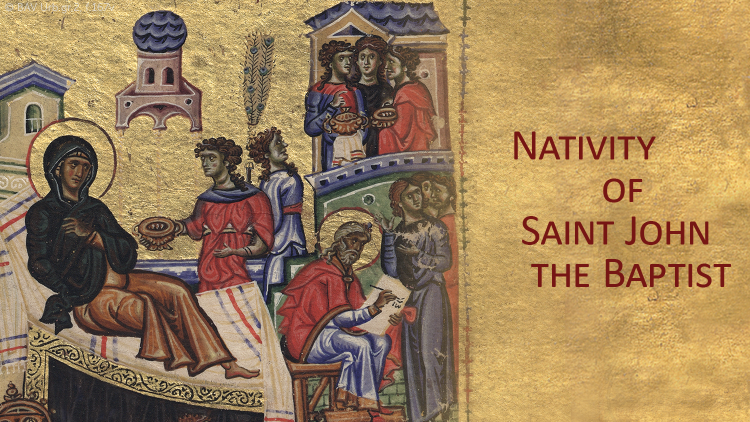
June 24 Wednesday: Nativity of St. John the Baptist. Luke 1:57-66
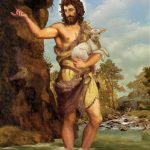
Today’s Gospel celebrates the birth of St. John the Baptist, the last and greatest of the Old Testament prophets, chosen by God to prepare the way for the coming of the Messiah. His life fulfilled the prophecy of Isaiah: “A voice cries out in the wilderness: Prepare the way of the Lord” (Is 40:3). John’s mission was unique in salvation history. Unlike the prophets who foretold the Messiah from afar, John had the privilege of pointing directly to Jesus and declaring, “Behold, the Lamb of God” (Jn 1:29). Through his preaching of repentance, conversion, and moral renewal, he prepared the hearts of God’s people to receive Christ.
The Gospel recounts the miraculous circumstances surrounding John’s birth. His parents, Zechariah and Elizabeth, were elderly and had long been unable to have children. Their situation recalls other miraculous births in Scripture, such as the births of Isaac to Abraham and Sarah (Gn 21:1-7), Samuel to Hannah (1 Sm 1:19-20), and Samson to Manoah and his wife (Jgs 13:2-5). In each case, God intervened to show that the child was part of His saving plan. John’s birth therefore became an occasion of great joy, not only for his parents but also for their relatives and neighbors who recognized God’s special favor upon the family.
Eight days after his birth, the child was brought for circumcision and naming according to Jewish custom. The gathered relatives expected him to be named after his father, Zechariah. However, Elizabeth insisted that his name should be John, in obedience to the command previously given by the Archangel Gabriel (Lk 1:13). When the people questioned this unusual choice, Zechariah confirmed it by writing on a tablet, “His name is John.” This act of faith and obedience marked a turning point. Immediately, his speech, which had been taken away because of his earlier doubt, was restored. Filled with the Holy Spirit, Zechariah burst forth in praise, blessing God for His faithfulness and proclaiming the coming salvation of Israel through the Messiah whose way John would prepare.
The name “John” means “The Lord is gracious,” a fitting title for one whose entire life would point to God’s mercy and saving plan. John’s humility would later shine throughout his ministry as he declared, “He must increase, but I must decrease” (Jn 3:30). He never sought glory for himself but dedicated his life entirely to directing people to Christ. In this way, John became the model of every Christian disciple and evangelizer.
Life Messages
1. Let us thank God for the gift of our parents.
Like Zechariah and Elizabeth, parents cooperate with God in giving life. We should pray for them, honor them, and show gratitude for their sacrifices, guidance, and love.
2. Let us remember and pray for our godparents.
Through Baptism we became children of God, members of Christ’s Body, and heirs to eternal life. We should be grateful for those who helped us begin our journey of faith.
3. Let us obey God’s will with trust.
Zechariah’s obedience brought blessing and restoration. We too experience God’s grace when we surrender our plans to His wisdom and providence.
4. Let us become heralds of Christ.
Like John the Baptist, we are called to prepare hearts for Christ through our words, example, and faithful Christian witness.
5. Let us cultivate humility.
John never sought attention for himself. His mission was to point others to Jesus. Authentic Christian discipleship always directs people toward Christ rather than ourselves.
6. Let us live lives of repentance and renewal.
John’s central message was conversion of heart. Every day presents a new opportunity to turn away from sin and grow closer to God through prayer, the Sacraments, and works of charity. God bless you.
June 25 Thursday: Matthew 7:21-29
Today’s Gospel brings the Sermon on the Mount to its powerful conclusion. After teaching His disciples about the Beatitudes, prayer, forgiveness, charity, purity of heart, and love of enemies, Jesus ends with two solemn warnings. First, He teaches that merely professing faith with our lips is not enough to enter the Kingdom of Heaven. Second, He insists that our lives must be firmly grounded on the foundation of His teachings if they are to withstand the trials and storms of life. True discipleship requires not only hearing the Word of God but also putting it into practice.
In the first section, Jesus declares that not everyone who calls Him “Lord” will enter the Kingdom of Heaven, but only those who do the will of His Father. He warns that even people who perform impressive religious works, such as preaching, casting out demons, or performing miracles, may still fall short if their lives are not marked by obedience and holiness. External religious activity, no matter how impressive, cannot replace an authentic relationship with God. Jesus teaches that God judges not by appearances but by the sincerity of the heart and the faithfulness of one’s life. This echoes the teaching of the Apostle James: “Be doers of the word, and not hearers only” (Jas 1:22). Likewise, Jesus condemned the Pharisees for honoring God with their lips while their hearts remained far from Him (Mt 15:8).
Jesus then illustrates His teaching with the parable of the wise and foolish builders. The wise man builds his house upon solid rock, while the foolish man builds upon sand. At first, both houses may appear secure, but when rain, floods, and winds strike, only the house founded on rock remains standing. The rock represents obedience to Christ and faithful adherence to His teachings. The storms symbolize the inevitable trials of life, suffering, temptation, persecution, disappointment, and even death itself. Those who build their lives on Christ possess a foundation that cannot be shaken. This image recalls Peter’s confession of faith upon which Christ promised to build His Church (Mt 16:18), and the teaching of St. Paul that “no one can lay any foundation other than the one that has been laid, namely Jesus Christ” (1 Cor 3:11).
The Gospel therefore presents a challenge to every believer. Christianity is not merely a matter of religious knowledge, pious words, or occasional acts of devotion. It is a daily commitment to live according to the Gospel. The true measure of faith is not what we say on Sunday but how we live from Monday through Saturday. A faith that transforms our actions, relationships, decisions, and priorities is the faith that endures and leads to eternal life.
Life Messages
1. We need to build our lives on Christ.
Jesus and His teachings are the only secure foundation capable of sustaining us through life’s trials and leading us to eternal salvation.
2. We must practice what we profess.
Faith cannot remain merely intellectual or verbal. Our words, choices, and actions should reflect the Gospel we claim to believe.
3. We should examine the sincerity of our discipleship.
Religious activities, ministries, and devotions are valuable only when accompanied by genuine obedience to God’s will.
4. We need to strengthen our families on Gospel values.
Christian families become strong when their members practice forgiveness, self-sacrifice, mutual respect, prayer, and love modeled on Christ.
5. We must prepare for life’s storms.
Trials, suffering, temptations, and difficulties are inevitable. A life rooted in prayer, Scripture, the Sacraments, and obedience to God will remain firm when challenges arise.
6. We are called to be doers of the Word.
The ultimate test of Christian faith is not how much we know about Christ, but how faithfully we live according to His teachings in our homes, workplaces, parishes, and communities. God bless you
June 26 Friday: Mt 8:1-4
Jesus Heals a Leper
After the Sermon on the Mount, Jesus healed a man suffering from leprosy, a disease that made people socially and religiously isolated. The leper approached Jesus with deep faith and humility, believing that Jesus had the power to heal him. Moved by compassion, Jesus touched him, breaking social conventions, and immediately restored him to health.
Jesus Rewards Faith and Humility
The leper did not demand healing but entrusted himself completely to Jesus, saying, “Lord, if you will, you can make me clean.” Jesus responded to this faith-filled request by healing him instantly. This miracle reveals both Christ’s divine power and his compassionate love for those who suffer.
3. Life Message
All people suffer from a spiritual form of leprosy, namely sin, which separates them from God. Jesus desires to heal us from our sins through his mercy and forgiveness. We should approach him with the same humility and trust shown by the leper, especially through prayer and the Sacrament of Reconciliation, allowing Christ to cleanse and restore us spiritually. God bless you.
June 27 Saturday: St. Cyril of Alexandria, Bishop, Doctor of the Church. Mt 8:5-17
1. The Faith of the Centurion
After the Sermon on the Mount, Jesus entered Capernaum where a Roman centurion approached him on behalf of his suffering servant. Though a pagan, the centurion displayed extraordinary faith and humility. Believing completely in Jesus’ authority, he declared, “Lord, I am not worthy that you should enter under my roof, but only say the word and my servant shall be healed.” Jesus was amazed at such faith, greater than any he had yet encountered in Israel, and healed the servant from a distance.
2. Peter’s Mother-in-Law Is Healed
Jesus then went to Peter’s house and found Peter’s mother-in-law seriously ill with a fever. Without being asked directly, Jesus touched her hand and immediately healed her. This miracle reveals God’s compassionate initiative and shows that the prayers and intercession of others can open the way for God’s healing grace to work in a person’s life.
3. Jesus Heals Many and Fulfills Prophecy
After sunset, when the Sabbath had ended, crowds brought their sick and possessed relatives to Jesus. He healed them all and cast out evil spirits with a word. Matthew presents these miracles as the fulfillment of Isaiah’s prophecy that the Messiah would take upon himself the sufferings and infirmities of his people (Isaiah 53:4), confirming Jesus as the promised Savior.
4. Life Messages
- The centurion teaches us humility, trust in God’s power, responsible leadership, and genuine concern for those entrusted to our care.
- Jesus shows us that true discipleship means responding with compassion and generosity to the needs of all people, regardless of status, race, or background.
- As we approach Holy Communion, we should imitate the centurion’s faith and humility, praying sincerely: “Lord, I am not worthy that you should enter under my roof, but only say the word and my soul shall be healed.” God bless you.



May GOF bless you