


Ezekiel 37:12-14
Romans 8:8-11
John 11:1-45
OVERVIEW OF THE READINGS
The first reading from Ezekiel proclaims God’s promise to open the graves of his exiled people and restore them to their land by placing his Spirit within them. The second reading from Romans declares that those who have the Spirit of Christ dwelling in them are liberated from the dominion of the flesh and promised future life. The Gospel of John relates the raising of Lazarus, revealing Jesus as the resurrection and the life.
REFLECTION
My dear brothers and sisters in Christ, the message of the prophet Ezekiel in the first reading emerges from one of the most painful moments in the history of Israel: the Babylonian exile. This was a time of profound suffering and loss. The people had witnessed the destruction of Jerusalem, the collapse of their institutions, and the loss of their homeland. Many were taken into exile, where they lived as strangers in a foreign land. The temple, which they understood as the dwelling place of God among them, lay in ruins. For a people whose identity was so deeply tied to the land, the city of David, and the temple worship, this catastrophe was not merely political. It was a spiritual crisis of the highest order.
In this context, the people felt abandoned and hopeless. They described themselves as dry bones, lifeless and without strength. Their lament reflected a deep spiritual crisis. They believed that they were cut off from God and that their future had come to an end. The exile was experienced not only as political defeat but as a kind of death. The words they spoke, “Our bones are dried up, our hope is lost, we are cut off entirely,” reveal the depth of their despair. They had reached the point where they could see no future, no reason to hope, no possibility of restoration. Everything they had built their lives upon had been taken away.
It is precisely in this situation that God speaks a word of hope through Ezekiel. He declares, “I will open your graves and bring you up from them.” The imagery of graves is powerful. It conveys the depth of the people’s despair and the finality they felt. A grave is a place of no return, a place where life has ceased. Yet God promises to reverse this condition. He will open the graves and restore his people to life. This is not a metaphor for a mere improvement in circumstances. It is a promise of radical transformation. God will reach into the very place of death and bring his people out.
This restoration is not limited to external circumstances. God promises to place his Spirit within them so that they may truly live. The Spirit represents God’s own life and presence. Just as God breathed life into humanity at creation, so now he promises to breathe new life into his people. This is a work of renewal and transformation that goes far beyond simply returning them to their land. It is about making them into a new people, inwardly renewed and spiritually alive. The Spirit within them would not only revive them but would sustain them in a faithful relationship with God. This is the beginning of the new covenant, the promise of an interior transformation that the prophets had foretold.
The emphasis throughout the passage is on God’s initiative. The repeated use of the phrase “I will”highlights that this restoration is entirely God’s work. The people cannot save themselves. Their hope rests in God’s faithfulness and power. There is nothing they can do to earn this restoration or to bring it about through their own efforts. It is a pure gift of grace. God opens graves and breathes life into dry bones, restoring what seems lost. We all face moments of despair, buried by problems, feeling cut off from hope. Ezekiel’s message reminds us that God sees us, hears our cries, and acts.
My dear brothers and sisters in Christ, in the second reading from Romans, Saint Paul continues this theme by focusing on the life of the individual believer. He contrasts two ways of living: according to the flesh and according to the Spirit. This is one of the great themes of Paul’s theology, and it has profound implications for how we understand the Christian life.
In Paul’s writings, “flesh” does not mean the physical body, which is good, but describes a life centred on self rather than on God. It refers to our fallen human nature living apart from grace, oriented towards selfishness and temporal satisfactions. Such a life is closed to God’s transforming love and unable to please him. This understanding calls us to examine whether we are living for ourselves or are open to the Spirit’s work within us.
In contrast, Paul speaks of life “in the Spirit.” This is the life of those in whom the Spirit of God dwells. The presence of the Spirit is the defining mark of the Christian. It is not something external but an interior reality that transforms the believer from within. Paul uses strong language to make this point: “You are not in the flesh; you are in the Spirit, since the Spirit of God dwells in you.” This is not a future hope but a present reality. The Spirit has taken up residence within us, making our bodies his temple. The Greek verb Paul uses here implies permanent dwelling, not a temporary visit. This is a profound truth: the living God, through his Spirit, makes his home in us.
Paul emphasises that the Spirit who dwells in us is the same Spirit who raised Jesus from the dead. It means that the power of the resurrection is already at work within us. The Spirit is both a present reality and a future promise. Paul writes, “If the Spirit of him who raised Jesus from the dead dwells in you, he who raised Christ from the dead will give life to your mortal bodies also through his Spirit that dwells in you.” The resurrection of Jesus is not an isolated event in the past. It is the pattern and guarantee of our own future. The same power that conquered death in Christ is already at work in us and will one day bring our mortal bodies to the fulness of life.
Because the Spirit dwells within us, our lives are no longer our own. We are called to be instruments of God’s love, kindness, and compassion for others. Though we struggle between flesh and Spirit, we are not alone. The Spirit strengthens us daily, gradually conforming us to Christ through the process of sanctification. This teaching transforms our understanding of death. For those in the Spirit, death is not the end but a transition to resurrection and eternal life with God. This hope sustains us in loss and gives us courage to face our mortality. Lent invites us to deepen our awareness of the indwelling Spirit through prayer, fasting, and charity.
Dearly beloved in Christ, the Gospel of the raising of Lazarus is one of the most powerful and moving passages in all of Scripture. This miracle is the final demonstration of Jesus’ identity before his own death and resurrection. It reveals who Jesus is in a profound way and prepares us for the events of his passion.
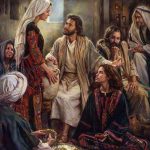
The story begins with the illness of Lazarus, who lived in Bethany with his sisters, Mary and Martha. These were friends of Jesus, people whom he loved. When Lazarus falls ill, the sisters send word to Jesus with a simple message: “Lord, he whom you love is ill.” This message is a model of prayer. They do not tell Jesus what to do or demand that he come. They simply state the fact and trust in his love. This teaches us the importance of trusting God in prayer, of placing our needs before him and leaving the outcome in his hands.
Jesus’ response is unexpected. He says, “This illness does not lead to death; rather it is for God’s glory, so that the Son of God may be glorified through it.” Then, instead of rushing to Bethany, he delays his journey for two days. This delay has troubled many readers. Why would Jesus wait when his friend was dying? The Gospel makes it clear that Jesus loved Lazarus and his sisters, so the delay is not a failure of love. It is a demonstration of love on a deeper level. By waiting, Jesus ensures that the miracle will be unmistakable. When he arrives, Lazarus has been dead for four days. In Jewish understanding, it was believed that the soul hovered near the body for three days but departed on the fourth, after which decomposition began. The four days underscore the finality of death. No one can claim that Lazarus was merely unconscious or that his recovery was natural. The smell of four-day-old death would silence all scepticism.
When Martha meets Jesus, she expresses both sorrow and faith: “Lord, if you had been here, my brother would not have died. But even now I know that God will give you whatever you ask of him.” Her words reveal a faith that persists despite disappointment. She does not understand why Jesus delayed, but she still trusts that he has access to the Father’s power. Jesus responds with a declaration that is the heart of the Gospel: “I am the resurrection and the life; he who believes in me, though he die, yet shall he live, and whoever lives and believes in me shall never die.” The phrase “I am” echoes the divine self-revelation to Moses at the burning bush. Jesus claims for himself the power over life and death that belongs to God alone. He does not merely say that he gives resurrection. He says that he is the resurrection. To believe in him is to possess already the life that death cannot destroy. Physical death becomes for believers a sleep from which Christ will awaken them.
Martha’s response is a confession of faith: “Yes, Lord, I believe that you are the Messiah, the Son of God, the one coming into the world.” This confession echoes the purpose of John’s Gospel and serves as a model for all believers.
When Mary comes to Jesus, she falls at his feet with the same words: “Lord, if you had been here, my brother would not have died.” Seeing her grief and the grief of those with her, Jesus is deeply moved. The Greek text indicates that he was greatly disturbed in spirit, and then, in the shortest verse in the Bible, “Jesus wept.”
Here we see the full humanity of the Son of God. He enters into the grief of those he loves. He does not stand apart from sorrow but shares in it fully. The tears of Jesus reveal that God is not a distant observer of human suffering. He feels it and weeps with those who weep. This is a profound comfort for all who mourn. Our tears are not unnoticed. They are shared by the one who is the resurrection and the life. His tears honour the reality of loss and remind us that grief and hope can coexist.
At the tomb, Jesus commands that the stone be removed. Martha objects, concerned about the smell after four days. Jesus reminds her that if she believed, she would see the glory of God. After a brief prayer spoken for the benefit of the crowd, Jesus cries out with a loud voice, “Lazarus, come out!” The dead man comes forth, still bound in his burial cloths. Jesus then gives a command with profound implications: “Unbind him, and let him go.”
The miracle is complete, but the community has a role in the work of liberation. Christ gives life, but the community is entrusted with the task of unbinding. The raising of Lazarus is a sign pointing to Jesus’ own resurrection. It demonstrates that he has power over death, but it also sets in motion the events leading to his death. The religious leaders, hearing of this sign, begin to plot against him. The irony is significant. The act that most clearly reveals Jesus’ divine power becomes the occasion for his own death. Yet in John’s Gospel, this death is itself the source of life for all who believe.
THE REFLECTION IN A NUTSHELL
The readings this Sunday reveal God’s power to bring life from death in all its forms. Ezekiel promises that God will open the graves of exile and restore his people by his Spirit. Paul assures us that the same Spirit who raised Jesus dwells in us, guaranteeing our own resurrection. The Gospel shows Jesus as the resurrection and the life, who weeps with the grieving and calls the dead to new life. Lent invites us to trust that no situation is beyond God’s reach. May we, like Martha, confess our faith and, like Lazarus, be unbound to live in freedom.