



Isaiah 9:1b-4
1 Corinthians 1:10-13, 17
Matthew 4:12-23
Dearly beloved, today, the Third Sunday in Ordinary Time, is the Sunday of the Word of God. I will say more about it later.
Synopsis of the Readings
The readings of this Sunday reveal God’s transforming initiative in human history. In Isaiah, the people who walked in darkness see a great light, as God restores hope, dignity, and joy to the oppressed lands of Zebulun and Naphtali. In 1 Corinthians, Saint Paul appeals for unity among believers, reminding them that the Church cannot be divided when Christ himself is one. True unity, he teaches, is not uniformity but harmony grounded in the cross of Christ. In Matthew’s Gospel, Jesus begins his public ministry, proclaiming the nearness of God’s kingdom and calling the first disciples from their daily work. Their response shows that God’s call meets us where we are and transforms our ordinary lives into a mission of grace and service.
My dear People of God, in the first reading, the prophet Isaiah speaks to a people long conditioned by suffering and despair. The northern tribes of Zebulun and Naphtali had endured repeated invasions and humiliation. They were the first to experience the brutality of foreign occupation and the shame of defeat. Their lands, situated on the vulnerable borders of Israel, symbolised the marginal edges of society—forgotten, exploited, and overshadowed by fear.
Into this setting of gloom, Isaiah proclaims a divine reversal: “The people who walked in darkness have seen a great light.” This is not wishful thinking or patriotic propaganda—it is the announcement of divine intervention. God himself breaks into human history to bring transformation. The light Isaiah describes is not merely physical brightness, but the restoration of dignity, order, and purpose.
The prophet compares this joy to two vivid human experiences: the gladness of a successful harvest and the exhilaration of liberation from oppression. These metaphors remind us that God’s salvation touches every part of life—social, emotional, and spiritual. True joy is communal; it is shared when justice is restored and peace returns.
Isaiah’s mention of “the yoke,” “the staff,” and “the rod”—the tools of oppression—reveals that God’s salvation is not passive comfort but active liberation. He not only consoles the broken-hearted; he dismantles the structures that caused their suffering. The reference to the “day of Midian” recalls an earlier deliverance (Judges 7), when God rescued Israel through Gideon’s small band of soldiers, showing that salvation comes through divine power, not human might.
Brothers and sisters, let us imagine a remote village whose only bridge was destroyed by a storm. For years, the people lived in isolation—cut off from trade, education, and healthcare. They lost hope that life could ever return to normal. Then, one day, a new bridge was built. When the first person crossed it, tears flowed freely; it was not simply a structure of steel and stone—it was a symbol of reconnection and renewal. That bridge, like the light Isaiah announces, became a sign that separation and despair do not have the final word. This passage assures us that God begins his work precisely where hope seems lost. No place is too forsaken, no life too broken, and no community too marginal for the light of God to dawn anew. The message to the people of Zebulun and Naphtali is also a message to us: even when we feel abandoned, God is already preparing our dawn.
Dearly beloved, if Isaiah deals with external darkness, Saint Paul addresses the darkness that arises within communities—the darkness of division. The Church in Corinth, vibrant and gifted though it was, had fallen into factions, as we learn from the second reading. Some claimed allegiance to Paul, others to Apollos or Cephas (Peter), and some even to Christ, as if he could be possessed by one group over another. Paul’s response is direct and pastoral: “I appeal to you… that all of you be in agreement and that there be no divisions among you.”He does not ask for superficial uniformity, but for unity rooted in Christ’s lordship. True unity does not erase diversity; it harmonises it under a common purpose.
Paul’s rhetorical question—“Has Christ been divided?”—strikes at the heart of the problem. The Church cannot claim to follow a divided Christ. Baptism incorporates believers into one body, one faith, and one mission. When personalities or preferences take precedence over Christ, the community’s witness is weakened, and the cross loses its power in our eyes. Paul deliberately emphasises the cross as the centre of Christian identity. He renounces “eloquent wisdom” so that faith rests not on persuasive speech but on divine truth. The cross exposes our pride and rivalry; it is the great equaliser that reminds every believer that we stand together as sinners redeemed by grace.
Brothers and sisters in Christ, let us picture an orchestra preparing for a grand performance. Every musician is talented, but if each plays independently, the result is chaos and cacophony. Only when they follow the same conductor and the same musical score does their individual talent contribute to a harmonious symphony. This is Paul’s vision for the Church. Christ is the conductor; the Gospel is the score. Our unity under his direction turns the noise of human division into the music of divine praise. The challenge for every Christian community today is to ask: Are we building the Body of Christ or building factions around personal tastes? Unity does not mean everyone thinks alike; it means we are united in purpose—to proclaim Christ and live by his love. Such unity is our greatest testimony to a fractured world.
Beloved in Christ, in the gospel reading from Matthew, we see how God’s light and unity take visible form in the life of Jesus Christ. When Jesus begins his ministry, he does not start in Jerusalem, the religious centre, but in Galilee of the Gentiles—a region looked down upon by the elite. This is consistent with Isaiah’s prophecy: the light dawns in unexpected places. Jesus proclaims, “Repent, for the kingdom of heaven has come near.” Repentance here means more than sorrow for sin—it is a radical turning towards God, a reorientation of one’s entire life. The kingdom of God is not distant or abstract; it is breaking into human existence through the presence of Jesus himself.
The calling of the first disciples—Peter, Andrew, James, and John—demonstrates the transforming power of this kingdom. Jesus meets them in the midst of their daily labour. His simple words, “Follow me,”carry a power that redefines their identity and purpose. They leave behind their nets not because their work was meaningless, but because they have found a greater calling: to become “fishers of people.” Discipleship, then, is both gift and challenge. It is a response to God’s initiative, requiring faith, courage, and surrender. God calls us where we are, but never leaves us where we are. He reshapes our talents, our relationships, and our ambitions for the sake of his kingdom.
My dear People of God, a young professional once volunteered at a shelter for a single afternoon. What she saw there unsettled her—people her own age struggling for food and shelter. That experience awakened something in her heart. Gradually, she began spending more time serving others, and eventually she redirected her entire career towardssocial work. Her life’s purpose was transformed not by guilt, but by grace. This mirrors the call of the disciples. When Jesus enters our ordinary routines, he invites us to a deeper and more demanding life. His call may disrupt our comfort, but it also awakens our truest selves.
Dearly beloved, across these readings runs a common thread: God takes the initiative to transform darkness into light, division into unity, and ordinary life into divine mission. Isaiah’s people were called to hope, Paul’s church to unity, and Matthew’s disciples to mission. Each invitation required a response. Our own world, too, knows the darkness of fear, conflict, and aimlessness. We see it in social division, in the loneliness of modern life, and in the discouragement that comes when plans fail. Yet the Word of God assures us that transformation begins not with human effort but with divine grace. God moves first; we respond with faith.
Lessons from the Readings
The readings of this Sunday invite us to reflect on God’s transforming power in our lives. From Isaiah, we learn that God’s Word brings light where darkness seems deepest, assuring us that no situation is beyond his reach. Like the people of Zebulun and Naphtali, we are called to trust that God is already at work restoring hope to those who feel forgotten or broken. This divine light not only consoles but also liberates, restoring dignity and joy to His people. In 1 Corinthians, Saint Paul reminds us that the Church must remain united in Christ, not divided by personal loyalties or pride. Christian unity does not erase differences but harmonises them under the one Lord, so that together we may reflect the beauty of the Body of Christ. Finally, in Matthew’s Gospel, Jesus calls ordinary people—Peter, Andrew, James, and John—to share in his extraordinary mission. Discipleship begins where we are but always leads us towards a new purpose shaped by God’s grace.
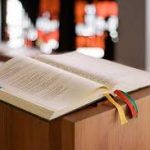
My brothers and sisters in Christ, as I indicated at the beginning of this homily, today, the Third Sunday in Ordinary Time, is the Sunday of the Word of God. This is a special celebration in the Catholic Church, established by Pope Francis in 2019 through his Apostolic Letter Aperuit Illis. It is observed every year on the Third Sunday in Ordinary Time, typically in late January, and is dedicated to honouring and deepening the Church’s relationship with Sacred Scripture. Pope Francis instituted this observance to remind Christians everywhere that the Bible is not merely an ancient book, but the living Word of God that continues to speak to the Church and to every believer today. Through Scripture, God reveals his love, his truth, and his plan for humanity, inviting us into a personal and transformative relationship with Him.
This celebration encourages all the faithful to give greater time and reverence to the Word of God in their daily lives. Parishes throughout the world mark the day in a variety of ways, such as by enthroning the Bible at Mass, symbolising its central place in the community of faith. Lectors, catechists, and readers may receive special blessings to emphasise their ministry of proclaiming God’s Word. Many parishes also invite families to begin reading the Bible together or to form small Scripture study groups. The homily on this Sunday often focuses on the importance of listening to God’s Word attentively, understanding it more deeply, and putting it into practice with sincerity of heart.
Pope Francis stresses that the Word of God and the Eucharist are inseparably linked, for both nourish the soul and lead believers into communion with Christ. He also reminds us that the relationship between the Risen Lord, the community of believers, and Sacred Scripture lies at the heart of Christian identity. Through hearing, praying, and reflecting on the Scriptures, the faithful encounter the living Christ who still speaks today. The Sunday of the Word of God therefore serves as a powerful reminder that the Bible is not confined to the church lectern but is meant to guide, challenge, and comfort us in every moment of life. It calls each of us to rediscover the joy of hearing God’s voice in Scripture and to allow his Word to inspire our choices, strengthen our faith, and renew our hearts in love.