


![Baptism of the Lord [YEAR “A”] (Jan 11, 2026) Is 42:1-4, 6-7; Acts 10:34-38; Mt 3:13-17. By Rev. Fr. Clifford Atta Anim.](https://frcliffordhomilies.com/wp-content/uploads/2026/01/IMG_2154.jpeg)
The Baptism of the Lord holds a special place in the life of the Church. In the Eastern Christian tradition, this event stands at the heart of the Feast of the Epiphany because it is the moment when God fully reveals himself as Trinity. At the Jordan, the Father speaks, the Son is baptized, and the Holy Spirit descends. For this reason, all four Gospels record this event, and the Church recognizes it as the beginning of Jesus’ public ministry. What happens at the Jordan is not private devotion, it is a public declaration of who Jesus is and what he has come to do.
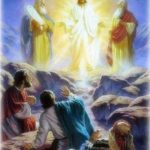
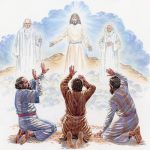
Jesus’ baptism marks a decisive turning point in his life. Though sinless, he steps into the waters of repentance, standing shoulder to shoulder with sinners. The heavens are opened, the Spirit descends like a dove, and the Father’s voice proclaims, “This is my beloved Son, with whom I am well pleased.” This moment reveals not only Jesus’ identity, but also the mystery of God himself as Father, Son, and Holy Spirit. Similar moments of divine self-disclosure appear elsewhere in Scripture, at Sinai when God reveals his name to Moses (Exodus 3), at the Transfiguration when the Father again speaks from heaven (Matthew 17), and at Pentecost when the Spirit descends upon the Church (Acts 2). Each moment marks a new stage in God’s saving work.
The opening of the heavens at the Jordan signals God’s decisive intervention in human history. What sin had closed, Christ now reopens. The prophet Ezekiel once cried out for God to tear open the heavens and come down (Isaiah 63). At Jesus’ baptism, that prayer is answered. Heaven and earth meet, and a new chapter of salvation begins.
This event was also deeply personal for Jesus. His baptism was not a ritual for cleansing from sin, but a spiritual confirmation at a critical moment. It marked the end of his hidden life at Nazareth and the beginning of his mission to the world. Like other servants of God before him, Jesus begins his mission with a profound encounter with the Father. Moses encounters God before leading Israel (Exodus 3), Isaiah receives his call after a vision of God’s holiness (Isaiah 6), and Jeremiah is strengthened by God’s assurance before his prophetic mission (Jeremiah 1).
By submitting to John’s baptism, Jesus identifies fully with his people. He chooses solidarity over distance. This is the mark of a true shepherd who walks with his flock. Later, he will show this same closeness by touching lepers, eating with sinners, and washing the feet of his disciples. As Saint Paul later teaches, though he was in the form of God, he emptied himself and took the form of a servant (Philippians 2).
The Father’s declaration at the Jordan is also a moment of divine approval. Jesus is named the beloved Son, echoing the royal psalms and the suffering servant of Isaiah. This reveals not only who Jesus is, but how he will fulfill his mission. He will not conquer through political power or violence, but through obedience, suffering, and love. The cross is already foreshadowed at the river. Just as Isaac carried the wood for sacrifice (Genesis 22), and the servant of the Lord bore the sins of many (Isaiah 53), Jesus embraces a path that leads through suffering to glory.
The descent of the Holy Spirit marks a moment of empowerment. Though the Spirit was always united with the Son, this visible anointing prepares Jesus for his mission of preaching, healing, and reconciling. The dove, a sign of gentleness and peace, contrasts sharply with images of judgment. Jesus’ ministry will reveal a God who seeks the lost, forgives sinners, and calls all people to conversion through love. This same Spirit will later descend upon the disciples, equipping them to proclaim the Gospel to the nations (Acts 1–2).
From this feast, powerful life messages flow.
First, the Baptism of the Lord reminds us of our identity. Through our own baptism, we become children of God, brothers and sisters of Christ, members of the Church, temples of the Holy Spirit, and heirs of eternal life. The words spoken over Jesus at the Jordan echo spiritually over each baptized person. “You are my beloved child.” This dignity is not earned, it is given.
Second, Jesus’ baptism reminds us of our mission. We are called to live as God’s children by recognizing his presence within us and respecting his image in others. This means living with integrity in thought, word, and action. It means refusing to desecrate our bodies and our relationships through injustice, impurity, hatred, jealousy, or intolerance. It means accepting both joy and suffering as paths through which a loving Father shapes us for holiness, just as Jesus embraced both the Jordan and the Cross.
We are also invited to grow continually in intimacy with God through prayer, reflection on Scripture, participation in the Eucharist, and regular reconciliation. The public ministry of Jesus begins in prayer and continues in obedience. Ours must do the same.
Finally, this feast calls us to gratitude and renewal. It is a day to thank God for the gift of baptism, to renew our baptismal promises, and to recommit ourselves to proclaiming the Good News. We preach Christ not only with words, but with lives marked by mercy, service, forgiveness, and love. When others look at us, they should catch a glimpse of what was revealed at the Jordan, that God is present, God is near, and God is love.
References
Sacred scripture
Catechism of the Catholic Church, nn. 535–537, 1213–1274
Second Vatican Council, Lumen Gentium, nn. 9–11
St. Gregory of Nazianzus, Oration on the Baptism of Christ
Rev. William Barclay, The Gospel of Matthew