
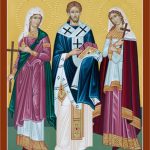


Oct 6 Monday:Saint Bruno, priest & Blessed Marie Rose Durocher, virgin. Lk 10:25-37
The Parable of the Good Samaritan (Luke 10:25–37)
In today’s Gospel, a scholar of the Law approaches Jesus with a question that has echoed through every age: “Teacher, what must I do to inherit eternal life?” (Luke 10:25). Instead of giving him a new answer, Jesus points him back to the very foundation of Scripture. The Law already contains the answer: “You shall love the Lord your God with all your heart, with all your soul, with all your strength, and with all your mind; and your neighbor as yourself” (Deuteronomy 6:5; Leviticus 19:18). True religion, therefore, is not only love of God but love made visible through service to others.
However, the scribe, shaped by a narrow understanding of “neighbor,” saw it as limited to his fellow Jews or those who shared his purity of faith. Wanting to justify himself, he asked Jesus, “And who is my neighbor?” (Luke 10:29). In response, Jesus told one of His most powerful parables, the story of the Good Samaritan.
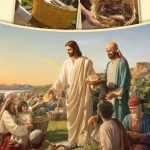
In the story, a man is left half-dead by robbers on the road from Jerusalem to Jericho, a notoriously dangerous route. A priest and a Levite, men of religious office, see him but pass by. Then comes a Samaritan, someone despised and considered unclean by the Jews who stops, binds the man’s wounds with oil and wine, places him on his own animal, and cares for him at an inn. Jesus overturns the scribe’s worldview: a “neighbor” is not defined by race, religion, or status, but by compassion in action. The right question is not “Who qualifies as my neighbor?” but “Am I being a neighbor to those who need mercy?”
Jesus Himself is the Divine Good Samaritan. Humanity, wounded by sin, lay helpless on the roadside of history. Christ came down to us, poured the oil and wine of His Sacraments upon our wounds, lifted us upon His own shoulders through the Cross, and brought us to the inn of the Church for healing and renewal. At the Last Supper, He gave us the new commandment, “Love one another as I have loved you” (John 13:34), because the invisible God is present in every person we meet.
Life Messages:
- Recognize the wounded along your own road. The road from Jerusalem to Jericho runs through our homes, parishes, schools, and workplaces. Our neighbors may be our own family members, “wounded” by anger, criticism, or neglect. Like the Samaritan, we are called to stop, listen, and show mercy.
- Be a true neighbor through small acts of love. Generosity is not only found in grand gestures but in daily kindness, a smile, a word of encouragement, a patient ear, or a sincere “thank you.” These small acts, done in love, can heal deep wounds.
- Let Jesus, the Good Samaritan, heal you. Through the oil and water of Baptism, the anointing of the Spirit in Confirmation, the forgiveness of Penance, the healing oil of the Anointing of the Sick, and the nourishment of the Eucharist, Christ continually binds our wounds and restores us to life.
- Extend mercy even to your enemies. The Good Samaritan challenges us to love those we find hardest to love. Jesus calls us to “be merciful, just as your Father is merciful” (Luke 6:36). True discipleship means crossing the boundaries of hatred and showing compassion to all, even those who hurt us. God bless you.
Oct 7 Tuesday. Our Lady of the Rosary. Lk 10:38-42
Origin of the Feast
This feast was instituted by Pope St. Pius V in thanksgiving for the Christian naval victory at Lepanto on October 7, 1571. The victory stopped the advance of the Ottoman Turks into Europe, which many feared would crush Christian civilization. The Pope attributed this miraculous triumph to the powerful intercession of the Blessed Virgin Mary, whose help had been sought through the communal recitation of the Rosary by Christians across Europe.
Originally called the Feast of Our Lady of Victory, it was celebrated on the first Sunday of October. Later, Pope Gregory XIII renamed it the Feast of the Holy Rosary, fixing its date to October 7 in honor of Mary’s role in defending the faith (see Pope St. Pius V, Bull Consueverunt Romani Pontifices, 1569).
Meaning and Importance of the Rosary
The word “Rosary” comes from the Latin rosarium, meaning “a crown or garland of roses.” Each prayer is considered a spiritual flower offered to Mary. Tradition calls the Rosary the “Breviary of the Common People” because it mirrors the 150 Psalms of the Divine Office with its 150 Hail Marys. It has also been known as the “Psalms of the Illiterate,” since it allowed those unable to read the Scriptures to meditate on the mysteries of salvation.
The prayers themselves are Biblical and inspired:
- The Our Father was taught by Jesus himself (Matthew 6:9–13).
- The Hail Mary combines the greetings of the Angel Gabriel (Luke 1:28) and Elizabeth (Luke 1:42).
- The Glory Be reflects the worship of the Trinity, echoing the heavenly praise in Revelation 4:8–11.
Each mystery of the Rosary invites us to meditate on a key event in the life of Jesus and Mary. These mysteries embody the Paschal Mystery, the life, passion, death, and resurrection of Christ in which Mary participated with perfect faith.
A Brief History of Prayer Beads
The use of beads in prayer predates Christianity.
- Hindu devotees recited the names of their gods using a string of beads.
- Jews used knotted cords to repeat Psalms and the Laws of Moses.
- Muslims use prayer beads (called tasbih) to recite the 99 names of Allah.
In the ninth century, Christian monks who prayed all 150 Psalms encouraged the illiterate faithful to substitute 150 Our Fathers instead. By the eleventh century, the Hail Mary had been added.
According to tradition, in 1214, the Blessed Virgin Mary appeared to St. Dominic Guzman, giving him the Rosary as a spiritual weapon against the Albigensian heresy. The devotion gradually took its present form by the 15th century, through the work of Dominican preachers and popular devotion.
In 1917, Our Lady appeared at Fatima, Portugal, and identified herself as the “Lady of the Rosary.” She urged the world to pray the Rosary daily for peace and the conversion of sinners. She added the Fatima Prayer:
“O my Jesus, forgive us our sins, save us from the fires of hell; lead all souls to heaven, especially those who have most need of thy mercy.”
Later, in 2002, Pope St. John Paul II, through his Apostolic Letter Rosarium Virginis Mariae, added the Luminous Mysteries, encouraging Catholics to rediscover the Rosary as a “compendium of the Gospel” and a prayer deeply centered on Christ (RVM, 19).
How to Pray the Rosary
The ideal practice is to recite at least one set of five decades daily, and if possible, all twenty mysteries over the course of the week.
When praying, we should:
- Begin slowly and reverently, avoiding distraction and rushing.
- Meditate for a moment on each mystery before starting the decade.
- Reflect on the meaning of the words as we pray, letting them sink into our hearts.
- Pray as a family before bedtime, during travel, or at moments of quiet reflection.
The Rosary is not merely a repetition of prayers but a journey through the Gospel, allowing us to walk with Mary as she contemplates her Son’s saving work.
Life Application
- The Rosary strengthens our relationship with Jesus through Mary. It shapes our hearts to imitate her virtues, humility, faith, patience, and love.
- It is a weapon of peace and a shield of faith in times of temptation, fear, or suffering.
- It has been called by many saints, including St. Padre Pio, “the weapon for these times.”
As Pope Francis said, “The Rosary is the prayer of my heart,” reminding us that through it, we find peace by meditating on the mysteries of Christ with the eyes of Mary (General Audience, October 7, 2020). God bless you.
References
- Pope St. Pius V, Consueverunt Romani Pontifices (1569).
- Pope Gregory XIII, Monet Apostolus (1573).
- Pope St. John Paul II, Rosarium Virginis Mariae (2002).
- Vatican News, “The Feast of Our Lady of the Rosary: History and Meaning,” October 7, 2023. https://www.vaticannews.va
- Catechism of the Catholic Church, 2678–2679.
Oct 8 Wednesday: Lk 11:1-4
Reflection on the Lord’s Prayer (Luke 11:1–4; Matthew 6:9–13)
1. The Origin of the Lord’s Prayer
The disciples were deeply moved by seeing Jesus at prayer. They noticed the depth of His communion with the Father and longed to experience the same intimacy. Recognizing this, one of them asked, “Lord, teach us to pray, just as John taught his disciples” (Luke 11:1). In response, Jesus gave them the Our Father, a prayer that has since become the heart of Christian spirituality.
The Catechism of the Catholic Church calls it “truly the summary of the whole Gospel” (CCC 2761). In just a few lines, it captures our relationship with God, our dependence on His grace, and our duty toward one another.
The saints have always treasured this prayer. St. Teresa of Ávila once advised, “Much more is accomplished by a single word of the Our Father said from the heart than by the whole prayer repeated many times in haste and without attention.” Similarly, St. Thérèse of Lisieux confessed that when she felt spiritually dry or distracted, she could always turn to the “Our Father,” finding in it the strength and focus she needed.
2. A Prayer in Two Parts
a. The First Part – Adoration and Surrender to God’s Will
The first half of the Our Father is entirely God-centered. We lovingly acknowledge Him as “Our Father who art in Heaven”, recognizing both His intimacy and His majesty. To call God Father is to acknowledge our identity as His beloved children (Romans 8:15).
We then praise Him, asking that His name be hallowed, His Kingdom come, and His will be done not just in Heaven but here on earth. In these petitions, we commit ourselves to live according to His plan and to work for a world shaped by His justice, mercy, and peace (CCC 2803–2806).
b. The Second Part – Our Needs and Dependence on God
The second part focuses on our human needs, expressing total trust in God’s providence. It brings our past, present, and future before Him:
- Present – “Give us this day our daily bread”: We entrust our daily sustenance and all our temporal and spiritual needs to God the Father, the Provider.
- Past – “Forgive us our trespasses”: We ask for reconciliation and mercy through God the Son, our Redeemer and Savior.
- Future – “Lead us not into temptation but deliver us from evil”: We seek the protection and guidance of God the Holy Spirit, our Advocate, Comforter, and Strength.
In this way, the prayer embraces the whole Trinity and every dimension of human life, body, soul, and spirit.
3. The Spirit of Forgiveness
Jesus places special emphasis on forgiveness in this prayer. After teaching it, He immediately adds, “If you forgive others their trespasses, your heavenly Father will also forgive you; but if you do not forgive others, neither will your Father forgive your trespasses” (Matthew 6:14–15).
This teaches that forgiveness is not optional for Christians, it is the very measure by which we receive God’s mercy. Each time we say “forgive us our trespasses as we forgive those who trespass against us,” we are pledging to mirror God’s compassion.
To forgive, therefore, is not weakness but participation in divine love. As Pope Francis notes, “The forgiveness of God is strong and great, but it needs a heart that is open to forgive others” (General Audience, March 14, 2018).
4. Living the Our Father Daily
The “Our Father” is more than a set of words, it is a way of life. Each petition calls us to concrete action:
- To honor God’s name by our example,
- To work for justice and charity that reflect His Kingdom,
- To trust His providence without anxiety,
- To practice mercy and reconciliation in our relationships, and
- To resist evil through faith and perseverance.
Praying this prayer sincerely transforms our hearts and aligns our will with God’s. As the Catechism explains, “The Our Father is not only a prayer to be said, it is also the model for all Christian prayer” (CCC 2765). God bless you.
References
- The Holy Bible, Luke 11:1–4; Matthew 6:9–13.
- Catechism of the Catholic Church, 2759–2865.
- St. Teresa of Ávila, Way of Perfection, ch. 27.
- St. Thérèse of Lisieux, Story of a Soul, ch. 11.
- Pope Francis, General Audience, March 14, 2018.
- Vatican News, “The Meaning of the Lord’s Prayer,” March 2020. https://www.vaticannews.va
Oct 9 Thursday: Saints Denis, Bishop, and companions, martyrs and St. John Leonardi, priest. Lk 11:5-13
Reflection on Luke 11:5–13 — The Friend at Midnight: Perseverance in Prayer
After teaching his disciples the model prayer, the Our Father, Jesus goes on to explain how they should pray. He invites them to approach God their Heavenly Father with boldness, confidence, persistence, and faith, like both Abraham interceding for Sodom (Genesis 18:20–32) and the “friend in need” in his parable.
Jesus assures us that God is not irritated by our repeated requests nor indifferent to our needs. Instead, He delights in our trust and rewards perseverance in prayer. In this passage, Jesus emphasizes the power of intercessory prayer and the necessity of steadfast, trusting faith that keeps praying, even when answers seem delayed (cf. Luke 18:1–8).
The Parable: The Friend in Need
In the parable, a man receives a late-night visitor but has no bread to offer him. In the culture of the ancient Near East, hospitality was sacred to leave a guest unfed was shameful. So, the host goes to his neighbor at midnight and knocks persistently, asking for bread.
Even though the neighbor is reluctant to get up because his door is locked and his children are asleep, he eventually gives in, not because of friendship, but because of the other man’s persistence. Jesus concludes: “Ask, and it will be given to you; seek, and you will find; knock, and the door will be opened to you” (Luke 11:9–10).
This parable is not about God being unwilling to respond. Rather, it reveals that God values trusting persistence, the kind that refuses to give up because it believes deeply in the Father’s goodness. As St. Paul urges:
- “Be constant in prayer” (Romans 12:12),
- “Pray at all times in the Spirit” (Ephesians 6:18),
- “Persevere in prayer, being watchful in it with thanksgiving” (Colossians 4:2),
- “Pray without ceasing” (1 Thessalonians 5:17).
Our persistence does not change God’s heart; it changes ours. It deepens our trust, strengthens our patience, and prepares us to recognize His answer when it comes.
Life Messages
1. Stop giving excuses for not praying.
Modern Christians often neglect prayer because of misplaced priorities. The most common excuses include:
- “I’m too busy.”
This reveals a distorted view of priorities. If God is not first, everything else falls apart. Prayer keeps us rooted in His peace and helps us discern what truly matters. Through prayer, God fills us with His grace and love, allowing us to live as our true selves. - “Prayer doesn’t really do much.”
This mindset forgets that prayer is not about psychological comfort, but about relationship. It connects us to the Source of life and power. Without prayer, faith withers; through prayer, grace flows (CCC 2559–2565). - “A loving God should provide without being asked.”
God indeed provides (Matthew 6:8), but prayer expresses our awareness of our dependence on Him. If we never ask, we may not recognize His gifts when they arrive. Prayer is not about informing God but aligning our hearts to His will. - “Prayer is boring.”
Prayer becomes lifeless only when we forget who we are speaking with. It is not a monologue but a conversation. God speaks to us through Scripture and the Church, and we respond in faith and love. Just as no friendship survives without conversation, no relationship with God can thrive without prayer.
2. Learn the lesson of persistence.
Jesus invites us to keep knocking, not because God is hard to persuade, but because perseverance purifies our motives. Prayer is an act of faith in motion, it says, “Lord, I trust you even when I don’t see results yet.”
As Pope Francis said, “Prayer is not magic, but it brings the power of God into our hearts and sustains our faith even when God seems silent.” (General Audience, May 25, 2016).
3. Recognize prayer as the heartbeat of faith.
Without prayer, faith dies. Through prayer, we open our hearts to grace and learn to depend on the Father as Jesus did. The Catechism beautifully says, “Prayer is the encounter of God’s thirst with ours. God thirsts that we may thirst for Him” (CCC 2560).
When we persist in prayer, we live out our dependence on God and experience His faithfulness. God bless you.
References
- The Holy Bible, Luke 11:5–13; Genesis 18:20–32; Romans 12:12; Ephesians 6:18; Colossians 4:2; 1 Thessalonians 5:17.
- Catechism of the Catholic Church, 2559–2565, 2560, 2742–2745.
- Pope Francis, General Audience, May 25, 2016. https://www.vaticannews.va
Oct 10 Friday: Lk 11:15-26
Jesus and the Accusation of Casting Out Demons by Beelzebul
(Luke 11:14–23; Matthew 12:22–30; Mark 3:22–27)
When Jesus cast out a mute demon, the man began to speak, and the crowd was amazed. Yet the scribes and Pharisees, driven by jealousy and hardened hearts, could not deny the miracle, so they attacked its source. They accused Jesus of collaborating with Beelzebul, the prince of demons, claiming He drove out evil spirits by the power of Satan himself.
Jesus’ Response: Divine Wisdom Against Malicious Accusation
Jesus answered their slander with calm yet piercing logic. First, He asked, “If Satan also is divided against himself, how will his kingdom stand?” (Luke 11:18). No kingdom, house, or community can endure internal division. Evil cannot destroy evil, for Satan does not work against his own dominion. Jesus exposed their contradiction: if He were working by Satan’s power, then the Jewish exorcists (“your sons”) who practiced exorcism must be doing the same. His argument revealed the absurdity of their accusation.
Then Jesus declared the deeper truth: “But if it is by the finger of God that I cast out demons, then the kingdom of God has come upon you” (Luke 11:20). This phrase, “the finger of God,” recalls Exodus 8:19, where Pharaoh’s magicians confessed their powerlessness before God’s works. Jesus, by using this expression, claimed divine authority. His exorcisms were not mere wonders; they were visible signs that the reign of God had arrived in His person. Where Jesus acts, Satan’s dominion collapses.
The Stronger One
To illustrate, Jesus used the image of a “strong man” guarding his house (Luke 11:21–22). The strong man represents Satan, armed and vigilant, keeping his possessions, human souls, under control. But Jesus is the stronger one who overcomes him, strips him of his armor, and liberates those enslaved by sin and fear. This echoes the prophecy of Isaiah 49:24–25, where God promises to free captives from the mighty. In Jesus, that prophecy is fulfilled.
Christ’s victory over demonic forces reveals that evil, though real and active, is not ultimate. The devil’s reign is being dismantled by the presence and power of the Messiah. Every healing, every deliverance, every act of mercy is a sign that God’s Kingdom is not just coming, it is here.
Life Lessons
- The Devil’s Persistence:
Jesus teaches that the devil never ceases his battle against humanity. Even when resisted, he returns to test our faith. St. Peter warns, “Be sober and vigilant. Your adversary the devil prowls around like a roaring lion, seeking someone to devour. Resist him, firm in your faith” (1 Peter 5:8–9). Spiritual warfare is constant, which is why vigilance, prayer, and humility are essential. - Our Weapons Against Evil:
We fortify ourselves against the evil one through prayer, which keeps us united to God; penance, which humbles the ego that Satan exploits; the Sacraments, which fill us with sanctifying grace; and the Word of God, which is “the sword of the Spirit” (Ephesians 6:17). Jesus Himself used Scripture to defeat temptation in the desert (Matthew 4:1–11). - The Presence of the Kingdom:
Every time we choose forgiveness over resentment, purity over lust, honesty over deceit, and faith over fear, we participate in the ongoing victory of Christ. Evil loses ground when hearts are converted and Christ reigns within them. God bless you.
References:
- Holy Bible, Luke 11:14–23; Matthew 12:22–30; Mark 3:22–27; Exodus 8:19; Isaiah 49:24–25; 1 Peter 5:8–9; Ephesians 6:17; Matthew 4:1–11.
- Catechism of the Catholic Church, §§550, 2852, 2846 (Vatican.va).
- Pope Benedict XVI, Jesus of Nazareth, Part One: From the Baptism in the Jordan to the Transfiguration (2007).
Oct 11 Saturday:Saint John XXIII, pope. Lk 11:27-28
True Blessedness: Hearing and Obeying the Word of God
(Luke 11:27–28; cf. Luke 1:38, 48; 8:21)
After Jesus had silenced His critics who accused Him of working with the devil, a woman in the crowd, deeply moved by His wisdom and authority, cried out, “Blessed is the womb that bore you, and the breasts that nursed you!” (Luke 11:27). It was an expression of admiration and praise for both Jesus and His mother. In her eyes, Mary was fortunate to have such an extraordinary Son.
Jesus did not reject the woman’s praise, but He redirected it to a higher truth. He said, “Blessed rather are those who hear the word of God and keep it” (Luke 11:28). In this response, Jesus revealed the true source of blessedness. Mary is indeed blessed, not merely because she gave birth to Jesus, but because she listened to God’s word and lived it with perfect faith and obedience.
The Real Source of Blessedness
Jesus’ statement does not diminish Mary’s honor, it completes it. Mary’s greatness lies precisely in her attentive listening and total surrender to God’s will. At the Annunciation, she heard the angel’s message and responded without hesitation, “Behold, I am the handmaid of the Lord; let it be done to me according to your word” (Luke 1:38). Because of her faith-filled obedience, she could later proclaim in her Magnificat, “All generations will call me blessed” (Luke 1:48).
No one in history listened more deeply or obeyed more faithfully than Mary. She carried the Word made flesh in her womb because she had first welcomed the Word in her heart. As St. Augustine beautifully explained, “Mary conceived Jesus in her heart before she conceived Him in her womb” (Sermon 215, 4). Her blessedness, therefore, flows from discipleship before motherhood.
Jesus emphasized the same truth elsewhere when He said, “My mother and my brothers are those who hear the word of God and do it” (Luke 8:21). Spiritual kinship with Christ, not biological connection, is what makes a person truly part of His family.
Life Messages
- True Family of God:
Through Baptism, we become members of the divine family, the children of God and brothers and sisters of Christ (John 1:12; Galatians 3:26–27). Yet our belonging to God’s household matures only when we continually hear His word and live by it. Faith without obedience remains incomplete (James 1:22). - Hearing and Doing the Word:
Real happiness and holiness come not from external honors or spiritual emotions but from faithful obedience to God’s will. As Jesus said in another context, “Blessed are those who hear the word of God and keep it” (Luke 11:28). This daily fidelity, listening, meditating, and acting, is what unites us to Christ and fills our lives with enduring joy. - Mary as the Perfect Model:
Mary stands as the first and best disciple, showing us that true blessedness lies in saying “yes” to God, even when His will is mysterious. Her example invites us to ponder the Word, trust its promise, and live it in love.
References:
Catechism of the Catholic Church, §§2617–2619, 2738 (Vatican.va).
Holy Bible: Luke 11:27–28; Luke 1:38, 48; Luke 8:21; John 1:12; Galatians 3:26–27; James 1:22.
St. Augustine, Sermon 215, 4 (in Nicene and Post-Nicene Fathers, Vol. 6).