


Nov 17-22 (2025) Nov 17 Monday: Saint Elizabeth of Hungary, religious. Luke 18: 35-43
Healing of the Blind Beggar at Jericho
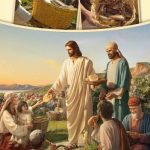
Jesus was on His way to Jerusalem for the Passover feast. When He reached Jericho, a large group of pilgrims walked with Him, listening as He taught. It was common for beggars to sit along the roadside during such times because pilgrims were usually generous, and people gathered along the path to greet those traveling to the holy city. Among them was a blind man. His friends told him that Jesus of Nazareth, the wonder-worker he had heard about, was passing by. At once he began to cry out, “Jesus, Son of David, have mercy on me.” The crowd tried to silence him, but he refused to give up. His need and his faith were stronger than their rebukes.
Jesus stopped, called the man forward, and asked him a deeply personal question: “What do you want Me to do for you?” The blind man answered simply, “Lord, let me see again.” Jesus responded, “Receive your sight, your faith has made you well,” and immediately the man’s vision was restored. This was the fruit of his persistent trust in the mercy and power of the Messiah. St Augustine later reflected on the urgency of responding to God’s grace, saying, “I fear Jesus may pass by and not return,” reminding us not to delay when grace draws near.
Life messages:
We need the blind man’s prayer, “Lord, let me receive my sight,” especially when our faith feels weak, when we cannot understand God’s timing, or when our commitments begin to falter. God gave us physical eyes to see the world, but He also gave us a heart capable of deeper vision, the kind that recognizes His work even in darkness. Let us use both faithfully and constantly.
We also need healing from our own forms of spiritual blindness, the kind that keeps us from recognizing God’s presence within ourselves, in other people, and in the events of daily life. Like the blind man, we need a faith that trusts Jesus’ compassion and keeps calling out even when obstacles discourage us. Scripture shows this in many places, for example, the persistence of the Canaanite woman who kept begging Jesus to heal her daughter, or Jacob wrestling through the night until he received a blessing. Prayer requires conviction, urgency, and perseverance. God bless you.
Nov 18 Tuesday: Dedication of the Basilicas of Saint Peter and Saint Paul, apostles, in Rome. Luke 19:1-10
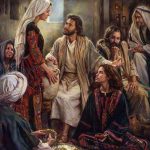
The Gospel presents the tender and forgiving mercy of God, and it shows the kind of response the Lord hopes for in us, a heart that turns back to Him. The scene centers on the sudden and sincere conversion of Zacchaeus, a tax-collector whose position in Jericho made him wealthy but also deeply disliked. As chief tax-collector, he served the Roman system and often collected more than required, so the Jewish people counted him among public sinners. In the crowd that day, Jesus looked beyond Zacchaeus’ reputation and saw the truth of his condition, a lost man longing for a way back. The way Jesus called him by name allows us to see how grace began to work in him, carrying him from simple curiosity to repentance, conversion, and a desire to make amends. This moment shows that true change begins when someone receives the love and acceptance offered by a merciful God. The experience of Zacchaeus echoes the message of Luke 15, where a lost sheep is carried home, a lost coin is recovered, and a lost son is embraced. All three stories point to the same truth: no one is ever beyond the reach of God’s transforming mercy.
Life messages:
- We need to welcome God’s call to repentance. All of us fall short in different ways. Through this Gospel, Jesus invites each of us to a deeper and more honest conversion. He loves us even when our minds are clouded by uncharitable thoughts, when our promises fail, when prayer grows weak, when faith feels thin, or when resentments and temptations trouble the heart. Like the psalmist who cried, “Have mercy on me, O God” (Psalm 51), we are invited to bring our sins into the light, repent sincerely, and trust that His mercy is greater than our failures.
- We need to love others despite their faults, because this is how Jesus loves us. Jesus did not wait for Zacchaeus to change before loving him. His acceptance came first, and the change followed. Scripture gives several similar moments, such as Jesus eating with Levi the tax-collector (Luke 5), or forgiving the woman caught in adultery (John 8). These encounters challenge us to love without placing conditions. As parents, friends, or teachers, can we welcome others with the same patience and compassion Jesus shows us?
- We need to let God free us from selfishness and lead us into generosity. Zacchaeus shifted from grasping to giving, from hoarding to healing. Grace awakened a new spirit in him, just as it did in the early Christians who “shared all things in common” (Acts 4). When the warmth of God’s presence touches the heart, it softens whatever selfishness is there and opens us to repentance, kindness, and generosity. God bless you.
Nov 19 Wednesday:Luke 19:11-28
The Gospel today invites us to live responsibly and gratefully, using the gifts God has placed in our hands so that, at the end of our lives, we may hear those joyful words, “Well done, good servant. Because you were faithful in small matters, I will place you over greater ones.” In Matthew’s telling of the parable, the Master’s approval reflects the hope every Christian carries within the heart, the hope of being welcomed into eternal joy: “Well done, good and faithful servant, you have been faithful with little, I will set you over much; enter into the joy of your Master” (Matthew 25:21). Whether we read Luke or Matthew, this parable pushes us to act with purpose, to make our lives fruitful, and to use our God-given gifts in ways that bring life, good, and blessing to others.
Jesus describes a wealthy Master preparing for a long journey. Before leaving, he entrusts great amounts of silver to his servants. Luke mentions ten servants receiving one mina each, while Matthew focuses on three servants receiving five, two, and one talent respectively, each according to personal capacity. The servants with larger sums immediately put their gifts to work, trading wisely and doubling what they had. The servant with the single talent chose fear instead of effort and buried his gift in the ground. When the Master returned, he praised the first two for their courage and diligence, but he condemned the one who hid his talent, calling him “wicked” in Luke and “wicked and slothful” in Matthew. The Master then took the unused talent and handed it to the servant who had shown the greatest initiative. The lesson rings clearly through Scripture, echoed even in Paul’s teaching that each person should use whatever gift he or she has received for the good of the Body of Christ.
Life messages:
- We are called to trust God enough to use the abilities He has planted within us. Every skill matters, whether it is teaching, cooking, farming, repairing, counseling, organizing, or working with technology. Scripture repeatedly shows God using simple skills for great purposes, such as David with his sling, Dorcas with her sewing, and the boy who shared his small offering of bread and fish. Our gifts become meaningful when we use them in our families, our communities, and the world around us.
- We need to invest our talents in the life of the parish. The Church only flourishes when each person contributes what he or she can. Saint Paul compared the Church to a body where every part has a function. In the same way, teaching catechism, singing in the choir, serving as an usher, joining a ministry, helping with youth or outreach programs, or offering practical skills are all ways of multiplying the gifts entrusted to us.
- We need to trade with the most precious gift we have received, the gift of faith. It is not enough simply to preserve it. Like the servants who multiplied their talents, we are called to deepen our faith, share it, and allow it to bear fruit. Jesus reminded His followers not to hide their light under a basket. Faith grows when we practice it, witness to it, and let it shape our choices. God bless you.
Nov 20 Thursday:Luke 19:41-44
During the Jewish festival of Passover, when thousands of pilgrims had gathered in Jerusalem, Jesus entered the city riding on a colt as crowds followed Him from the Mount of Olives. When they reached a place with a panoramic view of Jerusalem, Jesus stopped and wept. He loved this city deeply, not just for its beauty, but for what it represented. As the center of Jewish worship, home of the Temple, and heart of God’s promises, Jerusalem was meant to be a beacon of faith. Yet Jesus foresaw that it would one day face devastating judgment. He foresaw how, about forty years later, Roman armies under Titus would destroy the Temple and slaughter many of the city’s inhabitants.
Jesus’ tears were not just for the passing beauty of stones, but for people. He grieved because the city had failed to “recognize the time of its visitation.” In other words, Jerusalem had closed its doors to Him, to His message of mercy, grace, and salvation. Despite His miracles and teachings, many of her leaders rejected Him, and in their resistance they would contribute to His crucifixion.
Life Messages
- Jesus still visits us today as Lord and Savior. He teaches us through the Church, through Scripture, and in the Sacraments. We listen to His voice when we pray, when we attend Mass, and when we open the Bible. Because He continues to offer forgiveness and grace, we must not reject Him or ignore His call. Just as the people of Jerusalem were warned, we too are invited to repent, renew our hearts, and choose the way of holiness.
- We are living temples of the Holy Spirit. Because God dwells in us, we must never allow our hearts to become a place of division, jealousy, injustice, or impurity. It is our responsibility to guard our inner sanctuary, to allow Jesus’ love to purify us, and to live in a way that honors God’s presence. God bless you.
Nov 21 Friday: Presentation of Virgin Mary in the Temple. Luke 19:45-48
Today’s feast celebrates the Presentation of the Blessed Virgin Mary, recalling the tradition that she was offered to God in the Temple as a young girl. Since Nazareth was nearly one hundred miles from Jerusalem, the journey would have taken several days on foot. Jewish custom held that young girls often spent time in the Temple precincts, where they learned to read Scripture, chant the psalms, and assist in simple liturgical tasks. As with Mary’s birth, the story of her presentation appears not in the New Testament but in early Christian writings outside the canon. The Protoevangelium of James, although not historical, describes Joachim and Anna bringing their daughter to the Temple at a very early age. Later texts, such as the Gospel of Pseudo-Matthew and the Gospel of the Nativity of Mary, place Mary’s age at about three, offered to God in fulfillment of a vow made by her parents when Anna was still childless. In the light of Tradition, Mary’s time in the Temple is understood as part of God’s preparation for her vocation as Theotokos [Lk 1:26–38], the one chosen to bear the Son of God.
The feast itself began as the commemoration of the dedication of the Byzantine Basilica of Saint Mary the New in AD 543, built near the ancient Temple grounds. It spread from the Christian East, where it was treasured as one of the twelve Great Feasts and celebrated on November 21, and by the ninth century it reached the West through monastic communities in Southern Italy. The entire Latin Church adopted the feast formally in the fourteenth century. In Marialis Cultus (1974), Pope Saint Paul VI affirmed the value of the celebration, explaining that although the narrative is drawn from apocryphal sources, it expresses deep theological truths and preserves ancient traditions rooted in Eastern Christianity. The feast highlights the continuity of grace in Mary’s life. The holiness she received at her Immaculate Conception did not remain dormant; it shaped her childhood, her desires, and her openness to God’s plan. Her early dedication echoes the biblical pattern of children consecrated to the Lord, such as Samuel [1 Sam 1:24–28] and Jeremiah [Jer 1:5], both set apart from their earliest days for God’s service.
Life message
Each Mass we attend is, in a real way, our own presentation. Though our formal dedication to God happened at Baptism [CCC 1213], we continually place ourselves and our loved ones on the altar through Christ at every Eucharist. This feast invites us to remember that we are a consecrated people. Our daily choices should reflect that we belong to God and are called to holiness. It is good, each day, to offer our hearts to the Lord and to ask Him to shape us under Mary’s gentle guidance, trusting in her intercession as we seek to grow in purity, generosity, and joyful obedience. God bless you.
Nov 22 Saturday: Saint Cecelia, virgin and martyr. Luke 20:27-40
When Jesus arrived in Jerusalem for His final Passover, the religious authorities were already plotting to corner Him. The chief priests, scribes, and Pharisees tried to trap Him with loaded questions. The Sadducees, who denied the resurrection because they believed Moses had said nothing about it, also joined in. They crafted a hypothetical case meant to embarrass Jesus in front of both groups. They described a woman who had married seven brothers in succession according to the law of levirate marriage [Deut 25:5–10], and who eventually died childless. Their question was simple on the surface but malicious in intent: whose wife would she be in the resurrection? If Jesus defended resurrection, the Sadducees would attack Him. If He dismissed it, the Pharisees would turn on Him. Either way, they hoped to divide His support.
Jesus responded not by avoiding the question, but by exposing the assumptions underneath it. First, He challenged the Sadducees’ ignorance of the nature of life with God after death. They imagined Heaven as a continuation of earthly structures. Jesus explained that the life of the resurrection is transformed. Human relationships will be real, but different, and marriage as we know it will not be the framework of that existence. Those who rise, He said, are sustained by God in an immortal life, like the angels, and are truly “children of God” [Lk 20:36].
Second, Jesus used the Sadducees’ own authoritative text, the Torah, to prove the reality of life after death. He cited God’s words to Moses in the account of the burning bush: “I am the God of Abraham, the God of Isaac, and the God of Jacob” [Ex 3:6]. Jesus stressed the present tense. God did not say, “I was their God.” Since God is the God of the living, not of the dead [Lk 20:38], the patriarchs must in some way still be alive in God’s presence. With that single citation, Jesus dismantled the Sadducees’ denial of the resurrection from the very Scriptures they claimed as their foundation.
Life messages
- We are invited to live as people of the resurrection. This means refusing to remain trapped in the tombs of sin, resentment, or destructive habits. Instead, we are called to live with the quiet confidence and deep peace that come from knowing the Risen Lord walks with us and that our own bodies will one day share in His glory [1 Cor 15:20–23].
- The hope of our resurrection should shape how we treat our bodies and one another. If we believe these bodies will rise, then we keep them pure, honorable, and free from habits that diminish us. And if every person we meet is someone destined for eternal life, then we owe them respect, gentleness, and humble service. God bless you.