




![Ordinary Time Week 18 [Yr. A] (Aug. 2, 2026): Is 55:1-3; Rom 8:35, 37-39; Mt 14:13-21. By: Rev. Fr. Clifford Atta Anim.](https://frcliffordhomilies.com/wp-content/uploads/2026/08/IMG_3537.jpeg)
Today’s readings invite us to contemplate one of the most consoling truths of our faith: God does not abandon His children. He knows our needs, He sees our hunger, He hears our cries, and He is able to provide for us in ways that exceed our expectations. The God whom Scripture reveals is not distant from the struggles of His people. He is a God who feeds, heals, forgives, strengthens, accompanies, and saves. Yet God’s providence is not limited merely to satisfying our physical needs. The deepest hunger of the human person is a hunger for God Himself, and that is why divine generosity ultimately leads us to Christ, the Bread of Life. God gives us not merely something from Himself, but gives us His own Son. In Jesus Christ, the Father gives humanity the greatest gift imaginable, His only-begotten Son, who became flesh for our salvation. The God who feeds His people in the wilderness will eventually give them the living Bread that comes down from heaven. Thus, today’s readings move us from ordinary hunger to spiritual hunger, from bread that perishes to the Bread that gives eternal life, and from God’s generosity toward us to our responsibility to become generous toward others.
The first reading from the prophet Isaiah is addressed to a people who knew what it meant to experience deprivation. Israel had suffered exile, displacement, insecurity, and spiritual desolation. Yet through the prophet, God calls His people to return to Him: “Come, everyone who thirsts, come to the waters.” The invitation is remarkable because the people are told to come even though they have no money. God’s gifts cannot be purchased. His grace is not a commercial transaction. His mercy is offered freely. The Lord promises food for the hungry, drink for the thirsty, and a covenant relationship that restores His people. Behind the invitation is the revelation of a God who knows that humanity possesses needs that material wealth cannot satisfy. A person can have money and still be spiritually thirsty; one can possess a house and still have no peace; one can have food on the table and yet carry a hunger that no earthly meal can satisfy. Isaiah therefore points us beyond material provision toward the God who alone can satisfy the deepest desires of the human heart.
This is beautifully echoed in today’s Responsorial Psalm: “The hand of the Lord feeds us; he answers all our needs.” The psalmist does not describe God merely as a provider who occasionally gives something to His creatures. He presents Him as compassionate toward all that He has made. The Lord opens His hand and satisfies the desire of every living thing. This does not mean that God gives us everything we want exactly when we want it. Divine providence is not a promise of a life without suffering, disappointment, illness, or hardship. Rather, it means that God’s loving presence accompanies us through everything and that He is capable of bringing good even out of circumstances that we cannot understand. Sometimes God answers our prayers by changing the situation; sometimes He changes us within the situation by giving us the strength, wisdom, patience, or grace to endure it. The God who fed Israel with manna in the desert is the same God who continues to sustain His people today.
Saint Paul takes this assurance even further in the second reading. Having reflected on God’s saving love revealed in Christ, Paul asks, “Who will separate us from the love of Christ?” He then moves through a list of realities that can frighten human beings, hardship, distress, persecution, famine, nakedness, danger, and the sword. Paul’s message is not that Christians will never experience such things. Quite the opposite. He knows that suffering is part of the Christian journey. His confidence comes from knowing that suffering cannot have the final word. Nothing in creation has the power to separate us from the love of God revealed in Christ Jesus. This is the foundation of Christian hope. We may lose possessions, opportunities, relationships, health, security, or even our earthly lives, but if we remain united with Christ, we have not lost everything. The greatest treasure is still ours, because God’s love remains faithful.
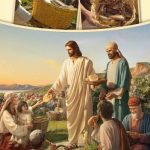
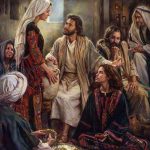
It is against this background that we should approach today’s Gospel, the miraculous feeding of the five thousand. Jesus has withdrawn to a deserted place, but the crowds follow Him. When He sees them, He does not become irritated by their interruption. Matthew tells us that Jesus has compassion on them and heals their sick. This detail is essential. The miracle of the loaves and fish begins not with the disciples’ resources but with the compassion of Jesus. He sees the needs of the people before they even know how those needs will be met. This is the heart of our God. Divine providence begins with divine compassion.
The crowd has come looking for Jesus because they are hungry for His teaching and healing, and now evening is approaching. The disciples see the practical problem. They tell Jesus to send the people away so that they can go into the villages and buy food for themselves. Their suggestion is understandable, but Jesus responds with words that challenge every Christian disciple: “They need not go away; you give them something to eat.” The disciples immediately look at what they possess and conclude that it is insufficient: five loaves and two fish. From their perspective, the resources are too small for the problem. But Jesus sees possibilities where the disciples see limitations.
This is one of the great lessons of the miracle. God frequently begins His work with what appears insignificant in human hands. Moses had only a staff when God called him to confront Pharaoh. David had only a sling when he faced Goliath. The widow of Zarephath had only a handful of flour and a little oil when Elijah asked her for food during the famine. The widow in the Temple had only two small coins, yet Jesus declared that her offering was greater than those who gave from their abundance. A young boy in today’s Gospel has five loaves and two fish, apparently far too little for such a crowd, but placed in the hands of Jesus, the little becomes more than enough.
The miracle therefore teaches us not to despise what we have simply because it appears small. We often tell ourselves, “I do not have enough.” I do not have enough money to help. I do not have enough knowledge to teach. I do not have enough influence to make a difference. I do not have enough time to serve. I am not important enough. I am only one person. Yet the Gospel teaches us that the question is not simply, “What do I have?” The deeper question is, “What am I willing to place in the hands of Jesus?” The five loaves and two fish were insufficient in themselves, but they became instruments of abundance when surrendered to Christ. Grace does not always begin with abundance. Sometimes it begins with a small offering placed faithfully into God’s hands.
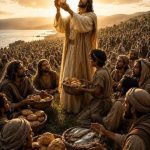
The actions of Jesus in this miracle are also deeply significant. Matthew tells us that Jesus took the loaves and fish, looked up to heaven, blessed and broke the loaves, and gave them to the disciples, who in turn gave them to the crowd. These actions anticipate the gestures of the Last Supper and the Eucharistic celebration of the Church. Jesus takes, blesses, breaks, and gives. The same pattern appears at the Last Supper when He takes bread, gives thanks, breaks it, and gives it to His disciples. It appears again in the account of the disciples at Emmaus, where Jesus takes bread, blesses it, breaks it, and gives it to them. The feeding of the multitude therefore points beyond itself to the Eucharist, in which Christ gives not merely bread multiplied by His power but His own Body and Blood for the life of the world.
The miracle also recalls the great signs of God’s provision in the Old Testament. Moses led Israel into the wilderness where God fed them with manna from heaven. In 2 Kings 4:42-44, the prophet Elisha miraculously feeds a hundred men with a small quantity of barley bread, and there is food left over. Jesus, however, does something even greater. He feeds thousands, and twelve baskets of fragments remain. The abundance is deliberate. It points toward the overflowing generosity of the Messianic age and reveals that Jesus is greater than the prophets. He is not merely another Moses or another Elisha. He is the Son of God through whom God’s saving and providing love is made present among His people.
John’s Gospel makes the Eucharistic significance of this event even clearer. After the multiplication of the loaves, Jesus will speak about the bread that comes down from heaven and eventually declare, “I am the bread of life.” The crowd is interested in bread that satisfies physical hunger, but Jesus directs their attention to a deeper hunger. Physical bread sustains biological life for a time; Christ gives eternal life. The food we eat today will eventually leave us hungry again, but whoever comes to Christ will discover the satisfaction that the world cannot provide. This is why the Eucharist is not simply a ritual we perform or an obligation we fulfill. It is an encounter with the living Christ who nourishes us with His own life.
Every celebration of the Holy Mass therefore contains two tables, the Table of the Word and the Table of the Eucharist. At the first, Christ speaks to us; at the second, Christ gives Himself to us. We come hungry, and Christ feeds us. We come weak, and He strengthens us. We come wounded by sin, and He offers healing. We come burdened by the difficulties of life, and He gives us the grace to continue. The Eucharist does not mean that Christians will never experience hunger, suffering, or difficulty. Rather, it gives us Christ Himself, and Christ is sufficient to sustain us on the journey toward eternal life.
For this reason, we must learn to nourish our souls. We are careful about feeding our bodies, but how much attention do we give to our spiritual hunger? We can spend considerable time searching for food, entertainment, information, and social media, yet sometimes struggle to find even a few minutes for God’s Word and prayer. A soul that is constantly deprived of spiritual nourishment becomes vulnerable. Just as the body becomes weak without food, the spirit becomes weak when it is deprived of prayer, Scripture, the Sacraments, and communion with God.
We should therefore cultivate the habit of reading Sacred Scripture prayerfully. When we open the Bible, we should not approach it merely as another book. We should ask, “Lord, what are You saying to me through this passage?” We should read slowly, reflect upon what we have read, allow the Word to challenge us, and then respond to God in prayer. Sometimes one verse can remain with us throughout an entire day. The Word of God can correct us when we are going astray, comfort us when we are discouraged, strengthen us when we are tempted, and remind us of God’s promises when our faith becomes weak. Prayer is our response to the God who has first spoken to us.
But today’s Gospel does not end with Jesus feeding the crowd. There is another important dimension. Jesus does not distribute the bread directly to everyone. He gives it to the disciples, and the disciples give it to the people. Here we discover something essential about Christian discipleship. God chooses to work through human beings. He could have fed the multitude without involving the disciples, but He deliberately involved them. “You give them something to eat.” This command continues to echo in the Church today.
There are people around us who are hungry in many different ways. Some are physically hungry and need food. Others are emotionally hungry for acceptance, friendship, and belonging. Some are spiritually hungry because they have lost their faith or have never truly encountered Christ. Some are hungry for forgiveness. Others are hungry for justice, dignity, peace, or hope. The Christian cannot simply look at the crowd and say, “Send them away.” Jesus tells us, “You give them something to eat.”
This means that every Christian is called to become Eucharistic in the way he or she lives. We receive Christ so that we can become more like Christ. We receive the Bread of Life so that our lives may become bread for others. We cannot come to the altar, receive the Body of Christ, and then remain indifferent to the needs of the Body of Christ around us. Saint Paul teaches that we who are many are one body because we share in the one bread. Our Eucharistic communion must therefore produce communion in everyday life.
The Eucharistic pattern of Jesus becomes a pattern for our own existence: He takes, blesses, breaks, and gives. God takes whatever we offer Him, however small. He blesses it with His grace. He breaks open our selfishness and teaches us to live beyond ourselves. Then He sends us to give ourselves in service to others. This is the meaning of Christian generosity. We are not blessed merely to accumulate blessings. We are blessed so that we can become blessings to others.
Perhaps someone has only a little money, but can still share something with another person. Someone may not have great possessions, but can offer time, attention, encouragement, prayer, or practical assistance. A parent can give patience to a child. A priest can give his time to a troubled parishioner. A teacher can encourage a struggling student. A neighbour can visit someone who is lonely. A Christian can forgive someone who has caused pain. A parish can reach out to families experiencing hardship. None of these acts may appear spectacular, but when offered to Christ, they become the five loaves and two fish of our time.
We must also remember that generosity is not merely about giving what we have left over. Christian charity sometimes requires sacrifice. The young boy’s bread and fish became available because someone was willing to surrender what he possessed. The Gospel challenges us to ask whether we give only from our surplus or whether we are sometimes willing to give sacrificially. The widow who offered two small coins teaches us that the value of generosity is not measured simply by the size of the gift but by the love and sacrifice with which it is offered.
At the same time, today’s Gospel does not teach us to be irresponsible or to ignore our legitimate needs. Christian generosity is not wastefulness. We are stewards, not owners, of everything God places into our hands. The Christian question is therefore not simply, “How much can I keep?” but, “Lord, how do You want me to use what You have entrusted to me?” When our possessions become instruments of love rather than objects of selfish attachment, they become part of God’s providential work.
There is another beautiful detail in the Gospel that we should not overlook. After everyone had eaten, Jesus instructed the disciples to gather the fragments so that nothing would be lost. God’s abundance does not justify wastefulness. Divine generosity and responsible stewardship belong together. We should be grateful for what we receive and careful with God’s gifts, whether food, money, time, natural resources, talents, or opportunities. The Christian does not waste what another person desperately needs.
Finally, the twelve baskets of fragments remind us that God’s generosity exceeds our calculations. The disciples began with five loaves and two fish and ended with more than they started with. This does not mean that God will always multiply our possessions in a material sense. Rather, it reveals something deeper about the economy of grace: what is surrendered to God in love is never ultimately wasted. A kind word, a prayer, a sacrifice, an act of forgiveness, a generous gift, or a life devoted to service may seem insignificant in our eyes, but God can use it to accomplish more than we can imagine.
Brothers and sisters, the question of today’s Gospel is therefore very simple but very demanding: What are your five loaves and two fish? What has God placed in your hands that you are tempted to consider too small to matter? Your time? Your talents? Your education? Your resources? Your position? Your home? Your influence? Your ability to pray? Your capacity to forgive? Your knowledge of the faith? Whatever it is, do not keep it locked away in your hands. Place it in the hands of Jesus.
And when we come forward for Holy Communion today, let us remember what we are receiving. We are receiving Christ, the Bread of Life, the One who satisfies the deepest hunger of the human heart. Let us ask Him to transform us into people who can feed others with the bread of compassion, kindness, forgiveness, justice, truth, and love. May the Lord nourish our bodies, strengthen our souls, deepen our trust in His providence, and make our lives instruments of His generosity. And when the Lord says to us, “You give them something to eat,” may we never respond, “I have nothing.” Instead, may we place whatever we have into His hands and trust that, when surrendered in love, even our five loaves and two fish can become enough to feed a multitude.
God bless you.
