




July 27 Monday: Mt 13:31-35
Today’s Gospel presents two short parables about the Kingdom of God: the mustard seed and the yeast. Through these simple images, Jesus teaches us that God’s Kingdom often begins in small and seemingly insignificant ways, but through the power of God, it can grow into something great. The mustard seed begins as something tiny but becomes a large plant, while a small amount of yeast quietly transforms an entire lump of dough. In the same way, the Gospel began with Jesus and a small group of disciples, but through the power of the Holy Spirit, it spread throughout the world.
These parables also speak about our personal lives. God’s grace may begin in us through a small act of faith, a sincere prayer, a word of forgiveness, or a decision to turn away from sin. When we cooperate with the Holy Spirit, these small beginnings can gradually transform our hearts and make us holy. The Kingdom of God grows within us when we allow God’s Word to take root and influence our thoughts, choices, and relationships.
Life message: Let us allow the Holy Spirit to transform us from within. Let our lives be like yeast, quietly influencing the people around us through love, patience, forgiveness, kindness, and humble service. We should not underestimate the power of small acts of goodness. A simple word of encouragement, an act of forgiveness, or a gesture of charity can become an instrument through which God’s Kingdom grows in another person’s life. May our daily Christian witness help God’s love to spread wherever we live and work. God bless you.
July 28 Tuesday: Mt 13:36-43
Today’s Gospel teaches us about the patience and mercy of God through the Parable of the Wheat and the Weeds. Jesus shows us that good and evil can exist side by side, and that God does not rush to destroy the sinner. Instead, He patiently gives the sinner time to repent and change. The parable therefore warns us against judging others too quickly or trying to eliminate those whom we consider “weeds” in our families, communities, and Church.
The field is the world, and the good seed represents those who belong to God, while the weeds represent the presence of evil. God allows both to grow until the harvest, reminding us that final judgment belongs to Him. As the saying goes, “God’s delays are not God’s denial.” His patience is an opportunity for conversion. We must therefore focus less on asking why there is evil in the world and more on asking how we can increase the good.
Life message: 1) Let us learn to be patient with ourselves and with others, especially those who annoy or offend us. Instead of condemning people, let us pray for their conversion and help them return to the right path through our good example, loving correction, and Christian charity. God bless you.
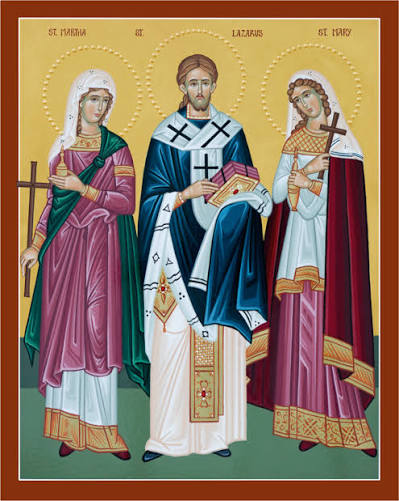
July 29 Wednesday: St. Martha, Mary & Lazarus. Jn 11:19-27
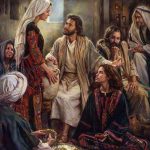
July 29 is now celebrated as the memorial of St. Martha, St. Mary, and St. Lazarus, the three siblings whom Jesus loved and visited in Bethany. In their home, we see three different but complementary ways of responding to Jesus. Martha welcomed Jesus through active service, Mary through attentive listening, and Lazarus through his witness to the life-giving power of Christ. When Lazarus died, Martha made a strong profession of faith, declaring Jesus to be the Messiah and the Son of God. Mary reminds us of the importance of sitting at the feet of Jesus and listening to His word, while Martha reminds us that faith must also express itself in loving service. Lazarus, having experienced Jesus’ life-giving power, became a living testimony to Christ.
The household of Bethany teaches us that the Church and our families need both action and contemplation. We need people like Martha who serve, organize, teach, care for others, and build the community. But like Mary, we must also make time to listen to God through Scripture, prayer, and the Sacraments. Our service becomes fruitful when it flows from a life of prayer and communion with Christ. Jesus does not call us to choose between prayer and service, but to unite the two.
Life message: 1) Let us invite Jesus into our families and homes through prayer, Scripture, and the Sacraments. Let us learn from Martha to serve generously, from Mary to listen attentively to God, and from Lazarus to witness courageously to what Christ has done for us. A truly Christian life is one in which we become both hearers and doers of the Word. God bless you.
July 30 Thursday: St. Peter Chrysologus, Bishop, Doctor of the Church. Mt 13:47-53
Today’s Gospel presents the Parable of the Fishing Net, another teaching about the Kingdom of God. Jesus compares the Kingdom to a net that gathers all kinds of fish, both good and bad. Only after the catch is brought ashore are the fish separated. In the same way, the Church is made up of people at different stages of faith and conversion. The final separation belongs to God at the Last Judgment, not to us.
Jesus also teaches us to be like the wise scribe who brings out both old and new treasures. As Christians, we must continue to deepen our knowledge of our faith and share what we have learned with others in ways they can understand. We are called to evangelize, not to decide who is worthy of God’s mercy.
Life message: 1) Let us practice loving patience and compassionate understanding. The Church is a mixture of saints and sinners, and we must resist the temptation to judge others as unworthy or less faithful. Final judgment belongs to God. Let us humbly recognize our own need for God’s grace and say with St. Paul, “By the grace of God I am what I am” (1 Cor 15:10). God bless you.
July 31 Friday: St. Ignatius of Lyola, Priest. Mt 13:54-58
Today’s Gospel presents Jesus in the synagogue at Nazareth, where He reads Isaiah’s prophecy about the Messiah and declares that it is fulfilled in Him. Jesus identifies His mission as bringing good news to the poor, freedom to captives, sight to the blind, and liberation to the oppressed. At first, the people admired His gracious words, but their admiration turned into rejection when they could not accept that someone they knew as the carpenter’s son could be God’s promised Messiah. Their familiarity with Jesus became an obstacle to recognizing who He truly was.
Jesus’ experience reminds us that those who speak God’s truth may sometimes face rejection, even from people who know them well. It also challenges us not to reject God because He comes to us through people or circumstances we consider ordinary or unsuitable.
Life message: 1) Let us face rejection with courage when we are trying to do what is right. At the same time, let us examine ourselves so that prejudice, pride, or familiarity does not prevent us from recognizing God’s presence in others. God may speak to us through the Bible, the Church, our families, and even through ordinary people whom we are tempted to overlook. God bless you.
Aug 1 Saturday: St. Alphonsus Liguori, Bishop, Doctor of the Church. Mt 14:1-12
Today’s Gospel presents the tragic story of the death of John the Baptist. The three principal characters are Herod, Herodias, and John. Herod was a weak ruler who feared John because the prophet had courageously confronted him over his sinful relationship with Herodias. Herodias, filled with resentment and a desire for revenge, wanted John silenced because he had exposed their wrongdoing. John, however, remained faithful to his prophetic mission. He refused to compromise the truth simply because the person he was confronting was a powerful king.
John the Baptist teaches us what it means to have the courage of our convictions. He was not afraid to speak the truth to the powerful because his loyalty was first to God. Herod, on the other hand, knew that John was a righteous man, yet his weakness and desire to please others led him into a terrible decision. The Gospel therefore warns us about the danger of allowing fear, pride, pressure from others, anger, or the desire for popularity to control our decisions.
Life messages: 1) Let us imitate the courage and moral integrity of John the Baptist. As Christians, we are sometimes called to speak the truth, defend what is right, and oppose injustice, even when doing so may bring criticism or rejection. We should never sacrifice our Christian principles simply to please people or protect our reputation.
- Let us guard ourselves against anger, revenge, and uncontrolled desires. Herodias allowed resentment to become destructive, while Herod allowed weakness and fear to overcome his conscience. We should learn to forgive those who offend us and allow God to deal with injustice. Let us remember that no position, power, pleasure, or human approval is worth sacrificing our relationship with God. God bless you.

Good reflections, Father. Keep it up.
Thank you