




Sept 8 Monday: Birth of the Virgin Mt 1:1-16, 18-23
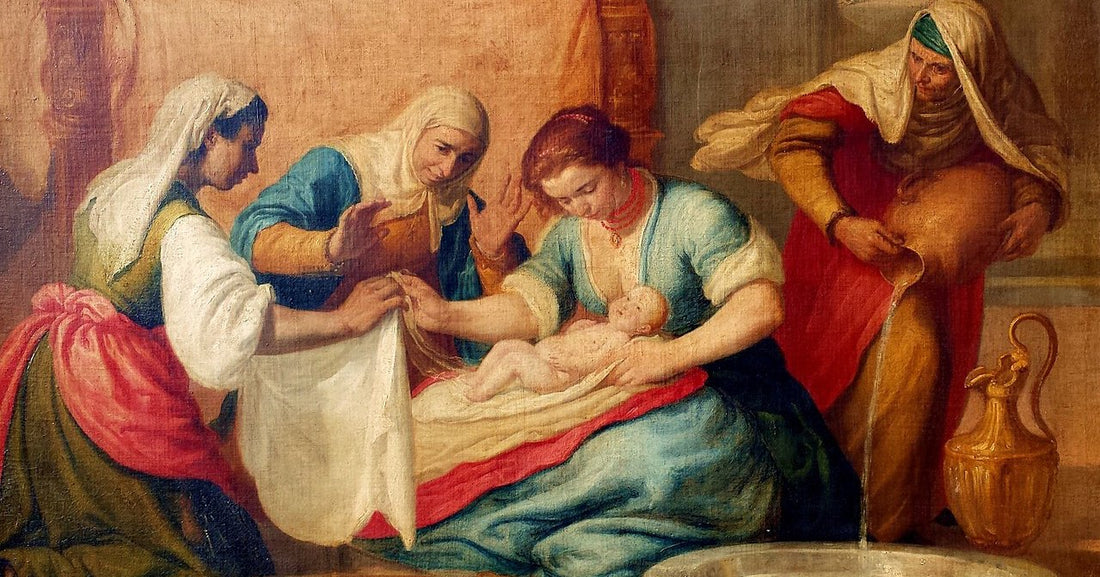
The Nativity of the Blessed Virgin Mary – September 8
Origins of the feast
This is one of the oldest Marian solemnities. Its roots are found in the 2nd-century apocryphal text, the Protoevangelium of James (also called the Pre-Gospel of James), which preserves early Christian traditions about Mary’s parents, Saints Joachim and Anna. Although not part of the inspired Scriptures, this text reflects the devotion of the early Church. According to it, Mary was born either in Jerusalem or in Sepphoris, near Nazareth. The Annunciation was believed to have taken place later in the house of her parents.
The feast of Mary’s Nativity arose in the fifth century in Syria or Palestine. Tradition says Saint Romanus of Syria brought it to Rome. The Roman Church adopted it in the seventh century and fixed the date on September 8. It appears in the Gregorian Sacramentary of the eighth and ninth centuries, showing its spread throughout the Western Church
Why the Church celebrates Mary’s birth
The Church normally celebrates the dies natalis (“heavenly birthday”) of saints—the day they died. There are only three exceptions: the birthdays of Jesus (December 25), Mary (September 8), and John the Baptist (June 24). Mary’s birthday is celebrated because of her Immaculate Conception. John’s is celebrated because, according to Luke 1:41, he was filled with the Holy Spirit while still in Elizabeth’s womb when Mary visited.
We honor Mary because God “has done great things” for her (Luke 1:49):
a) He chose her to be the Mother of His Son (Luke 1:30-31).
b) He filled her with the Holy Spirit (Luke 1:35).
c) He made her “full of grace” (Luke 1:28), the embodiment of all virtues and our heavenly Mother.
d) He allowed her to share uniquely in the redemptive mission of Christ (cf. Lumen Gentium 61-62).
Scripture for the feast
First Reading: Micah 5:1-4 or Romans 8:28-30.
Gospel: Matthew 1:1-16, 18-23 (the genealogy and birth of Jesus).
Romans 1:3 and Matthew’s genealogy indicate Mary’s Davidic lineage, showing God’s fidelity to His covenant promises.
Life messages
- A birthday gift for our Mother. Every mother wants her children to inherit her virtues. The best gift we can give Mary on her birthday is to strive to become holy children of a Holy Mother.
- Imitate her virtues. Today can be the day we begin to practice:
- Her trusting faith in God’s power (“Nothing is impossible for God” Luke 1:37).
- Her perfect obedience to God’s will (“Be it done to me according to your word” Luke 1:38).
- Her sacrificial and sharing love (John 2:1-11; John 19:25-27).
- Her acceptance of suffering, with total commitment to her mission alongside Christ (cf. Luke 2:35).
By celebrating Mary’s birth, we celebrate God’s preparation for our salvation: the coming into the world of the Mother of the Savior. God bless you.
References:
– Protoevangelium of James, c. 150 A.D. (English text at New Advent)
– Butler’s Lives of the Saints (Sept. 8)
– Vatican II, Lumen Gentium 52–69
Sept 9 Tuesday: Saint Peter Claver, priest. Lk 6:12-19
The Call of the Apostles and the Mission of Jesus. Today’s Gospel gives a brief but powerful account of how Jesus, the first missionary sent by the Father (cf. John 20:21), began his work of preaching and healing. His message was the Good News that God is not distant or vengeful but a loving, merciful and forgiving Father who “wills everyone to be saved” (1 Timothy 2:4). In today’s passage, we see how this first missionary called and empowered twelve future missionaries, the Apostles, to continue his work after him (cf. Luke 6:12-16; Mark 3:13-19).
The choice of the Twelve
Jesus deliberately chose very ordinary people. Most were hard-working fishermen with no social standing or formal learning. Yet he saw in them the openness to become instruments in God’s hands (cf. 1 Corinthians 1:26-29). Among them was Matthew, a despised tax collector in the service of Rome, and Simon the Zealot, a fiery nationalist determined to overthrow Roman rule. Only their shared love for Jesus, and his love for them, united such opposites. Before choosing them, Jesus spent the whole night in prayer (Luke 6:12), showing that every vocation begins in God’s initiative and is confirmed in prayer. He then shared with them his own authority to heal and cast out demons and his mission of proclaiming the Kingdom of God (cf. Matthew 10:1, 7-8).
Life messages
- God’s initiative in every vocation. Whether our call is to priesthood, religious life, marriage, or lay ministry, it is first God who calls. Our response begins in prayer and trust, as Jesus modeled.
- The mission continues through us. As baptized Christians, we share the same mission Christ entrusted to the Apostles (cf. Matthew 28:19-20).
- Witness first, then words. We fulfill this mission primarily by living out Jesus’ teachings in our daily life (John 13:34-35), and then by actively supporting the Church’s missionary activities through prayer, service, and generosity.
By meditating on this Gospel, we can renew our awareness that God calls ordinary people and gives them extraordinary grace to serve his Kingdom. God bless you.
References: Luke 6:12-16; Mark 3:13-19; Matthew 10:1-8; John 20:21; 1 Timothy 2:4; 1 Corinthians 1:26-29; Vatican II Ad Gentes 2.
Sept 10 Wednesday: Lk 6:20-26
The Beatitudes: God’s Surprising Way to True Happiness
Luke presents the Sermon on the Plain immediately after Jesus chooses the Twelve Apostles (Luke 6:12-20). This setting is important: the Beatitudes are not abstract advice but Jesus’ program for the new community he is forming. Like Matthew’s eight beatitudes (Matthew 5:1-12), Luke’s four beatitudes overturn the prevailing ideas of “real” happiness, both in first-century Judaism and in our own time. In a world that prizes wealth, power, freedom from suffering, and influence, Jesus calls “blessed” those who are poor, hungry, sorrowing, and persecuted for his sake.
The meaning of the Beatitudes
Jesus teaches that in poverty we discover God’s reign; in hunger we learn to trust his providence; in tears we find the promise of true consolation; and in rejection for his name we receive lasting joy (cf. 2 Corinthians 12:9-10; 1 Peter 4:13-14). These are not blessings because suffering itself is good, but because living these situations in faith and solidarity with Jesus opens us to God’s mercy and the values of his Kingdom. The Beatitudes are a blueprint for Christian discipleship: a call to live with trust, simplicity, compassion, and courageous fidelity, just as Jesus did (Philippians 2:5-8).
Life messages
- Live the Beatitudes concretely. Millions today are poor, hungry, persecuted, or homeless. When we reach out to them in works of mercy we are living the Beatitudes and, as Jesus says in Matthew 25:31-46, we are serving him himself.
- Reveal God’s love to the suffering. Each time we pray for, visit, or help the needy, sick, or oppressed, we give them an experience of God’s tenderness.
- Go to the margins. As the Apostles were sent to society’s “untouchables,” every Christian is called to stand with the discriminated and marginalized today so that through our presence and action they may encounter the love of Christ in human flesh. God bless you.
References: Luke 6:20-26; Matthew 5:1-12; Matthew 25:31-46; 2 Corinthians 12:9-10; 1 Peter 4:13-14; Gaudete et Exsultate (Pope Francis, 2018) §§65-94.
Sept 11 Thursday: Lk 6:27-38
Christian Love and the Golden Rule
Today’s Gospel (Luke 6:27-38) continues Jesus’ Sermon on the Plain and shows the power of Christian love when lived according to the “golden rule”: “Do to others as you would have them do to you.” Far from being a vague principle, Jesus spells it out with concrete commands:
- Love your enemies. “Do good to those who hate you; bless those who curse you, pray for those who maltreat you” (Luke 6:27-28). This is not sentimental tolerance but active benevolence, mirroring God’s own love for sinners (Romans 5:8).
- Show mercy and compassion. “Be compassionate, as your Father is compassionate” (Luke 6:36). Just as God “makes his sun rise on the evil and the good” (Matthew 5:45), so disciples are to treat all people, even adversaries, with undeserved kindness.
- Stop judging and start forgiving. “Do not judge…do not condemn…forgive, and you will be forgiven” (Luke 6:37). Jesus links our own experience of God’s pardon with our readiness to pardon others (Matthew 6:12, 14-15).
Life messages
- Answer the invitation to grace-filled behavior. What sets Christianity apart is grace, the ability, by the Holy Spirit, to treat others not as they “deserve” but as Christ treats us (Ephesians 4:31-32).
- Accept the daily challenges of discipleship. Jesus asks us to endure misunderstanding or unjust suffering for his sake and for the Gospel, knowing that God’s mercy triumphs (1 Peter 2:19-23).
- Pray for the strength to forgive. Each time we say the Our Father we ask, “forgive us…as we forgive” (Matthew 6:12). Remembering God’s forgiveness of us enables us to forgive and heals our own hearts.
- Live the Golden Rule. Consciously choose to act toward others as you would want them to act toward you. This fulfills the Law and the Prophets (Matthew 7:12) and makes visible God’s Kingdom in everyday life. God bless you.
References: Luke 6:27-38; Matthew 5:43-48; Matthew 6:12-15; Matthew 7:12; Romans 5:8; Ephesians 4:31-32; 1 Peter 2:19-23.
Sept 12 Friday: Most Holy Name of Mary.Lk 6:39-42
First Take the Log out of Your Own Eye
In today’s Gospel (Luke 6:39-42), part of the Sermon on the Plain, Jesus humorously condemns our careless, malicious, and often rash judgments about the motives or actions of others. He paints two vivid images: a blind man leading another blind man into a pit, and a man with a wooden beam in his eye trying to remove a speck from his brother’s eye. These pictures expose the hypocrisy of criticizing others without first confronting our own sins.
Why we should not judge others
- Only God judges rightly. No one but God is perfectly good and all-knowing (1 Samuel 16:7). Only he sees the whole truth and reads the human heart (Psalm 139:1-4; Romans 2:16).
- We lack full knowledge of circumstances. We rarely see the temptations, pressures, or inner wounds that lead someone to act wrongly (James 4:11-12).
- Our judgments are often biased. Because of prejudice or self-interest, total fairness cannot be expected from us (Proverbs 18:13).
- We share the same faults. Jesus warns against the “beam” in our own eye (Matthew 7:1-5). St. Philip Neri, seeing a drunkard, remarked, “There goes Philip but for the grace of God.” Abraham Lincoln echoed this: only those willing to help have earned the right to criticize.
Life message
Instead of rushing to condemn, examine your own conscience, ask for God’s mercy, and then approach others with compassion and humility. Correct if necessary, but do it in a spirit of charity (Galatians 6:1). In this way we reflect our Father’s mercy and help build a community where healing is possible. God bless you.
References: Luke 6:39-42; Matthew 7:1-5; 1 Samuel 16:7; Psalm 139:1-4; James 4:11-12; Galatians 6:1.
Sept 13 Saturday: Saint John Chrysostom, bishop and Doctor of the Church. Lk 6:43-49.
In today’s passage, taken from the Sermon on the Plain given in Luke’s Gospel, Jesus teaches the necessity for cultivating a strong Christian moral character as the foundation of our Christian life. The teaching: In the first part of the Gospel, Jesus teaches us that the good fruits of Christian virtues, like love, mercy, forgiveness, and service, result only from an upright character trained in and cultivated by the repeated practice of Christian principles. Jesus compares good works with figs and grapes and reminds us that thorny shrubs and bramble bushes cannot produce them. In the second part, Jesus gives us two warnings: that we must match our profession of Faith with actual obedience to the will of God, and that we must build a life on the firm foundation of Jesus’ teachings. Jesus emphasizes the truth that we should not be mere hearers of the word of God, but also consistent doers of that word. In other words, our profession of Faith should be matched by our practice. Jesus compares mere hearers of the word to a foolish man who built his house on a sandy foundation, and the doers of the word to a wise man who built his house on strong and solid rock.
Life messages: 1) We need to be men and women of character with the courage of our religious convictions, doing what is right at all times. Such persons are honest and reliable before God, themselves, and their neighbors. 2) We need to build our family on a strong Christian foundation. There can beno great marriage and no great family without a solid foundation, and that foundation begins with the husband and wife doing, and being, the love of Christ for each other and for their children. 3) We need to get ready to face the storms of life: Jesus wants us to follow his words and to build our lives and our families on his words. He wants us to be ready for the storms of life, including, among others, the ongoing Covid-19 pandemic, economic downturns, pension defaults, war, depression both mental and economic, relationships that fade, the deaths of those who love us and whom we love, devastating illness, and protracted disease. God bless you.


