











Acts 8:5-8, 14-17
1 Pet 3:15-18
Jn 14:15-21
OVERVIEW OF THE READINGS
The Acts of the Apostles presents Philip proclaiming Christ in Samaria, where many accept the word and receive the Holy Spirit through the apostolic laying on of hands, thus demonstrating the unity of the Church. 1 Peter exhorts believers to defend their hope with gentleness and reverence, grounding their witness in the suffering of Christ, the righteous for the unrighteous. The Gospel according to John records the promise of Jesus of another Advocate, the Spirit of truth, who will remain with the disciples and ensure that they are not left as orphans. Together, these readings emphasise that the Spirit is given within the community of faith, strengthens believers in suffering, and guarantees the abiding presence of Christ to those who keep his commandments.
REFLECTION
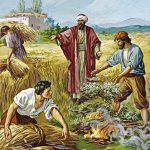
My brothers and sisters in Christ, the first reading presents the mission of Philip in Samaria, a region whose inhabitants were long regarded by the Jews as outsiders. The enmity between Jews and Samaritans arose after the Assyrian conquest of the Northern Kingdom, when intermarriage with foreign settlers produced a population of mixed ancestry. Over time, Jews regarded Samaritans as ritually impure and heretical for worshipping at Mount Gerizim rather than Jerusalem. The Samaritans accepted only the Pentateuch, not the Prophets or the Writings. Despite this division, Philip proclaims Christ to them, and the Samaritans receive the message with openness. The healing of the sick and the liberation of those afflicted by unclean spirits show that God’s power is at work, and great joy fills the city.
When the apostles in Jerusalem hear that Samaria hasreceived the word of God, they send Peter and John. The apostles pray for the Samaritans and lay hands on them so that they may receive the Holy Spirit. Although they had been baptised in the name of the Lord Jesus, the Spirit had not yet come upon them. The laying on of hands signifies incorporation into the one Church. This gesture demonstrates that the mission to Samaria is not an independent venture but is united to the apostolic foundation. Saint Augustine notes that the Samaritans received the fullness of the Spirit through apostolic ministry, safeguarding the unity of the Church (Augustine, On Baptism, Against the Donatists, 3.16.21). The joy in Samaria reflects the deeper joy of belonging to the people of God.
This passage carries a lesson for our own time, when ethnic rivalries and religious suspicion divide communities. The Gospel does not merely tolerate those who are different; it actively seeks them out. Philip went to Samaria. In the same way, we are called to cross the thresholds of hostility in our families, workplaces, and parishes. We are sent to those we might have considered outsiders, to proclaim Christ by the integrity of our lives.
A man worked in an office where a colleague from a different ethnic background was treated with suspicion. During a difficult project, they worked together and through patient collaboration formed a lasting friendship. Their cooperation overcame prejudice. This illustrates the Samaritan experience, where the Spirit overcame centuries of hostility and created a new family of faith.
The sending of Peter and John reveals an essential truth: the Holy Spirit is not given in isolation. The Samaritans had believed and been baptised, yet the Spirit came upon them through the ministry of the apostles. This shows that the Spirit works within the visible unity of the Church, built upon the foundation of the apostles. No one receives the Spirit for himself alone. Every gift is ordered towards the building up of the whole Body of Christ.
Dearly beloved in Christ, the second reading from 1Peter addresses Christians who face misunderstanding and hostility. The believers are urged to set apart Christ as Lord in their hearts and to be ready always to give a defence of the hope that sustains them. The word translated as ‘defence’ in the original language means a reasoned response offered in a formal setting, not an aggressive argument. This defence must be presented with gentleness and reverence. Gentleness means an internal composure that does not retaliate, while reverence indicates respect for both God and the questioner. The believer’s conduct must support his words, and a clear conscience serves as a shield against false accusations.
The apostle does not tell the suffering Christian to be silent or to hide. Neither does he command a harsh posture that returns insult for insult. He calls for a defence that is both reasonable and gentle. This balance is possible only through the Holy Spirit, whom Jesus calls the Advocate, the one who comes alongside to help, to defend, and to guide. When we suffer for doing good, we are not left to craft our own defence from our limited resources. The Spirit of truth gives us the words, patience, and courage to witness to the hope within us.
The passage grounds Christian suffering in the suffering of Christ himself. Christ died for sins once for all, the righteous for the unrighteous, to bring us to God. The phrase ‘once for all’ means a decisive and unrepeatable action, emphasising the completeness of his sacrifice. The purpose of his suffering is to restore communion with God. Saint Clement of Rome affirms that Christ gave himself entirely to restore humanity to God (Clement of Rome, Letter to the Corinthians, 49). Suffering endured for doing good, when it is the will of God, participates in the redemptive suffering of Christ.
This teaching is counter-cultural. The world tells us that suffering is always an evil to be avoided and that when we are wronged, we must assert our rights with force. The Gospel tells us that suffering, when united to Christ, becomes redemptive. This does not mean we seek suffering or passively accept injustice. It means that when we suffer for righteousness, we do not lose hope, because Christ has walked this path and transformed it into a way of salvation.
A woman was falsely accused of taking credit for work she had not done. She did not respond with anger. She calmly presented the facts to her supervisor, and her truthful response cleared her name. Her gentle but firm defence won the respect of those who had doubted her. This illustrates how Christians are called to respond to hostility with clarity, integrity, and calmness rooted in Christ.
The requirement of a clear conscience is particularly important. If we suffer for wrongdoing, our suffering is merely the consequence of our own fault. But if we suffer for doing good, our suffering becomes a participation in the passion of Christ. A clear conscience gives us freedom. We need not fear exposure, because we have nothing hidden that is shameful. We need not manipulate, because the truth is sufficient. This is the freedom of the children of God, which no hostility can take away.
My dear People of God, the Gospel presents Jesus speaking to his disciples at the Last Supper, preparing them for his departure. He promises them another Advocate, the Spirit of truth, who will remain with them forever. The word translated as ‘Advocate’ means ‘one called alongside to help, to defend, and to guide’. Jesus assures his disciples that he will not leave them as orphans. Orphans lack protection, identity, and support. In the ancient world, they were among the most vulnerable. By promising the Spirit, Jesus assures his followers that they will never be abandoned.
This promise is intimate. Jesus does not send a replacement who is lesser than himself. He sends another Advocate, one who is equal to him in divinity, because the Spirit proceeds eternally from the Father and the Son. The original language distinguishes between another of the same kind and another of a different kind. Jesus uses the word meaning ‘another of the same kind’. The Spirit is not a consolation prize for the absence of Christ. The Spirit is the very presence of Christ, made accessible to believers in every place and time.
Jesus links the gift of the Spirit to love and obedience. He declares that those who have his commandments and keep them are those who truly love him. The word translated as ‘keep’ means ‘to guard something precious, to observe with attentive care’. Love for Christ is demonstrated not through words alone but through faithful living. The Spirit makes Christ present to believers in every age, enabling them to live in communion with him. Saint John Chrysostom explains that Jesus promises the Spirit so that the disciples may not feel abandoned in his absence (John Chrysostom, Homilies on the Gospel of John, 75). The mutual indwelling that Jesus describes— ‘I am in my Father, and you in me, and I in you’—is the goal of the Christian life, a union in which distinct persons are bound together in love without losing their identity.
This indwelling is not a metaphor. It is a real communion. The Father dwells in the Son, the Son dwells in the Father, and through the Spirit, we are drawn into that eternal exchange of love. To keep the commandments of Christ is not legalism. It is the way we open our hearts to receive this Trinitarian life. When we love as Christ loved, when we forgive as he forgave, when we serve as he served, we are participating in the very life of God.
A young man who lost his father felt abandoned. In the months that followed, an older neighbour quietly offered encouragement and support. That steady presence assured him that he was not alone and gave him strength to move forward. This illustrates the role of the Advocate, who comes alongside the believer and provides the comfort and assurance that Christ remains present even when he is not visibly seen.
The world cannot receive the Spirit of truth, because the world neither sees him nor knows him. But believers know the Spirit, because he abides with them. This knowledge is not intellectual information but the intimate knowledge of love. Just as a child knows the voice of a parent, so the believer knows the presence of the Spirit. That presence is the guarantee that we are not orphans. We have a home in God, and we are never alone.
THE REFLECTION IN A NUTSHELL
My dear People of God, the readings of this Sunday teach us that the Holy Spirit is given within the unity of the Church, overcoming ancient divisions and forming one people from many nations. The enmity between Jews and Samaritans is healed through the Gospel and the apostolic ministry that confers the Spirit. Believers facing hostility are called to defend their hope with gentleness and a clear conscience, following Christ who suffered once for all to bring us to God. Jesus promises the Advocate, the Spirit of truth, who ensures that we are never left as orphans but are drawn into intimate communion with the Father and the Son. This presence is experienced through love expressed in faithful obedience to the commandments of Christ.


![EASTER WEEK VI [Yr.A] (May 10, 2026): Acts 8:5-8, 14-17, I Pt 3:15-18, Jn 14:15-21. By: Rev. Fr. Clifford Atta Anim.](https://frcliffordhomilies.com/wp-content/uploads/2026/05/IMG_3011-150x150.jpeg)