




March 16 Monday: Isa 65:17-21/ Psalm: 29/ Jn 4:43-54
According to the Gospel of John, after experiencing rejection in his hometown of Nazareth, Jesus went to Jerusalem for the Passover feast. Later he returned to Galilee, especially to Capernaum, which had become the center of his public ministry. The people there welcomed him because they had heard about the signs and miracles he performed in Jerusalem during the feast (John 4:43–45).
Today’s Gospel describes one of those remarkable signs. While Jesus was in Cana of Galilee, an official serving in the royal court of Herod Antipas came to him with an urgent request. The man’s son was seriously ill and near death in Capernaum, which was about twenty miles away. Despite his position and social status, the official humbled himself and traveled to Cana to ask Jesus to come and heal his son. His desperation as a father overcame any pride he might have had about approaching a wandering preacher (John 4:46–47).
Jesus first made a general observation about the people’s attitude toward faith, saying that many would not believe unless they saw signs and wonders. Yet the official did not allow this remark to discourage him. Instead, he continued to plead earnestly for his son’s life. Seeing the sincerity of the man’s faith, Jesus simply said to him, “Go; your son will live” (John 4:48–50).
The remarkable part of the story is the father’s response. Without demanding further proof, he trusted Jesus’ word and began his journey back home. On the way, his servants met him with the joyful news that his son had recovered. When he asked about the exact time the fever left the boy, he realized that it happened at the very moment Jesus had spoken the words of healing. This confirmed his faith, and as a result he and his entire household came to believe in Jesus (John 4:51–53).
This miracle reveals the power of Jesus’ word and the importance of faith that trusts even without seeing. It also shows that God’s saving action is not limited by distance or human limitations. Jesus healed the child simply by speaking, demonstrating his divine authority and compassion.
Life message
- We are invited to approach Jesus with humility and faith. Like the royal official, we are called to bring our needs and the needs of our loved ones before the Lord in sincere prayer. Genuine faith trusts in God even when the answer is not immediate (Hebrews 11:1).
- We must trust in the power of Jesus’ word. The official believed Jesus before he saw the result. In the same way, Christians are called to trust God’s promises revealed in Scripture and in the teachings of the Church (Romans 10:17).
- God answers prayer according to his wisdom and love. Sometimes the answer may not come in the way we expect, but every sincere prayer is heard by God. He responds in a way that serves our true good and our salvation (1 John 5:14). God bless you.
March 17 Tuesday: Ezek 47:1-9.12/ Psalm: 45/ Jn 5:1-16. St. Patrick, Bishop: St. Patrick’s Day
The Jewish people celebrated three principal pilgrimage feasts each year, the Feast of Passover, the Feast of Pentecost, and the Feast of Tabernacles. According to the Law, adult Jewish men living within a reasonable distance of Jerusalem were expected to attend these feasts, especially Passover, which commemorated God’s deliverance of Israel from slavery in Egypt (Exodus 23:14–17; Deuteronomy 16:16). As a faithful Jew who observed the religious traditions of his people, Jesus also went to Jerusalem for these celebrations (John 5:1).
Today’s Gospel recounts a powerful miracle that took place in Jerusalem near the pool called Bethesda, also known as Bethzatha. This pool was located near the Sheep Gate and was surrounded by five porticoes where many sick people gathered, including the blind, the lame, and the paralyzed, hoping for healing (John 5:2–3). Among them was a man who had been suffering from paralysis for thirty-eight years. He waited near the pool believing that when the waters were stirred he might be healed, but he had no one to help him enter the water in time.
Seeing the man and knowing how long he had been suffering, Jesus asked him a simple yet profound question, “Do you want to be made well?” The man responded by explaining his helpless situation, that whenever the water was stirred someone else always reached it before him. Without using the pool, Jesus immediately healed him with a command, “Stand up, take your mat and walk.” Instantly the man was cured, and he obeyed Jesus’ words (John 5:6–9).
However, the miracle occurred on the Sabbath, and this led to controversy. Some Jewish leaders criticized the healed man because he was carrying his mat, which they interpreted as breaking the Sabbath regulations. The man explained that the person who healed him had instructed him to do so, although at that moment he did not know who the healer was (John 5:10–13).
Later, Jesus met the man again in the Temple. At that moment Jesus revealed his deeper concern for the man’s spiritual life, telling him, “See, you are well. Sin no more, so that nothing worse may happen to you.” After realizing that it was Jesus who had healed him, the man informed the Jewish authorities. This miracle became one of the events that intensified their opposition to Jesus (John 5:14–16).
The passage shows that Jesus does not only restore physical health but also calls people to spiritual conversion. His miracles point to God’s mercy and to the deeper healing that comes through repentance and new life.
Life message
- We are invited to approach God with trust and perseverance. Like the paralytic who longed for healing, we must bring our needs to God with sincere faith and persistent prayer, trusting in His power and mercy (Hebrews 4:16).
- Jesus heals both body and soul. Physical healing is important, but the greater healing is freedom from sin and the renewal of our spiritual life (Matthew 9:2–6).
- We must respond to God’s grace with conversion. After receiving God’s blessings, we are called to change our lives and avoid returning to sinful habits that weaken our relationship with God (Romans 6:1–4).
- Christ invites us to rise from spiritual paralysis. Just as the paralytic stood up and walked, we are called to overcome the paralysis of sin, discouragement, and indifference, and to walk in the light of God’s love revealed in Jesus (Ephesians 5:8). God bless you.
March 18 Wednesday: St, Cyril of Jerusalem, Bishop, Doctor of the Church: Jn 5:17-30
Today’s Gospel presents Jesus responding to serious accusations made by the Jewish leaders. After healing on the Sabbath, they accused him not only of breaking the Law but also of blasphemy, because he spoke of God as his Father, thereby making himself equal with God (John 5:16–18). In response, Jesus offers a profound explanation of his identity and his relationship with the Father.
Jesus begins by affirming that his actions are inseparable from those of the Father. He explains that “the Son can do nothing on his own, but only what he sees the Father doing” (John 5:19). This does not imply weakness, but rather a perfect unity. Everything Jesus does is in complete harmony with the will of the Father. His obedience is not forced but flows from a deep and eternal communion of love. In this way, Jesus reveals that his mission is to make the Father known through his words and actions (John 5:30).
Jesus then goes further to show his divine authority. He declares that just as the Father raises the dead and gives life, so also the Son gives life to whom he wills (John 5:21). In Jewish belief, giving life and raising the dead were powers belonging to God alone. By claiming this authority, Jesus reveals his divine identity. He also states that the Father has entrusted all judgment to the Son, so that all may honor the Son just as they honor the Father (John 5:22–23). This shows that recognizing Jesus is essential to true faith in God.
Furthermore, Jesus promises that those who hear his word and believe in the One who sent him already share in eternal life. They pass from death to life even now (John 5:24). He also speaks of a future moment when all who are in the tombs will hear his voice and rise again, some to the resurrection of life and others to judgment (John 5:28–29). In this teaching, Jesus reveals both his authority over life and death and his role as the final judge of humanity.
Through all this, Jesus makes it clear that his unity with the Father is revealed in his perfect obedience and in the divine works he performs. His mission is not independent but fully aligned with the Father’s will, bringing life, healing, and salvation to those who believe.
Life message
- We are called to imitate the obedience of Jesus. True Christian life means aligning our will with God’s will, seeking to do what pleases Him in all things (John 6:38).
- Faith in Jesus leads to life. Believing in Christ is not just an intellectual act but a commitment that transforms our lives and opens us to eternal life (John 3:16).
- We must listen to the voice of Christ. Through Scripture, the teachings of the Church, and prayer, Jesus continues to speak to us, guiding us toward truth and salvation (Romans 10:17).
- Our choices have eternal consequences. Jesus reminds us that our response to his word determines our destiny, calling us to live responsibly and faithfully each day (Matthew 25:31–46). God bless you.
March 19 Thursday: St. Joseph, Spouse of Blessed Virgin Mary: Sm 7:4-5, 12-14, 16; Rom 4:13-14, 18-22; Mt 1:16, 18-21, 24; Lk 2:41-51)
St. Joseph in the Holy Bible
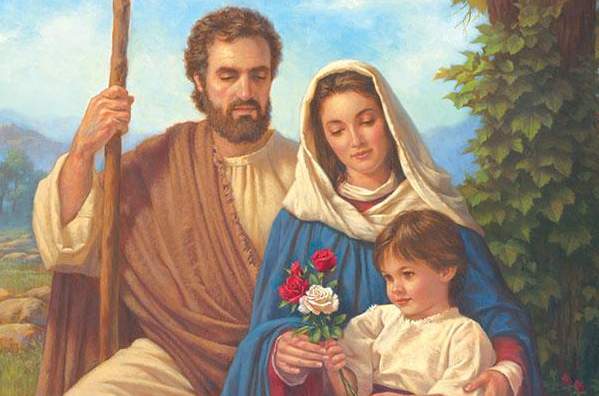
St. Joseph appears in the Gospels of Matthew and Luke as a quiet yet powerful figure. Though few words of his are recorded, his life speaks deeply. He is presented as a just man, a man of prayer who listens to God, and a silent servant who faithfully fulfills his mission as the protector of Jesus and Mary and a model of obedience to God’s will.
A. Joseph, the Just Man
In Matthew 1:19, Joseph is described as “a just man.” In biblical understanding, a just person is one who lives in right relationship with God, with others, and with the law. Joseph’s life shows this justice in action.
1. Faithfulness to God
Joseph demonstrated his righteousness by faithfully observing God’s law and responding obediently to His will.
a) Obedience to the Law of Moses
Joseph fulfilled the religious duties expected of a devout Jew:
- He ensured that Jesus was circumcised and officially named on the eighth day (Luke 2:21).
- He brought Mary and the child Jesus to the Temple for the purification rites (Luke 2:22–24).
- He raised Jesus in the traditions of Israel, bringing him to Jerusalem for the Passover feast, including the visit when Jesus was twelve years old (Luke 2:41–42).
b) Obedience to civil authority
Joseph complied with the decree of the Roman emperor by taking Mary to Bethlehem for the census, even under difficult circumstances (Luke 2:1–5).
c) Care and protection of the Holy Family
Joseph faithfully protected Jesus and Mary in times of danger and uncertainty:
- He fled to Egypt to save the child from King Herod’s threat (Matthew 2:13–15).
- He returned to Israel when instructed by God (Matthew 2:19–21).
- He anxiously searched for Jesus when he was lost in the Temple (Luke 2:44–48).
- He provided a stable home in Nazareth where Jesus grew in wisdom and grace (Luke 2:51–52).
2. Faithfulness to others
a) To Mary
Joseph showed deep love and respect for Mary. Faced with her mysterious pregnancy, he chose compassion over judgment. As Pope John Paul II reflected, Joseph protected Mary “discreetly, humbly, and silently,” remaining faithful even when he did not fully understand.
b) To Jesus
Joseph embraced Jesus as his own son. He taught him a trade, formed him in faith, and guided him into responsible adulthood. Through his care, Jesus “increased in wisdom and in years, and in divine and human favor” (Luke 2:52).
c) To his community
Joseph lived as a hardworking carpenter and a good neighbor, quietly serving others through his daily work.
B. Joseph, the Dreamer
Like Joseph in the Old Testament, St. Joseph received guidance from God through dreams. In biblical times, dreams were often a way through which God communicated His will.
Joseph’s openness to God is seen in four key dreams:
- He was told not to be afraid to take Mary as his wife (Matthew 1:20).
- He was instructed to flee to Egypt to protect the child (Matthew 2:13).
- He was told to return to Israel (Matthew 2:20).
- He was guided to settle in Nazareth for safety (Matthew 2:22–23).
These moments show a man deeply attuned to God. Joseph prayed, listened, trusted, and acted without hesitation, even in uncertain and dangerous situations.
C. Joseph, the Silent Saint
Joseph is often called the silent saint because no spoken words of his are recorded in Scripture. Yet his silence is full of meaning. It reflects deep faith, humility, and total surrender to God’s will.
He protected and provided for Jesus and Mary not through words, but through faithful action. His life was marked by presence, responsibility, and quiet strength. From welcoming Mary into his home, to fleeing into Egypt, to building a life in Nazareth, Joseph fulfilled his mission with courage and dedication.
Because of this, the Church sees him as a protector not only of the Holy Family but also of the Mystical Body of Christ, the Church. He remains a model and intercessor for families, workers, and all who care for others, especially the weak, the elderly, and the vulnerable.
Life Messages
- Be faithful in small things.
St. Joseph teaches us that holiness is found in everyday duties. Like him, we are called to be faithful where we are, doing ordinary things with love and responsibility (Luke 16:10). - Seek God’s will in prayer.
Joseph listened to God and acted promptly. We too must cultivate a life of prayer so that we can recognize and follow God’s guidance (Proverbs 3:5–6). - Practice justice in daily life.
To be just means to give God and others what is due. This includes honesty, fairness, respect, and love in all relationships (Micah 6:8). - Build holy families.
Joseph shows us how to be responsible, loving, and God-centered in family life. Parents are called to guide their children in faith, character, and discipline (Ephesians 6:4). - Be protectors of others.
Like Joseph, we are called to guard our hearts, our thoughts, and our actions. We must promote what is good and reject what harms ourselves and others. As Pope John Paul II once said, “Do not be afraid of goodness or even tenderness.” God bless you.
March 20 Friday: Jn 7:1-2, 10, 25-30
Today’s Gospel presents Jesus going up to Jerusalem for the Feast of Tabernacles (also called the Feast of Booths), at a time when there were growing tensions and even rumors that the authorities were looking for an opportunity to arrest him (John 7:1–2, 10). At first, Jesus went quietly, avoiding public attention. But later, he appeared openly in the Temple and began to teach, surprising many who wondered why he had not yet been arrested (John 7:14–15, 25–26).
As Jesus taught, he made profound claims about his identity and mission. First, he revealed that his teaching did not originate from himself but from the One who sent him. In doing so, he pointed to his unique relationship with God (John 7:16–17). Then he went further by stating that he had come from God and truly knew Him, something no ordinary person could claim (John 7:28–29). These statements strongly suggested that he was more than a prophet, he was the Messiah, the One sent by God.
This created confusion and division among the people. Some were drawn to his teaching and began to believe in him, while others rejected him. Many questioned how someone they thought they knew, a man from Nazareth, could make such claims. According to certain expectations at the time, the Messiah’s origin would be mysterious or hidden. Because they believed they knew Jesus’ background, they concluded that he could not be the Messiah (John 7:27).
Their reaction shows how human expectations can sometimes prevent people from recognizing God’s action. The people had formed their own ideas about how the Messiah should appear and act. When Jesus did not fit into those expectations, they struggled to accept him, even though his words and works revealed God’s presence among them.
Despite the opposition and misunderstanding, Jesus continued to speak boldly. His courage reveals his complete trust in the Father and his commitment to his mission. He did not allow fear or rejection to silence the truth he came to proclaim.
Life messages
- We must guard against prejudice in our faith. Like the people of Jesus’ time, we can sometimes allow our own expectations or assumptions to block us from recognizing God’s truth. Humility helps us to remain open to God’s guidance through Scripture and the teachings of the Church (Proverbs 3:5).
- We are called to accept Jesus fully. Faith means more than knowing about Jesus; it requires a personal response. We are invited to encounter him in prayer, in the Sacraments, and in daily life, and to surrender ourselves to his will (John 1:12).
- God is present in ordinary ways. The people expected a dramatic and extraordinary Messiah, but God often comes to us in simple and quiet ways. We are called to recognize Christ in everyday life and in the people around us (Matthew 25:40).
- We need courage to live our faith. Like Jesus, we are called to stand firm in truth, even when it is not popular or when it leads to misunderstanding or rejection (2 Timothy 1:7). God bless you.
March 21 Saturday: Jn 7:40-53
Today’s Gospel presents the varied reactions of different groups to Jesus’ public teaching and his implicit claim to be the promised Messiah and the “Son of Man” spoken of in Scripture (John 7:40–52; Daniel 7:13–14). These reactions reveal how people respond differently to the same truth depending on their openness, expectations, and disposition of heart.
Among the common people, many were deeply impressed by Jesus. They listened to his teaching and witnessed his miracles, and some began to believe that he could truly be the Messiah. His words carried an authority that touched their hearts and awakened faith (John 7:40–41).
However, the Pharisees, scribes, and chief priests rejected him. They focused on his apparent origin, arguing that Jesus came from Galilee, while they believed the Messiah should come from Bethlehem, the city of David (Micah 5:2; John 7:41–42). Their reasoning shows how limited human understanding and rigid expectations can prevent people from recognizing God’s work. Ironically, their conclusion was based on incomplete knowledge, since Jesus was indeed born in Bethlehem.
The Temple guards, who had been sent to arrest Jesus, returned empty-handed. When questioned, they gave a striking testimony: “Never has anyone spoken like this man.” They were so moved by Jesus’ words that they could not carry out their orders (John 7:45–46). Their response shows how truth can touch even those who are not initially seeking it.
In contrast to the hostility of the leaders, Nicodemus, a member of the Sanhedrin who had earlier come to Jesus by night, spoke up in his defense. He appealed to the Law, insisting that no one should be judged without first being heard. His intervention was a call for justice and fairness, even if it was cautious and not yet a full public profession of faith (John 7:50–51).
This Gospel highlights the division that Jesus brings. His presence challenges people to make a decision, to accept or reject him. As foretold, he becomes a “sign of contradiction,” revealing the thoughts of many hearts (Luke 2:34–35).
Life messages
- We are called to believe in Christ with understanding and trust. Our faith rests on the authority of Jesus and the witness of Sacred Scripture, which the Church faithfully preserves and interprets through her teaching authority (2 Timothy 3:16; Matthew 16:18–19).
- We must be open to truth, not limited by prejudice. Like the Pharisees, we can sometimes reject what is true because it does not fit our expectations. Humility helps us to recognize God’s action even when it surprises us (Isaiah 55:8–9).
- We need courage to stand for what is right. Like Nicodemus, we are called to defend truth and justice, even when it is unpopular or risky (Ephesians 6:13).
- We are called to be witnesses in a divided world. Living our Christian faith faithfully may bring misunderstanding or opposition, but we are invited to remain firm, becoming a sign of Christ’s truth and love in our daily lives (John 15:18–19). God bless you.


Thank you for sharing
May God bless you 🙏
Amen