




![Lent Week IV [Yr. A] (Mar. 15, 2026): I Sm 16:1b, 6-7, 10-13a; Eph 5:8-14; Jn 9:1-41. By: Rev. Fr. Clifford Atta Anim.](https://frcliffordhomilies.com/wp-content/uploads/2026/03/IMG_2466.png)
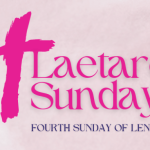
Laetare Sunday: From Blindness to the Light of Christ
The Fourth Sunday of Lent is traditionally called Laetare Sunday, from the Latin word meaning “Rejoice.” In the midst of the penitential season of Lent, the Church pauses briefly to express joyful hope as we move closer to the celebration of the Resurrection of our Lord. The liturgy reminds us that the darkness of sin does not have the final word, because Christ, the Light of the world, is drawing near with the promise of new life.
Today’s readings focus on the theme of vision and blindness, both physical and spiritual. They teach us that true sight is a gift from God and that without His grace we easily fall into spiritual blindness. The readings also challenge us to examine whether we truly see with the eyes of faith or whether pride, prejudice, and self-sufficiency cloud our vision.
Scripture Lessons
The first reading from the First Book of Samuel recounts the anointing of David as king of Israel (1 Samuel 16:1–13). When the prophet Samuel arrived at the house of Jesse, he naturally assumed that the eldest and strongest sons would be chosen by God. But the Lord corrected Samuel’s judgment, saying: “Man looks on the outward appearance, but the Lord looks on the heart” (1 Samuel 16:7).
The one whom God had chosen was the youngest son, David, a shepherd boy overlooked by everyone else. This moment reveals a fundamental truth about divine wisdom. God’s choices often overturn human expectations. The world tends to judge according to external appearance, status, and power, but God sees the interior disposition of the heart.
This theme appears throughout salvation history. God chose the younger Jacob rather than Esau (Genesis 25:23). He chose Moses, a reluctant shepherd, to lead Israel out of Egypt (Exodus 3:10–12). He chose Gideon, the least in his family, to deliver Israel (Judges 6:15–16). He chose a humble virgin from Nazareth, Mary, to become the Mother of the Savior (Luke 1:26–38). These examples remind us that God’s vision is far deeper than human judgment.
In the second reading, Saint Paul exhorts the Christians of Ephesus to live according to their new identity in Christ. Once they lived in darkness, but through baptism they have become “children of light” (Ephesians 5:8). Because they belong to the light, their lives must produce the fruits of goodness, righteousness, and truth (Ephesians 5:9).
Paul’s words echo Jesus’ own teaching that those who follow Him “will not walk in darkness but will have the light of life” (John 8:12). To live as children of light means allowing the grace of Christ to transform our attitudes, choices, and relationships.
The Responsorial Psalm expresses profound trust in God’s guidance: “The Lord is my shepherd; there is nothing I shall want” (Psalm 23:1). The image of the Good Shepherd leading His people through dark valleys reminds us that God does not abandon us in the confusion and darkness of the world. Instead, He guides us safely toward life.
The Gospel presents the powerful story of Jesus healing the man born blind (John 9:1–41). This miracle is far more than a physical healing. It is a profound sign of spiritual illumination. The man who had never seen light gradually comes to recognize who Jesus truly is. At first he calls Him “the man called Jesus” (John 9:11). Later he declares that Jesus is a prophet (John 9:17). Finally, he professes his faith, saying, “Lord, I believe,” and he worships Him (John 9:38).
In contrast, the Pharisees, who pride themselves on their religious knowledge, remain spiritually blind. Their refusal to accept the truth reveals that intellectual knowledge alone does not guarantee spiritual insight. True sight requires humility and openness to God.
Jesus concludes the episode with a striking statement: “I came into this world for judgment so that those who do not see may see, and those who see may become blind” (John 9:39). The paradox is clear. Those who humbly acknowledge their need for God receive light, while those who believe they already possess the truth may remain in darkness.
Life Messages
1. We must allow Christ to heal our spiritual blindness
Every person has areas of blindness. We may fail to recognize our own faults while easily noticing the weaknesses of others. We may overlook God’s presence in our daily lives or ignore the suffering of those around us.
Scripture repeatedly calls us to seek spiritual clarity. The Psalmist prays, “Open my eyes, that I may behold wondrous things out of your law” (Psalm 119:18). The prophet Elisha prayed that his servant’s eyes might be opened to see God’s protecting presence (2 Kings 6:17). Likewise, the disciples on the road to Emmaus recognized the risen Christ only when their eyes were opened (Luke 24:31).
Jesus desires to remove whatever prevents us from seeing clearly. Pride, selfishness, resentment, jealousy, addiction to harmful habits, and indifference toward others can all darken the soul. Through prayer, repentance, and the grace of the sacraments, Christ gradually restores our spiritual sight.
2. We must overcome the blindness of our culture
Not only individuals but entire societies can become spiritually blind. Modern culture often struggles to recognize the value of selfless love, the beauty of lifelong fidelity in marriage, and the dignity of human life from conception until natural death.
Scripture frequently warns about this kind of collective blindness. The prophet Isaiah lamented that many people “have eyes but do not see” (Isaiah 6:9–10). Jesus later repeated this warning when addressing those who refused to believe despite witnessing His works (Matthew 13:13–15).
As Christians, we are called to challenge this blindness by living differently. Through personal prayer, reflection on Scripture, and faithful participation in the sacraments, we allow Christ’s light to shine through our lives. Our actions should help others recognize the presence of God in the world.
Conclusion
Laetare Sunday reminds us that the journey of Lent is leading us toward the light of Easter. Christ, the Light of the world, desires to heal our blindness so that we may see clearly the truth about God, about ourselves, and about others.
If we approach Him with humility and faith, He will open our eyes just as He opened the eyes of the man born blind. Then we will be able to walk as children of light, guided by the Good Shepherd who leads us safely through the darkness of this world toward the joy of eternal life. God bless you.
