



Isaiah 60:1-6, Ephesians 3:2-3a, 5-6, Matthew 2:1-12
A Brief History of the Feast
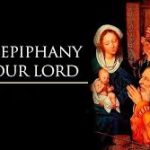
The Feast of the Epiphany originated in the Eastern Church in the third century, where it initially commemorated the Nativity of Christ. By the fourth century, its focus had expanded to celebrate the manifestation of Christ’s divinity through three key events: his birth, the adoration of the Magi, and his baptism in the Jordan. As the feast travelled westward, the Roman Church, which had begun celebrating the nativity separately on 25 December, emphasised the visit of the Magi as the primary mystery of Epiphany. This shift underscored a profound truth: the salvation wrought by Christ is not for one people but is a universal gift, revealed to the Gentiles in the persons of the wise men from the East. Thus, Epiphany celebrates the glorious mystery of God made visible to all nations.
Synopsis of the Readings
The liturgy for this great feast unveils the universal destiny of God’s saving plan in a clear threefold revelation. We begin at the heart of the mystery with the Gospel of Matthew. Here, prophecy becomes action in a journey, as Magi from a distant land follow a star to worship the infant King in Bethlehem. This narrative is the foundational event: the first Gentiles to seek and find their Saviour. This event finds its theological explanation in the reading from Saint Paul to the Ephesians. Paul unveils the ‘mystery’ now made known: that through the Gospel, the Gentiles are coheirs, members of the same body, and sharers in the promise. The Magi’s pilgrimage is a sign of this deeper, spiritual unity. Finally, the prophecy of Isaiah provides the ancient vision for this mystery. Isaiah foresaw a radiant Jerusalem, lit by God’s glory, becoming a beacon to which nations and kings would stream. The Magi, with their gifts, are the living fulfilment of this vision. Together, these readings move from the event of the Magi’s visit, to its meaning for the Church, and to its prophetic roots, proclaiming that Christ’s coming gathers every people into one family.
My dear People of God, the account of the Magigiven by Matthew is far more than a story; it is a lesson that sets the stage for the Christian mission. Matthew introduces ‘Magi from the East’. The term ‘Magi’ refers to learned men, scholars of the stars, representing the highest wisdom of the Gentile world. Their arrival signals that the birth of this child is an event of universal importance. Their guiding light is a star. This tells us that God can use the language of his creation to lead sincere seekers to truth. All genuine human search for understanding can, by God’s grace, become a path that leads to Christ.
Yet, the journey also shows a painful contrast. The Magi go to Jerusalem and ask, ‘Where is the newborn king of the Jews?’ This question troubles King Herod and the religious leaders. The chief priests and scribes know the prophecy of Micah by heart. They can give the correct answer: Bethlehem. But they show no desire to go there themselves. Here is a warning for us: we can have perfect knowledge of our faith and still lack the living desire to seek the Lord personally. The Magi, with their incomplete knowledge but earnest hearts, put the complacent to shame.
Their moment of arrival is the climax. On finding the child with Mary, they kneel in homage. Then they open their treasures. Their gifts are symbolic: gold for a king, frankincense for God, and myrrh, which points to suffering and death. In these gifts, we too are called to offer our lives: our talents (our gold), our prayer (our frankincense), and our willingness to share in the difficulties of others (our myrrh). Finally, warned in a dream, they return home ‘by another way’. A true meeting with Christ changes our direction. We cannot go back to our old habits of pride or selfishness. Conversion means being set on a new path of Gospel living.
We saw a modern example of this worship in 2016. Pope Francis visited refugees on the Greek island of Lesbos. He washed and kissed the feet of twelve Muslim refugees. This was an act of humble adoration of Christ present in those who suffer. Like the Magi, he journeyed to a place of need, offering the gifts of humility and welcome. This feast asks us clear questions: What am I truly seeking? Am I content just to know about Christ, or am I willing to make the effort to find him? Let us resolve to be seekers. Let us offer him our gifts, and be ready for him to send us out on a new and better way.
Dearly beloved, the Gospel shows us the event; Saint Paul explains what it means. He speaks of a ‘mystery’ that has now been revealed. For Paul, a ‘mystery’ is God’s hidden plan, made known in Jesus Christ. To his audience in Ephesus, a city of many cultures and religions, he declares the great truth: ‘that the Gentiles are coheirs, members of the same body, and co-partners in the promise in Christ Jesus through the gospel’. This was revolutionary. The deep division between Jew and Gentile is overcome in Christ. The Magi’s visit was the first sign of all peoples being gathered into one family. Paul’s words break down division. ‘Coheirs’ means we share the same gift from God. ‘Members of the same body’ means we are connected and need one another. ‘Copartners’ means we share the same hope. This mystery calls us to active unity and a special care for those pushed to the edges of society. Paul calls this a ‘stewardship’. He was a manager of this truth. Our job today is to actively build the unity that Christ has made. We are to put it into practice in our daily lives.
We see an example from after the 1989 Romanian Revolution. State orphanages were full of neglected children. Religious sisters and volunteers did not just give care; they created a family. They brought children of different backgrounds together for meals, prayer and learning. They became stewards of Paul’s mystery, making the unity of Christ visible.
This calls us to look at our own lives. Where do we keep up walls of habit, preference or comfort in our parish? Our calling is to ‘manage’ this gift of unity. It happens when we mend a family argument, work with other Christians to serve our community, or make sure a newcomer feels welcome. The Spirit helps us to see this unity; we must then work to live it. Let us be stewards who make God’s inclusive love believable to a divided world.
Having seen the fulfilment, we turn to its prophetic foundation in Isaiah. The command, ‘Arise, shine, for your light has come!’ is powerful. To feel its force, we must hear it in its original darkness. The people had returned from exile to a ruined Jerusalem. They felt forgotten by God. The ‘thick darkness’ was their real experience of despair. Into this, God declares a new reality: ‘your light has come’. This light is ‘the glory of the Lord’. The prophecy says that Jerusalem will be transformed from a broken place into a bright centre for the world, a beacon for everyone.
This change is for others. The prophet describes a great attraction: ‘Nations shall come to your light, and kings to the brightness of your dawn’. He lists the wealth of the nations coming towards Zion: camels, gold and frankincense. For Isaiah’s poor audience, this was an amazing vision. It meant that the wealth which passed them by would now come to them as a gift. The city gates, once shut for safety, would stay open to welcome a global family. This vision shatters any small idea of God’s favour. The light is given to be shared so that it draws others in. This call to be a beacon is for the Church today. Our world has new darkness: loneliness, anxiety, injustice and division. Into this, God still commands his people: ‘Arise! Shine!’ Our life together—marked by real justice, kindness, hope and fellowship—is meant to give off a credible and attractive light.
We see this light in true stories like that of ImmaculéeIlibagiza in the 1994 Rwandan genocide. A Hutu woman, she chose to risk her life to hide seven Tutsi neighbours for 91 days. Her act was a point of light in utter darkness. Her courage and her later work for forgiveness drew others towards healing. She became a living bearer of that divine light.
The call to us is the same. We, the Church, are to be that Jerusalem. In our families, we are to shine with the patience that comes from Christ. In our workplaces, we are to be sources of integrity and peace. In our parish, we must actively open our ‘gates’—our time, our friendship, our help—to welcome those who are lost or alone. We must become a community so bright with Christ’s love that others are drawn to ask why. We are to be the pathways for God’s mercy. Just as old trade routes carried precious goods, our lives are to carry grace and hope to the world. Therefore, let us consciously leave behind despair and isolation. Let us put on the armour of light. For the prophecy is true: our light has come. The glory of the Lord has risen upon us. Let us arise and shine.
Lessons to be Drawn from the Readings
The Feast of the Epiphany is a launching point for our Christian life. It teaches us three key truths. First, God’s salvation is for all people. The Magi show that no one is beyond God’s love. This challenges any prejudice in our hearts. Second, we are called to be a community of light and unity. We cannot hide the light we have received. We are to live in a way that makes the Gospel attractive. We are also stewards of unity, called to break down walls and build bridges. Thirdly and finally, the Christian life is a continual journey of seeking Christ. We are all called to be seekers who follow God’s word and the needs of others until we find him. We must offer him our lives and let that meeting change our direction. Carrying this light is our vocation. May we leave this celebration with the courage to be living signs of God’s love, making him manifest in our daily world.