




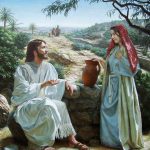


Dec 15-20: Dec 15 Monday
After driving out the merchants and moneychangers from the Temple following the Palm Sunday procession, Jesus began teaching openly in the Temple courts. This bold action drew the attention of the chief priests and elders, who confronted Him and questioned His authority. They challenged His right to enter Jerusalem in triumph, to accept the praise of children, to heal the sick, to cleanse the Temple, and to teach publicly in a place they believed they controlled. Their question was not sincere. It was carefully designed to trap Him.
If Jesus openly claimed divine authority as the Messiah, they would accuse Him of blasphemy. If He claimed merely human authority, He would deny His true identity as both Son of God and Son of Man. Even worse, such a claim could lead to His arrest as a political agitator, bringing confusion and scandal to the people whose faith was still simple and sincere. Any of these outcomes would seem to undermine His mission. So Jesus answered their challenge with a question of His own, one that exposed the real issue behind their hostility.
He asked them about the baptism of John the Baptist. Was John’s mission from God or from human origin? This question forced them to confront their own dishonesty. If they admitted John was sent by God, they would have to explain why they rejected his call to repentance and ignored his clear witness to Jesus as the Messiah. If they said John’s authority was merely human, they risked the anger of the crowd, who regarded John as a true prophet. Trapped by their fear and self-interest, they chose silence. Their refusal to answer revealed not wisdom but cowardice, a humiliating admission that they cared more about their position than about truth.
This encounter shows the contrast between Jesus and His opponents. Jesus speaks and acts out of obedience to the Father, without fear of consequences. The religious leaders calculate, protect themselves, and avoid commitment. Their silence is not neutrality but a failure of faith. Scripture repeatedly warns that refusing truth is itself a form of judgment, a hardening of the heart that blinds people to God’s work in their midst.
Life message.
In matters of faith, we cannot decide our position based on safety, popularity, or convenience. The Gospel asks for courage. We are called to stand for God’s truth, to obey His commandments, and to live our Christian convictions openly, even when doing so brings cost, misunderstanding, or sacrifice. Fidelity, not comfort, is the measure of authentic discipleship. God bless you.
Dec 16 Tuesday: Mt 21:28-32
Jesus entered Jerusalem fully aware that this holy city would soon witness everything He had foretold about His suffering and death. After cleansing the Temple with prophetic zeal and teaching openly in its courts, He was confronted by the chief priests and elders, who demanded to know by what authority He acted. Their question was not born of faith but of resistance. In response, Jesus did not argue. Instead, He told a parable that exposed their hearts and forced them to face the truth about themselves.
The parable speaks of a father who asks his two sons to go and work in the vineyard. One son quickly agrees but never follows through. The other refuses at first, but later changes his mind and goes to work. Jesus made it clear that the second son, the one who initially said no but later obeyed, represents tax collectors and sinners. Though they had lived far from God, they listened to John the Baptist, repented, and began to do God’s will. The first son, who promised obedience but failed to act, represents the scribes and Pharisees. They spoke piously, claimed religious authority, and knew the Law well, yet refused to respond to God’s call to conversion.
Through this parable, Jesus delivered a serious warning. Pride and stubbornness can shut the doors of the Kingdom, while humility and repentance can open them. What matters most before God is not how we begin, but how we finally respond. Salvation is shaped by our ultimate choice for or against God. Words alone are never enough. A beautiful profession of faith without obedience is empty, while sincere action, even after failure, is pleasing to God.
The parable also reflects a pattern still present in the world today. Some people speak eloquently about faith but struggle to live it. Others may say little, yet their lives quietly reflect God’s will. The perfect son in the parable is neither of the two described, but the Son Jesus points us toward Himself. He said yes to the Father not only with His lips but with His entire life, carrying that obedience all the way to the cross.
Life messages.
First, we are called to live responsible Christian lives by saying yes to God in both word and action. Faith must be visible in how we live, remembering that not everyone who calls Jesus Lord will enter the Kingdom, but only those who do the Father’s will.
Second, the Christian path is marked by obedience lived out in daily choices. God is not impressed by promises alone. He looks for faithful action, offered generously, humbly, and consistently. God bless you.
Dec 17 Wednesday: Mt 1:1-17
Beginning a story with a genealogy was the normal Jewish way of opening a biography. For the Jewish people, identity and vocation were rooted in ancestry. Belonging to God’s chosen people meant belonging to a known line. A respected Jew was expected to trace his lineage back several generations, while a priest had to prove descent from Aaron. By starting his Gospel with a genealogy, Matthew makes it clear that Jesus enters real human history and that the long journey of salvation reaches its decisive moment in the birth of the Son of God, conceived by the Holy Spirit and born of the Virgin Mary.
Jewish genealogies were traced through the male line. For this reason, Joseph is presented as the husband of Mary and the legal father of Jesus. In Jewish law, legal fatherhood carried the same rights and responsibilities as biological fatherhood. Through Joseph, Jesus inherits the royal lineage of David and stands firmly within the promises made to Israel. Since marriage normally took place within one’s clan, the early Fathers reasonably held that Mary herself also came from the house of David. In this way, Jesus is truly the Son of David and the fulfillment of God’s covenant promises announced by the prophets.
Matthew carefully structures the genealogy into three groups of fourteen generations. This arrangement is not accidental. The first section traces Israel’s rise from Abraham to David, the moment of national greatness. The second section follows the decline of the kingdom, ending in the Babylonian exile, a period of loss and humiliation. The third section leads from the exile to the birth of Christ, marking the renewal of hope. Symbolically, these stages reflect the story of humanity itself: created in God’s image, wounded by sin, and restored to dignity through Jesus Christ.
One striking feature of this genealogy is the inclusion of people with complicated and even sinful histories. Matthew names women like Tamar, Rahab, and Ruth, individuals who stood on the margins, yet became instruments of God’s saving plan. Their presence reminds us that God works through imperfect families and broken stories. Holiness is not about having a flawless past but about allowing God to redeem what is wounded.
Life messages.
First, we are invited to look honestly at our own families. Every family has its struggles and its failures. Like the family line of Jesus, ours may include painful chapters. Still, God can bring grace and goodness even out of weakness and sin, if we remain open to Him.
Second, through Baptism we belong to a greater family, the family of God. This dignity calls us to live as children of a holy Father, reflecting His mercy, faithfulness, and love in the way we live. God bless you.
Dec 18 Thursday: Mt 1:18-25
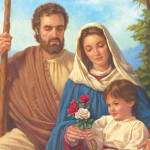
Today’s Gospel draws our attention to the mystery of the Virgin Birth, a truth that stands at the very center of our Christmas celebration. It also highlights the quiet but decisive role of Saint Joseph. Matthew turns to the prophecy of Isaiah to show that the promised Messiah would come from the house of David. For this promise to be fulfilled, Joseph had to accept Jesus as his son, and he did so freely and obediently. Though Jesus was conceived by the power of the Holy Spirit and not by human means, Joseph’s legal fatherhood placed Him firmly within David’s royal line.
Matthew is careful to tell us that Joseph was not the biological father of Jesus. Yet in Jewish law, a legal father carried full responsibility and authority. Because Joseph was married to Mary when Jesus was born, Jesus became Joseph’s legal son and therefore a true descendant of David. Luke’s Gospel emphasizes Mary’s obedience when she answered the angel, “Let it be done to me according to your word.” Matthew complements this by revealing Joseph’s obedience, an obedience lived quietly and without hesitation. Luke narrates the angel’s visit to Mary, while Matthew simply affirms that the child conceived in her was from the Holy Spirit, drawing our focus to Joseph’s response of faith.
God’s message to Joseph came through an angel in a dream, the first of four such encounters. The angel commanded him not to fear but to take Mary into his home. Mary’s role was to give birth to the Son, while Joseph’s role was to name Him. In giving the child the name Jesus, Joseph publicly claimed Him as his son and welcomed Him into the house of David. Joseph’s greatness lies precisely here, in his prompt, humble, and steady obedience. Mary’s yes allowed the Son of God to enter the world. Joseph’s yes allowed that Son to stand within the history and promises of Israel.
Despite his initial plan to separate quietly from Mary, Joseph trusted God’s word. He took Mary as his wife, protected her, safeguarded the Child, and loved them both with a father’s devotion. Through further angelic guidance, he led the family into Egypt, brought them safely back, and settled them in Nazareth. Without speeches or recorded words, Joseph reveals a faith that listens and acts.
Life messages.
First, like Joseph, we are called to trust God even when His plans are not immediately clear. Faith grows when we listen attentively and act faithfully, allowing God to guide us through His word and through prayer.
Second, we are invited to imitate both Joseph and Mary in their humility and openness to God. Their lives teach us how to welcome Jesus not only during Christmas but every day, allowing Him to dwell in our hearts and shape our choices. God bless you.
Dec 19 Friday: Lk 1 5-25
During Advent, the Church invites us to remember two great comings and two decisive angelic messages. The first announces the birth of John the Baptist, the forerunner who prepares the way. The second announces the birth of Jesus, the Savior Himself. Both messages are delivered by the Archangel Gabriel, yet they unfold in very different settings and reveal different responses of faith. Today’s Gospel focuses on the first announcement, the message given to Zechariah in the Temple of Jerusalem.
Zechariah was an elderly priest belonging to one of the many priestly divisions that served in the Temple. Thousands of priests shared this sacred duty, and each group served only at appointed times. Among them, offering incense before the Holy of Holies was the greatest privilege of a priest’s lifetime, often granted only once. It was during this solemn moment, as Zechariah stood in prayer representing the people before God, that the angel of the Lord appeared to him. Gabriel announced that Zechariah’s long years of prayer had not been forgotten, and that Elizabeth, though barren and advanced in age, would bear a son. The child was to be named John and would live a life set apart for God, filled with the Holy Spirit, and charged with turning hearts back to the Lord.
Instead of rejoicing, Zechariah hesitated. Age and human reasoning overwhelmed his faith. He asked for a sign, not realizing that the angel standing before him was already the sign. Gabriel responded firmly, identifying himself as one who stands in God’s presence and declaring that Zechariah would be unable to speak until the promise was fulfilled. His silence became both a correction and a lesson, a time for interior reflection and trust in God’s word, which never fails.
Yet Zechariah did not abandon his calling. Even in silence, he remained faithful in prayer and service. When the child was finally born and Zechariah confirmed the name John in obedience to God’s command, his speech was restored and his mouth opened in praise. His journey from doubt to faith mirrors the journey many believers take, learning slowly to trust God beyond human limits.
Life messages.
First, we are reminded not to exaggerate our difficulties or allow disappointment to extinguish hope. Zechariah teaches us perseverance, continuing to pray and serve even when answers seem delayed.
Second, Advent calls us to examine the barrenness of our own hearts. We are invited to clear away sin, unhealthy attachments, and distractions so Christ may be reborn within us.
Third, Zechariah and Elizabeth remind parents and grandparents of the power of prayer. Their child was a gift shaped by years of faithful intercession. We too are called to pray constantly for our children and grandchildren, trusting that God hears every sincere prayer. God bless you.
Dec 20 Saturday: Lk 1:26-38
Today’s Gospel presents the mystery of the Annunciation, the moment when God began to fulfill the promise He made to King David through the prophet Nathan, that one of David’s descendants would reign forever as the Messiah. The angel Gabriel’s greeting to Mary, “Hail, full of grace,” echoes earlier moments in salvation history, when God assured His chosen servants of His presence. It recalls God’s words to Moses at the burning bush and the angel’s greeting to Gideon, both moments when human weakness was met with divine reassurance. Mary is revealed as one uniquely filled with God’s favor, entirely receptive to His grace.
Luke shows us that Mary is chosen to become the new Ark of the Covenant. Just as God once dwelt among His people in the tent of meeting and later in the Temple, He will now dwell within Mary in a real and physical way. She becomes the true dwelling place of God, the greater House promised to David. When Mary asks, “How can this be, since I am a virgin?” her question is not born of doubt but of trust seeking understanding. The angel reassures her that God’s power will accomplish what human strength cannot. The Holy Spirit will come upon her, and God’s presence will overshadow her, language that recalls the cloud of glory that once filled the sanctuary.
The angel’s message makes clear that the Child to be born is not only heir to David’s throne but is also the Son of the Most High. Jesus is both fully human and fully divine. He fulfills Israel’s hopes and surpasses them. Mary does not ask for proof or signs. Instead, she responds with total surrender: “Behold, I am the handmaid of the Lord; let it be done to me according to your word.” With these words, she freely accepts God’s plan and allows the eternal Word to take flesh within her.
Life messages.
First, Mary teaches us to become humble instruments in God’s hands. God respects human freedom and invites our cooperation. As Saint Augustine reminds us, God who created us without our consent will not save us without our cooperation. Like Mary, we are called to trust God’s goodness and allow His grace to work through us.
Second, Mary did not keep Jesus to herself. She carried Him to Elizabeth and brought joy wherever she went. In the same way, we are called to carry Christ into the lives of others through love, mercy, forgiveness, and service.
Third, we are encouraged to treasure this Gospel in prayer. The Church invites us to keep this mystery alive through practices such as the Angelus and meditation on the Joyful Mysteries of the Rosary, allowing the mystery of the Incarnation to shape our daily lives. God bless you.


https://shorturl.fm/qn4SH
https://shorturl.fm/Q6AjZ