




Sirach 15:15-20
1 Corinthians 2:6-10
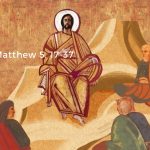
Matthew 5:17-37
Overview of the Readings
The first reading from Sirach teaches that God has given human beings freedom and responsibility, setting before them the choice between life and death. It affirms that God does not cause sin but calls each person to choose what leads to life. The second reading from 1 Corinthians explains that true wisdom is not human cleverness but God’s hidden wisdom, revealed through the Holy Spirit. It shows that God’s saving plan, centred on Christ, can be known only through openness to the Spirit. The Gospel from Matthew presents Jesus as the fulfilment of the Law, calling believers to an interior righteousness that transforms the heart and guides actions, relationships and speech.
REFLECTION
My dear People of God, the first reading from Sirach offers one of the clearest affirmations in Scripture of human freedom and moral responsibility. The sacred author speaks with striking simplicity: ‘If you choose, you can keep the commandments.’ And again: ‘He has placed before you fire and water; stretch out your hand for whichever you choose.’ These words remind us of a fundamental truth: we are not puppets of fate, nor are we driven helplessly by circumstance. God created us with freedom. He respects the dignity he has given us. He allows our choices to matter.
Sirach was addressing a people tempted to blame God for their failures. Even today, we sometimes hear similar excuses: ‘It was God’s will,’ or ‘I could not help it,’ or ‘My situation forced me.’ But Sirach firmly rejects such thinking. He declares clearly: ‘He has not commanded anyone to be wicked, and he has not given anyone permission to sin’ God is not the author of evil. Sin arises from the misuse of freedom.
The images of fire and water are powerful. Fire can warm and purify, but it can also destroy. Water can give life, but it can also overwhelm. The point is that our choices are not neutral. Before each one of us lie life and death. What we choose shapes who we become.Yet Sirach does not present God’s commandments’ as burdens. He says: ‘If you choose, you can keep the commandments.’ Obedience is possible. God does not command the impossible. Grace always accompanies his command. Freedom in the biblical sense is not licence to do whatever we wish; it is the capacity to choose what leads to life. The reading also reminds us that God ‘sees everything.’ His eyes are upon those who fear him. This is not meant to frighten us but to reassure us. Our struggles, our efforts, our hidden acts of fidelity — none of these escapes his loving gaze. He is both just and attentive.
My dear friends, this passage invites us to honest self-examination. In our daily decisions — in our words, our relationships, our use of time and resources — are we stretching out our hand towards life or towards destruction? Circumstances may influence us, but they do not determine us. With God’s help, we remain capable of choosing the good. May we therefore ask for the courage to choose wisely, the humility to accept responsibility for our actions, and the grace to stretch out our hand each day towards life.
Dearly beloved, in today’s second reading, Saint Paul speaks about wisdom — but not the kind of wisdom the world admires. Corinth was a city that valued eloquence, philosophy and intellectual brilliance. Reputation mattered. Persuasive speech mattered. Public recognition mattered. Yet Paul reminds the Christians there that the heart of the Gospel rests not on human cleverness but on divine revelation. He says: ‘We speak a wisdom among the mature, but it is not a wisdom of this age or of the rulers of this age, who are passing away.’ The wisdom of this world measures success by power, influence and visible achievement. It praises strength and avoids weakness. But God’s wisdom is different. It is revealed in what appears to be weakness — in the cross of Christ. Paul calls this wisdom ‘secret and hidden,’ not because God wishes to exclude anyone, but because it cannot be grasped by pride. It was part of God’s eternal plan, ‘decreed before the ages for our glory.’ The cross was not an accident of history. It was not a tragic failure. It was the unfolding of God’s saving design.
He goes further and says that if the rulers of this age had understood this wisdom, ‘they would not have crucified the Lord of glory.’ What a powerful expression — the Lord of glory. The one who was crucified in apparent shame is in fact the bearer of divine glory. Human judgment saw weakness; faith recognises divine love.
Paul then quotes Scripture: ‘What no eye has seen, nor ear heard, nor the human heart conceived, what God has prepared for those who love him.’ God’s plan surpasses human imagination. It cannot be discovered by observation alone, nor mastered by intelligence. It is prepared for those who love him. And how do we come to know this wisdom? Paul gives the answer: ‘These things God has revealed to us through the Spirit.’ The Holy Spirit makes known what human reasoning cannot attain by itself. The Spirit opens our minds and hearts to help us to recognise Christ in the mystery of the cross.
My dear friends, this passage challenges us to examine how we measure wisdom. Do we judge by appearances? Do we equate success with power and prestige? Or do we see God’s presence in humility, sacrifice and faithful love?
The world may still misunderstand the cross. It may see it as weakness. But we know that it is the power and wisdom of God. The Spirit enables us not only to understand this truth but to live by it. May we therefore ask the Holy Spirit to enlighten our minds, purify our hearts and teach us to recognise divine wisdom where the world sees only folly. And may we find our true glory not in passing achievements but in sharing the life of the Lord of glory.
My dear brothers and sisters in Christ, in the Gospel according to Matthew, our Lord speaks words that go to the very heart of Christian life: ‘Do not think that I have come to abolish the Law or the Prophets; I have not come to abolish but to fulfil.’Some may have thought that Jesus was overturning the Law of Moses. His teaching was bold and authoritative. Yet he makes it clear that he does not destroy the Law; he brings it to its full meaning. The Law was a gift from God. It revealed his will. But in Christ, that will is not merely written on stone tablets; it is written on the human heart.
To fulfil the Law means to bring it to completion. Jesus fulfils it by perfectly obeying it, by revealing its deepest intention and by showing that every commandment ultimately points to love. The Law was never meant to be reduced to external compliance. It was always meant to lead to holiness. That is why Jesus says something very striking: ‘Unless your righteousness exceeds that of the scribes and Pharisees, you will never enter the kingdom of heaven.’ The scribes and Pharisees were careful observers of the Law. But their righteousness often remained external. Jesus calls us to something deeper — a righteousness of the heart.
He gives concrete examples. ‘You have heard that it was said, “You shall not kill.” But I say to you, anyone who is angry with his brother will be liable to judgement.’ Our Lord moves from the outward act of murder to the inward attitude of anger and contempt. Before there is violence in the hand, there is resentment in the heart. He even tells us that reconciliation with our brother or sister is so important that it must come before presenting our gift at the altar. Worship and charity cannot be separated.
He then speaks of adultery. It is not only the external act that matters but the deliberate nurturing of lust in the heart. Jesus reminds us that purity is not merely physical; it is interior. In a world that often trivialises the dignity of the human person, Christ calls us to respect one another not as objects but as persons created in the image of God. When he speaks about divorce, he restores marriage to its original dignity. Marriage is not a temporary arrangement; it is a sacred covenant reflecting God’s faithful love. His teaching may seem demanding, but it protects the seriousness and beauty of commitment.
Finally, he addresses the matter of oaths. Instead of multiplying formulas to guarantee truthfulness, he says simply: ‘Let your yes be yes and your no be no.’ The disciple of Christ must be a person of integrity. Our words should be so truthful that no oath is needed to make them credible.
My dear brothers and sisters, what unites all these teachings is this: Jesus goes beyond external observance and reaches into the heart. He does not abolish the Law; he deepens it. He does not lower the standard; he raises it to its true spiritual height.
This Gospel challenges us. Are there resentments we must let go? Are there desires we must discipline? Are there relationships we must treat with greater fidelity? Are our words always truthful? The righteousness that Christ demands is not something we achieve by our own strength. It is the fruit of grace. The one who fulfils the Law also enables us to live it. As we approach this altar, may he write his Law upon our hearts and make us truly citizens of his kingdom.
Lessons from the Homily
God does not cause evil, nor does he tempt us. We must not blame him for our sins but accept moral responsibility for our choices. Freedom is real and consequential. God places life and death before us, and our choices shape who we become. Yet grace always accompanies his commands to make obedience possible. The wisdom of God is revealed not in human power or eloquence but in the apparent weakness of the cross, which was not an accident but the unfolding of his eternal plan. This wisdom cannot be grasped by pride or intellect alone; it requires revelation through the Holy Spirit. Christ did not abolish the Law but deepened it, moving righteousness from external compliance to the purification of the heart. Sin begins inwardly — in anger and lust — before it manifests in action, and true worship cannot be separated from reconciliation with others. The Christian is called to such integrity that simple words suffice without the need for oaths. Although the standard is high, the Lord who fulfils the Law also enables us to live it by writing it upon our hearts. The altar is the source of grace, where we receive courage to choose life and humility to accept responsibility for our actions.
