





Zephaniah 2:3; 3:12-13
1 Corinthians 1:26-31
Matthew 5:1-12a
Synopsis of the Readings
The first reading from Zephaniah teaches that God preserves a humble and faithful remnant who seek justice and place their trust in the Lord. The second reading from 1 Corinthians proclaims that God chooses what the world considers weak so that salvation depends entirely on Christ and not on human pride. The Gospel reading from Matthew presents the Beatitudes, in which Jesus declares blessed those who live in humility, mercy, righteousness, and trust in God. Together, the readings reveal a Kingdom that overturns worldly standards of success and power. They affirm that true blessedness is found in reliance on God and faithful discipleship.
The first reading from the prophet Zephaniah speaks into a time of profound moral and spiritual crisis in Judah. Corruption, injustice, and religious complacency had distorted the nation’s covenantal relationship with God. Political alliances were pursued in place of trust in the Lord; ritual observance replaced obedience; and the vulnerable were exploited rather than protected. Zephaniah’s proclamation is severe. Divine judgment is unavoidable, and human pride will not endure. Yet within this warning lies a promise of hope. God does not pledge to preserve Judah as a political power or territorial entity. Instead, God promises to preserve a people—a remnant marked by humility, justice, and fidelity.
This remnant is described as “humble and lowly,” a people who seek the Lord and live by justice and truth. Their humility is not weakness of character, but radical dependence on God. They are secure not because of armies or wealth, but because they rest in the Lord’s name. As one patristic commentator explains, “Humility is the soil in which God plants his promises” (St. Augustine, Sermon 69).
The prophet’s call to “seek the Lord” is inseparable from the call to “seek justice” and “seek humility.” Faith is not presented as an interior sentiment detached from life, but as a concrete way of living that shapes speech, relationships, and social responsibility. The humble remnant resists violence, rejects deceit, and refuses to exploit others. In this way, they become a visible sign that God’s future belongs not to the proud, but to the faithful.
We see this pattern repeated throughout history. In a village parish in northern Ghana, prolonged economic hardship strained the community. External support was unreliable, and many young people migrated in search of work. Those who remained chose cooperation over resentment. Elders offered wisdom, younger members contributed labour, and prayer shaped daily life. The parish did not flourish in wealth or numbers, but it endured in unity and faithfulness. This is the humility Zephaniah proclaims—a quiet fidelity that sustains God’s people.
The early Church consistently recognised the theological importance of such communities. One Father teaches that pride renders the heart barren, while humility prepares it to receive grace (St. Augustine, On Christian Doctrine). Another insists that God’s dwelling place is not splendour or power, but a contrite and truthful heart (St. Gregory of Nyssa, On the Beatitudes). The remnant, therefore, is not peripheral to salvation history. It stands at its very centre.
Dearly beloved, Saint Paul’s message to the Corinthians carries Zephaniah’s prophetic vision directly into the life of the Church. Corinth was a city shaped by competition, rhetoric, and social hierarchy. Within the Christian community, these values had begun to distort relationships. Believers compared themselves by education, eloquence, and social status. Paul responds by calling the community to remember its origins. Few were influential or powerful when God called them. Yet this was not a deficiency; it was God’s deliberate design. God chooses what the world calls foolish, weak, and insignificant in order to reveal that salvation is pure gift.
By stripping away every ground for boasting, God ensures that faith rests not on human achievement, but on Christ alone. Christ becomes wisdom, righteousness, sanctification, and redemption. Everything the believer needs is received, not earned. At the heart of Paul’s theology stands the cross. The cross contradicts human expectations of success and power. Yet it is precisely here that God’s wisdom and power are revealed. As one Father explains, “The cross humbles pride in order to heal it” (St. Gregory the Great, Pastoral Rule). The Church itself becomes a living proclamation of this truth. Its very composition testifies that grace, not merit, is the foundation of Christian identity. In every age, God continues to work quietly through fidelity rather than prominence.
In the United Kingdom, a declining parish faced closure. Financial resources were scarce, and attendance had dwindled. While committees debated strategy, an elderly parishioner quietly maintained the church, welcomed visitors, and prayed daily for the community. His constancy became a source of stability and hope. Through him, God sustained the parish—not by visibility, but by faithfulness.
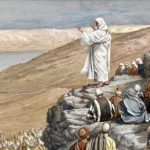
My dear brothers and sisters in Christ, the Gospelreading from Matthew brings this divine logic to its fullest expression in the Beatitudes. Jesus ascends the mountain, echoing Sinai, and teaches with authority. Yet the content of his teaching overturns every expectation. Jesus declares blessed not the successful or powerful, but those whose lives are shaped by dependence on God. The poor in spirit are blessed because they know their need for God. This poverty is not despair, but openness—space for grace to act.
In the United States, a community devastated by flooding learned that recovery required humility. People accepted help, shared resources, and relied on one another. Dependence became the path to renewal. This is the poverty of spirit Jesus proclaims. Those who mourn are blessed because they refuse indifference. Their sorrow reflects hearts attuned to suffering and injustice. In Canada, families affected by addiction formed parish support groups. Through shared grief and prayer, mourning became a channel of consolation. The meek are blessed. Meekness is disciplined strength, not passivity. In Germany, volunteers assisting displaced families encountered hostility but responded with patience and lawful advocacy. Their meekness revealed trust in God’s justice rather than reliance on force.
Those who hunger and thirst for righteousness express a deep longing for God’s justice to shape the world. In Australia, young Catholics combined prayer with environmental responsibility, living their desire for righteousness through sustained commitment. Mercy, purity of heart, and peacemaking follow. Mercy embodies God’s compassion. Purity of heart signifies integrity and undivided loyalty. Peacemakers reflect God’s reconciling work. The final Beatitude reminds us that faithfulness often leads to misunderstanding and suffering. Yet persecution does not negate blessedness; it confirms it.
The Beatitudes describe both present reality and future promise. They reveal a Kingdom already at work, though not yet complete. They shape the Church’s identity and mission in every age. The Church is called not merely to admire the Beatitudes, but to live them. Wherever humility, mercy, justice, and faithfulness shape Christian life, the Kingdom becomes visible (cf. St. Augustine, Sermon 53).
Lessons from the Readings
The first reading teaches that God preserves a future through humility, justice, and trust. The second proclaims that salvation is entirely God’s gift in Christ, leaving no room for pride. The Gospel reveals that true blessedness is found in living the Beatitudes. Together, these readings call the Church away from reliance on power and status, and towards confident dependence on God. They assure us that God’s Kingdom is already present wherever lives are shaped by faithfulness and humility.
