



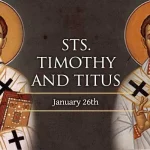

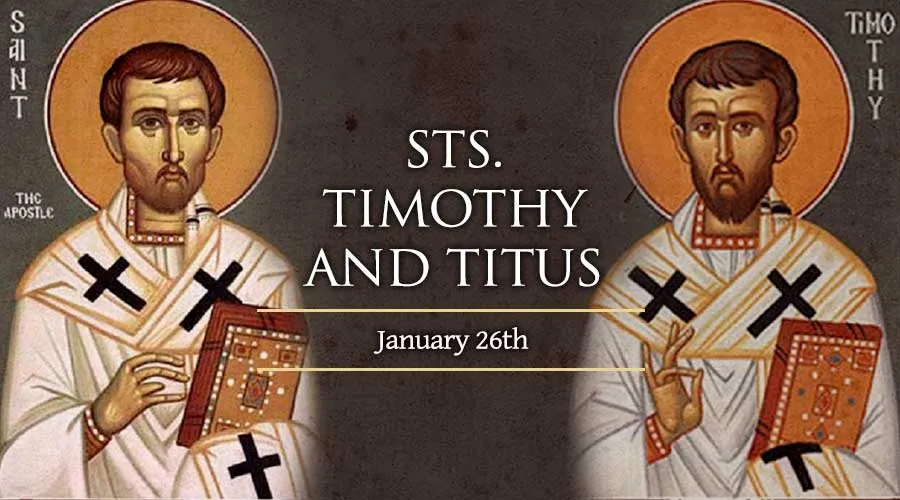
Jan 26 Monday: Saints. Timothy & Titus. Mk 3:22-30.
Today’s Gospel passage presents Jesus’ firm and crushing response to a serious slander spread by scribes sent from the Sanhedrin. They accused Jesus of casting out demons by the power of Beelzebul, the leader of demons. This accusation was not a misunderstanding but a deliberate distortion of the truth, made in bad faith, in order to discredit Jesus and turn the people against him.
Jesus answers the accusation calmly but forcefully, using clear reasoning and ending with a solemn warning. First, he points out the absurdity of the charge. A kingdom divided against itself cannot stand. A house torn by internal conflict will collapse. If Satan were helping Jesus to drive out demons, then Satan would be working against himself, something that makes no sense. Evil does not deliberately destroy its own power base. Jesus’ exorcisms, therefore, cannot possibly come from Satan.
Second, Jesus turns the accusation back on his critics. Jewish exorcists also claimed to cast out demons. If Jesus’ power came from Satan, then consistency would demand that their own exorcists be accused of the same collaboration. By their own standards, the charge collapses. This exposes the scribes’ hypocrisy and selective judgment.
Third, Jesus reveals the true source of his authority. He casts out demons by the power of God. Using the image of a strong man guarding his house, Jesus explains that only someone stronger can bind him and plunder his goods. Satan is the strong man who holds humanity captive through sin, fear, and death. Jesus is the stronger one. By his authority, his obedience to the Father, and ultimately by his death on the Cross, Jesus overpowers the evil one and frees those held in bondage. The Cross, which looks like weakness, becomes the decisive victory over Satan.
Finally, Jesus delivers a severe warning. By knowingly calling the work of the Holy Spirit evil, his accusers are committing blasphemy against the Holy Spirit. This sin is unforgivable not because God refuses mercy, but because the person deliberately rejects the very source of forgiveness. When the heart is closed to truth and repentance, forgiveness cannot be received. Still, Jesus’ warning leaves room for hope, since repentance always opens the door to mercy.
Life message.
Jesus teaches us that the human heart is never neutral. If we do not allow the Holy Spirit to fill us, something else will. We can be influenced by the evil spirit when we listen to lies, nourish sin, and harden our hearts. Therefore, we must keep our souls cleansed through daily prayer, repentance, the Word of God, and the sacraments, especially Confession and the Eucharist. A heart filled with God leaves no room for evil. God bless you.
Jan 27 Tuesday: St Angela Merici, Virgin. Mk 3:31-35
As Jesus became increasingly critical of the Jewish religious authorities, tension around him grew. His relatives, including his cousins, became deeply concerned. Taking Mary, his mother, with them, though she fully supported Jesus and trusted his mission, they set out to see him. Their intention seems to have been to persuade him to return quietly to Nazareth. They may have feared that his public confrontation with religious leaders would lead to his arrest and execution, and that they themselves might also suffer the consequences. Their concern was human, understandable, and rooted in love, even if mixed with fear.
At first glance, today’s Gospel may sound as if Jesus ignored his mother and relatives when they asked to see him. But such an interpretation would contradict everything we know about Jesus’ love for Mary and the years of faithful care he gave her before beginning his public ministry. His response, “Whoever does the will of God is my brother, and sister, and mother,” was not a rejection of Mary but a profound affirmation of her unique holiness. Mary was the first and most perfect disciple, the one who heard the word of God and kept it with total obedience. In highlighting obedience to God’s will, Jesus was, in fact, praising his mother rather than distancing himself from her.
Jesus uses this moment to teach a deeper lesson to the crowd. He reveals that belonging to him is not based primarily on blood ties or family background. Discipleship creates a new family, rooted in obedience to God and communion with the Father, the Son, and the Holy Spirit. Faith establishes a bond stronger than biological kinship. Those who listen to God’s word and live it become part of God’s household.
By this teaching, Jesus reshapes human relationships. God’s greatest gift is not simply creating us but adopting us as his sons and daughters. Through this divine adoption, all who belong to Christ become brothers and sisters to one another. Loyalty to God and his Kingdom now takes precedence over every other attachment. This does not destroy family bonds but purifies and elevates them, ordering them toward God’s saving plan.
The early Church Fathers reflected deeply on this truth. They taught that those who obey God become family to Christ, because they share in his obedience to the Father. Even more, those who help others come to faith spiritually give birth to Christ in their hearts, sharing in Mary’s spiritual motherhood by bringing Christ to the world through witness and love.
Life message.
Through Baptism, we become children of God, brothers and sisters of Jesus, and members of the divine family of the Trinity. This dignity carries responsibility. We are called to treat one another with love and reverence, to practice corporal and spiritual works of mercy, and to live as authentic disciples. Like Mary, we are not only to hear the word of God but to live it daily with faith, courage, and obedience. God bless you.
References and Sources
Sacred Scripture:
Mark 3:31–35
Matthew 12:46–50
Luke 8:19–21
Luke 1:38
Luke 11:27–28
Romans 8:14–17
Second Vatican Council:
Lumen Gentium, no. 58
Church Fathers:
St. Jerome, Commentary on the Gospel of Matthew
St. Augustine, Sermons on the New Testament
Catechism of the Catholic Church:
Divine adoption and discipleship, nos. 1692, 2233
Jan 28 Wednesday: St. Thomas Aquinas, Priest, Doctor of the Church. Mk 4:1-20
Today’s Gospel presents the parable of the sower, the seed, and the different kinds of soil. It is the first parable Jesus tells about the Kingdom of Heaven, and it is one of the few parables he explains himself. The message is therefore central and urgent. Jesus tells this parable at a moment when opposition to his mission is growing. It is meant as a double warning, a call to listeners to take the word of God seriously, and an encouragement to the Apostles not to lose hope when their preaching seems unfruitful.
Jesus makes it clear that the success or failure of God’s word does not depend on the seed. The word of God is always powerful, alive, and effective. Scripture itself describes it as a sharp sword, a two-edged sword, and as fire and a hammer that shatters rock. The real issue is the condition of the soil, the human heart that receives the word. God is the sower, but he works through many hands, through the Church, through parents, teachers, preachers, and through our own personal reading and reflection on Scripture.
Jesus describes four types of soil, each representing a way people respond to God’s word. The hardened soil along the path stands for those whose minds and hearts are closed. This hardness can come from pride, laziness, fear, or prejudice. Such people hear the word, but it never enters deeply, and the evil one easily snatches it away.
The soil with rocky ground represents people who respond quickly and emotionally but lack perseverance. They enjoy novelty and excitement but resist commitment. When faith demands sacrifice, discipline, or suffering, they fall away. God promises through the prophet Ezekiel to remove hearts of stone and replace them with hearts of flesh, capable of faithful obedience.
The soil full of thorns represents those who allow the word to grow, but only partially. Their lives are crowded with unhealthy attachments, sinful habits, greed, anxiety, jealousy, or an excessive concern for wealth and pleasure. The word of God is slowly choked and becomes unfruitful.
Finally, the good and fertile soil represents people with open minds, humble hearts, and a sincere desire to live God’s will. They listen attentively, reflect deeply, and act faithfully. Scripture and Church history give us many examples of such soil, people like Zacchaeus, the sinful woman who loved much, the repentant thief on the cross, and saints such as Augustine, Francis of Assisi, and Francis Xavier. Their lives produced abundant fruit because they allowed God’s word to shape their decisions and actions.
Life message.
Jesus calls each of us to become good soil. This requires effort, patience, and daily conversion. We must listen to the word of God, welcome it with faith, protect it from distractions, and cultivate it through prayer, the sacraments, and acts of love. When we do this, the Holy Spirit produces fruit in us, fruit that blesses our families, our parishes, and the world. God bless you.
References and Sources
Sacred Scripture:
Matthew 13:1–23
Mark 4:1–20
Luke 8:4–15
Isaiah 49:2
Hebrews 4:12
Jeremiah 23:29
Ezekiel 11:19
Catechism of the Catholic Church:
The Word of God and faith, nos. 101–104, 131–133
Church Teaching and Commentary:
Pontifical Biblical Commission, The Interpretation of the Bible in the Church
Navarre Bible Commentary, Gospel of Matthew
Jan 29 Thursday: Mk 4:21-25
Today’s Gospel passage comes from Saint Mark’s continuation of Jesus’ teaching after the parable of the sower. Having spoken about how the word of God is received, Jesus now explains what that word is meant to do in our lives. He reminds us that those who receive God’s word are meant to become light for others. We are not only hearers of the word but also bearers of Christ’s light, called to reflect his love, mercy, compassion, truth, and forgiveness to the world around us.
The image of the lamp and the light.
In biblical times, a lamp was essential for daily life. It allowed people to see, to work, and to move safely in the darkness. Without light, people stumbled and fell. For the Jewish people, light was more than a physical necessity, it was a symbol of God himself. Light represented God’s holiness, truth, beauty, and goodness. Scripture repeatedly speaks of God as light. The glory of the Lord shone around the shepherds at the birth of Jesus. Saul encountered God in a blinding light on the road to Damascus. Saint Paul teaches that God dwells in unapproachable light.
Against this background, Jesus’ claim becomes clear and powerful when he says that he is the Light of the world. When Christ’s light enters our hearts, it reveals truth, not only about God, but also about ourselves and our relationships with others. Living in Christ’s light helps us see clearly who we are, who our neighbors are, and who God truly is. It frees us from self-deception and prevents us from hiding our sins, weaknesses, and responsibilities from God, from others, or even from ourselves. At the same time, Christ’s light gently exposes the consequences of sinful habits and invites us to conversion and healing.
Jesus insists that a lamp is not lit in order to be hidden. Light exists to shine. Faith that is kept private, unshared, or unpracticed slowly fades. A Christian life that does not radiate goodness, mercy, and truth fails to fulfill its purpose.
The paradox of “the one who has will receive more.”
Jesus follows this teaching with a striking statement: “To the one who has, more will be given.” This is not a lesson about wealth or material success. Rather, it concerns our openness to God. Jesus warns us to pay attention to how we listen. When we listen to God’s word with humility and sincerity, even the small understanding we possess begins to grow. Grace builds upon grace. Faith deepens, wisdom expands, and our relationship with God becomes stronger.
But when the heart is closed, distracted, or resistant, spiritual understanding shrinks. Even the little faith or insight we think we possess can slowly disappear. Jesus is teaching that spiritual growth depends on living connection. Those rooted deeply in God grow richer in faith, hope, and love. Those whose relationship with God remains superficial risk spiritual emptiness.
Life message.
As disciples of Christ, we are called to be light in a dark world. This means driving away darkness through lives shaped by prayer, integrity, forgiveness, compassion, and humble service. By living visibly and faithfully as Christians, we help others discover the true light of Jesus and the hope he brings. God bless you.
References and Sources
Sacred Scripture:
Mark 4:21–25
Luke 2:9
Acts 9:3; 22:6
1 Timothy 6:16
John 8:12
Matthew 5:14–16
Catechism of the Catholic Church:
Christ the Light of the nations, nos. 748–750
The moral life in Christ, nos. 1691–1698
Church Fathers and Commentary:
Saint Augustine, Sermons on the New Testament
The Navarre Bible Commentary, Gospel of Mark
Jan 30 Friday: Mk 4:26-34
Using the brief parables of the growing wheat seed and the mustard seed, Jesus explains how the Kingdom of God grows in human hearts and in human society. In both images, growth begins quietly and almost unnoticed. A seed is buried in the soil, hidden from sight. For a time, nothing seems to happen. Then slowly, a shoot appears, followed by steady growth, until the plant becomes strong, mature, and fruitful.
Jesus uses this natural process to explain the way God’s rule works within us. The Kingdom of God does not usually arrive with noise, force, or instant results. Instead, it begins silently in the human heart. It starts when a person listens to God’s word, chooses to do God’s will, and surrenders daily life to God’s guidance. At first, this change may seem small and insignificant, even to the person experiencing it.
Yet, just as the seed contains within itself the power to grow, the Kingdom of God grows through the power of the Holy Spirit. God nourishes this growth through the Word of God, the Sacraments, prayer, and faithful obedience. Over time, God’s rule transforms individuals, families, parishes, and entire communities. What began as something hidden becomes visible in lives marked by love, justice, mercy, patience, and service.
Jesus’ teaching offers comfort and hope. We are reminded that God is at work even when we do not see immediate results. Spiritual growth is often slow, but it is real. God is patient, and his Kingdom advances steadily until it reaches its fullness, which will be completed in eternal life.
Life message.
As we listen to God’s word and make sincere efforts to live it out, we cooperate in the growth of God’s Kingdom here on earth. This requires openness, perseverance, and daily surrender. Because we cannot live God’s will by our own strength alone, we need the continual anointing and guidance of the Holy Spirit. Each day, therefore, we are invited to place our lives before God and ask for the grace to be faithful doers of his word. God bless you.
References and Sources
Sacred Scripture:
Mark 4:26–32
Matthew 13:31–33
Luke 13:18–21
Catechism of the Catholic Church:
The Kingdom of God, nos. 541–546
The work of the Holy Spirit, nos. 683–690
Church Commentary and Tradition:
The Navarre Bible Commentary, Gospel of Mark
Saint Augustine, Sermons on the Kingdom of God
Jan 31 Saturday: St. John Bosco, Pries. Mk 4:35-41
Mark deliberately highlights the mighty works of Jesus to reveal his true identity as the promised Messiah and Lord of creation. The central message of today’s Gospel is God’s power to bring peace in the storms of life. By narrating this miracle, Mark also reassures the early Christian community that the Church cannot be destroyed as long as the risen Lord remains present within her. For us today, the scene is an invitation to keep Jesus firmly in the boat of our lives and to trust him amid every storm we face.
The storm itself is very realistic. The Sea of Galilee, about thirteen miles long and eight miles wide, lies far below sea level and is surrounded by hills and ravines. When cold air rushes down through these natural funnels and collides with warm air rising from the lake, violent storms can erupt without warning. Even experienced fishermen could be overwhelmed. Caught in such a tempest, the disciples are seized by fear. They wake Jesus with words that reveal both panic and disappointment, accusing him of indifference to their danger.
Jesus’ response is swift and revealing. He first rebukes the wind and the sea, restoring a deep and complete calm. Then he turns to his disciples and challenges their fear and lack of faith. By commanding the forces of nature, Jesus does what the Old Testament attributes only to God, the One who stills the roaring of the seas and the crashing of their waves. In this moment, Jesus is revealed not merely as a teacher or prophet, but as Lord over creation itself.
For Mark’s community, threatened by persecution and uncertainty, this story carried a powerful promise. The Church may be battered by storms, but it will never sink while Christ is present. The same assurance is offered to us today.
Life messages.
First, we are called to welcome Jesus into the boat of our lives. Each of us is journeying across the sea of time toward eternity, and storms are inevitable. We face storms of sickness, grief, fear, temptation, doubt, anxiety, and inner conflict. Only Christ can give lasting peace in moments of sorrow, especially when we mourn the loss of those we love.
Second, when storms of doubt shake the foundations of our faith, Jesus stands ready to calm them by revealing his divine authority through Scripture and the living tradition of the Church. He brings peace in times of anxiety about the future and reassurance when fear overwhelms us. He can also quiet the storms of anger, passion, and unrest within our hearts. The Gospel invites us not merely to wake Jesus in moments of panic, but to trust him even when he seems silent. God bless you.
References and Sources
Sacred Scripture:
Mark 4:35–41
Psalm 65:7
Psalm 107:23–30
Job 38:8–11
Catechism of the Catholic Church:
Christ’s authority over creation, nos. 447–451
Faith and trust in God, nos. 150–152
Church Fathers and Commentary:
St. Augustine, Sermons on the New Testament
The Navarre Bible Commentary, Gospel of Mark
